Issue 55:2

Issue 55:2 includes a Spotlight on Decision making under uncertainty. Other topics include urban ecology, population monitoring, tropical forest restoration and more. Here we take a look at some of the articles published in this issue. Decision making under uncertainty Senior Editor, Michael Bode on this issue’s selection of Spotlight papers How does grazing by wild ungulates and livestock affect plant richness? This issue’s Editor’s Choice Jaguar … Continue reading Issue 55:2

Mapping risk: new method to synthesize spatial data on human and animal use of coastal waters

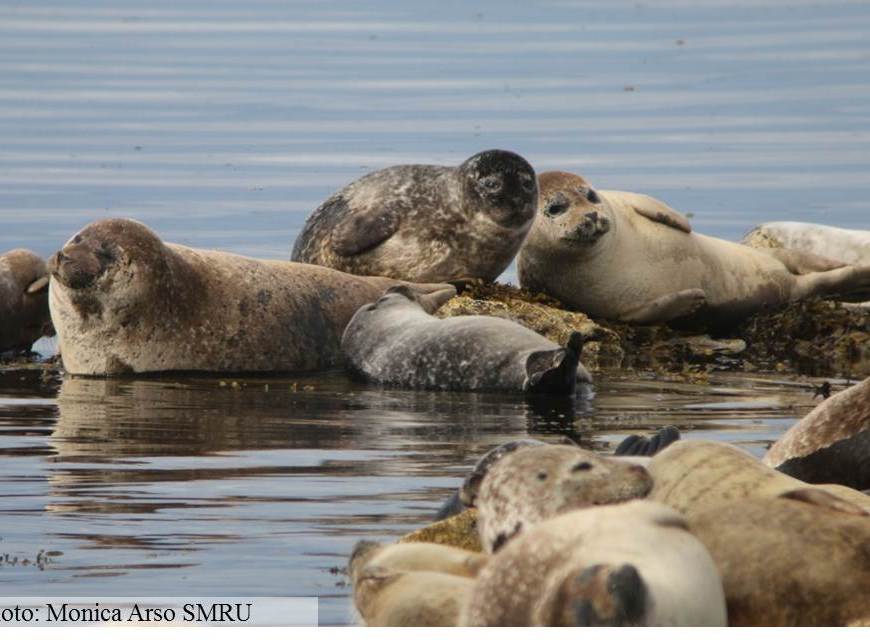
In this post Erin Ashe discusses a new article from Esther Jones and colleagues ‘Seals and shipping: quantifying population risk and individual exposure to vessel noise‘ An exciting new paper (Jones et al. 2017) outlines a rigorous and widely applicable framework to predict ship noise levels in coastal waters, assess noise exposure for two seal species, and explicitly incorporate these results into risk assessments and … Continue reading Mapping risk: new method to synthesize spatial data on human and animal use of coastal waters

Density-dependence and marine bird populations: Are wind farm assessments precautionary?

In this post, Catharine Horswill discusses her paper ‘Density-dependence and marine bird populations: Are wind farm assessments precautionary?‘ “Just one thing would be enough to halt climate change, if clean energy became cheaper than coal, gas or oil, fossil fuel would simply stay in the ground”. Sir David Attenborough made this statement in support of the Global Apollo Program, an international initiative to increase the amount … Continue reading Density-dependence and marine bird populations: Are wind farm assessments precautionary?

Seals find a quiet place to phone home

In this post Debbie Russell discusses her paper ‘Avoidance of windfarms by harbour seals is limited to pile driving activities‘ published today in Journal of Applied Ecology. Marine renewables in the fight against climate change To fight climate change we have to cut our carbon emissions. One of the main sources of carbon emissions results from burning coal to make electricity. Thus a key weapon … Continue reading Seals find a quiet place to phone home

VIDEO: Saving seagrass isn’t just a pipefish dream – strategies to enhance its resilience

In this post Richard Unsworth discusses his recent Practitioner’s Perspective article with Leanne Cullen-Unsworth ‘Strategies to enhance the resilience of the world’s seagrass meadows‘ Over the last few years we’ve been increasingly interested by the #oceanoptimism movement on Twitter. It seeks to try and reframe the marine conservation story from a narrative of doom and gloom to one that seeks to see the positives in conservation around … Continue reading VIDEO: Saving seagrass isn’t just a pipefish dream – strategies to enhance its resilience

Global analysis of seagrass restoration

In this post Marieke van Katwijk discusses her recent paper ‘Global analysis of seagrass restoration: the importance of large‐scale planting’ Have you seen a lot of your restorations fail? Not immediately… but in the end? Repeatedly? Could you not find a consistent environmental correlation to explain it, nor a technique to overcome it? It happened to me. I must admit I felt stupid. I am … Continue reading Global analysis of seagrass restoration

Managing invasive species in a warming Arctic

In this post Associate Editor Joseph Bennett discusses a paper he recently handled by Chris Ware and colleagues ‘Biological introduction risks from shipping in a warming Arctic’ It is well known that the Arctic is one of the most vulnerable regions to the impacts of climate change (IPCC 2014). Climate change will not only have direct impacts, it will also magnify the effects of existing … Continue reading Managing invasive species in a warming Arctic

Ecological considerations for an urban marine environment

In this post Filippo Ferrario discusses his recent paper ‘The overlooked role of biotic factors in controlling the ecological performance of artificial marine habitats’ Summer is going to be over soon and many of us have spent the vacation enjoying sea beaches, practising aquatic sports or looking for a pristine marine landscape, where to hike or a wonderful sunset to cherish. Did you realize how … Continue reading Ecological considerations for an urban marine environment

Helping Hawaiian spinner dolphins rest

In this post Julian Tyne discusses his paper ‘The importance of spinner dolphin (Stenella longirostris) resting habitat: implications for management’ Coastal dolphin populations are exposed to non-consumptive human activities that can pose conservation challenges. Consequently, effective management strategies, using rigorous scientific assessments of exposed populations and their habitats, are needed to mitigate potential negative impacts of these activities. Key habitats may function as critical for … Continue reading Helping Hawaiian spinner dolphins rest

The effects of seals on Scottish cod stock recovery

In this post Robin Cook discusses his recent paper with Steven Holmes and Robert Fryer ‘Grey seal predation impairs recovery of an over-exploited fish stock’ Both seals and humans prey on fish and so potentially compete for the same resource. Such competition is vividly illustrated in the controversy surrounding the effect grey seals have on cod in a number of regions including Canada and the … Continue reading The effects of seals on Scottish cod stock recovery