Maja Bradarić: Forecasting nocturnal bird migration for dynamic aeroconservation

Shortlisted for the 2024 Southwood Prize Maja Bradarić details how, alongside colleagues, utilising radar data, weather and phenological variables allowed for the development of seasonal near-term forecasts of low-altitude nocturnal bird migration over the southern North Sea. About the research Overview Our research explores environmental drivers and spatiotemporal patterns of nocturnal bird migration over the North Sea to predict migration intensity for conservation frameworks. The … Continue reading Maja Bradarić: Forecasting nocturnal bird migration for dynamic aeroconservation

Nicholas McMillan: Unraveling the invasion paradox 

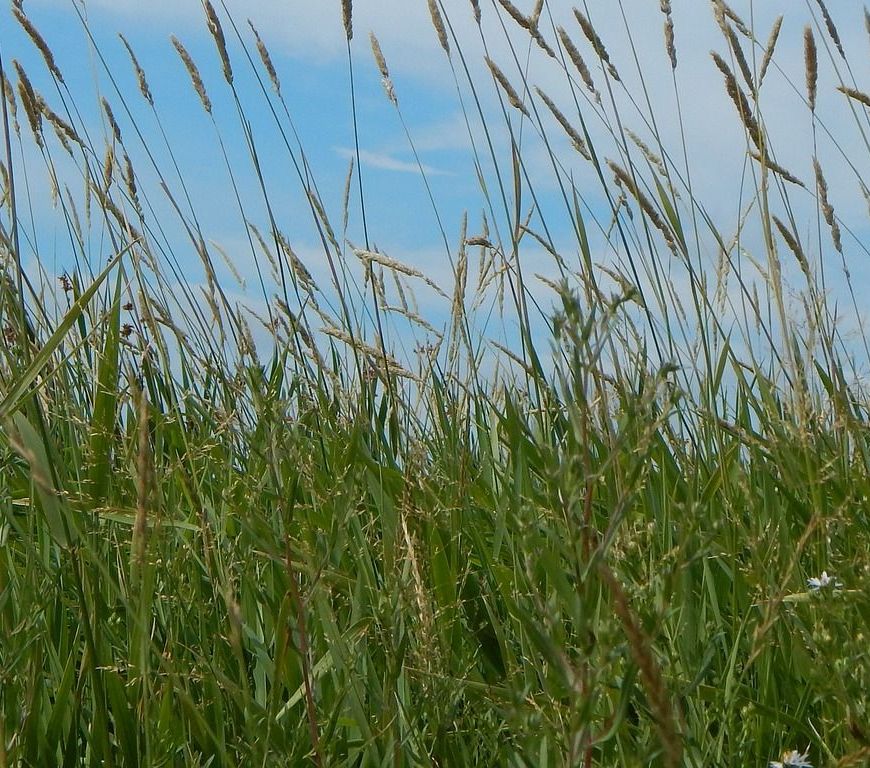
Shortlisted for the 2023 Southwood Prize Nicholas McMillan details how he and colleagues collected data across eight grassland landscapes to test how an invasive legume affected plant and bird communities at spatial grains ranging from 0.1 m2 to >3,000,000 m2. It was concluded that scale is a central problem in ecology, and defining scale in management objectives is essential for effective biodiversity conservation. Invasive plants Invasive plants are managed … Continue reading Nicholas McMillan: Unraveling the invasion paradox 

Humans drive spatial variation in mortality risk for a threatened wolf population in a Canis hybrid zone

John Benson shares recent research, conducted alongside colleagues, which monitored the movement of eastern wolves in Algonquin Provincial Park, Canada. Results suggest that eastern wolves and dispersing canids survive poorly outside of APP, primarily due to human-caused mortality. Thus, expanding the threatened population outside of APP is unlikely under current management conditions. The challenge of human-caused mortality for threatened, hybridizing wolves in Canada When large … Continue reading Humans drive spatial variation in mortality risk for a threatened wolf population in a Canis hybrid zone

Key Concepts in Ecology: Life and the physical environment 

This blog post on ‘Life and the physical environment’ is part of the BES ‘Key Concepts in Ecology’ series, designed to help ecologists in learning the key topics in ecology! Take a look at the full series for a list of key topics you might typically find in an ecology textbook, each providing a quick introduction to the topic, and a list of suggested papers … Continue reading Key Concepts in Ecology: Life and the physical environment 

Prescribed burns for multiple needs – is optimising spatial planning the solution to conflicting fire management objectives?

Following our recent Editor’s Choice that looked at prescribed burns in African savanna, this latest blog by Brooke Williams turns to fire management and prescribed burns in Australia. The blog supports Williams’ recent paper, Optimising the spatial planning of prescribed burns to achieve multiple objectives in a fire-dependent ecosystem. Fire management is an important aspect of ensuring the safety of Australians living within fire-prone environments. It … Continue reading Prescribed burns for multiple needs – is optimising spatial planning the solution to conflicting fire management objectives?

Editor’s Choice 54:2 – Optimizing the use of species distribution maps for planning new protected areas

The Editor’s Choice for Issue 54:2 is written by Kulbhushansingh Suryawanshi, who is taking part in our Associate Editor mentoring opportunity. The article chosen by the Editors as this issue’s Editor’s choice article is ‘Limitations and trade-offs in the use of species distribution maps for protected area planning‘ by Moreno Di Marco and colleagues. Protected Areas have been the ‘big idea’ of biodiversity conservation over … Continue reading Editor’s Choice 54:2 – Optimizing the use of species distribution maps for planning new protected areas

Measuring dark diversity: what do we know and where do we go from here?

In this post Chris Wilson (The Flory Lab) discusses a recent article from Jesper Moeslund and colleagues ‘Using dark diversity and plant characteristics to guide conservation and restoration‘ Central to ecology and conservation biology is the quest to understand and, more importantly, conserve biodiversity. However, generally you can’t manage what you can’t measure, and you can’t measure what you can’t define! Biodiversity is traditionally defined … Continue reading Measuring dark diversity: what do we know and where do we go from here?

Optimally controlling invasive species in spatially-connected networks

In this post Sam Nicol discusses his recent article with Regis Sabbadin, Nathalie Peyrard and Iadine Chadès ‘Finding the best management policy to eradicate invasive species from spatial ecological networks with simultaneous actions‘ Lots of invasive species live in spatial networks, which means that they live in a series of discrete habitat sites, but occasionally move between the sites. Managing invasive species in these networks … Continue reading Optimally controlling invasive species in spatially-connected networks

Interested in becoming an Associate Editor?

We are currently seeking new Associate Editors for Journal of Applied Ecology and invite anyone interested in joining the board to contact the editorial office (admin@journalofappliedecology.org) with your CV or link to your institutional/personal webpage and a brief outline of your reviewing or editorial experience. The closing date for applications is midnight BST Thursday 7 May. ***Applications are now closed*** We are looking for researchers … Continue reading Interested in becoming an Associate Editor?