Restorative recreation: One landowner’s restoration experience in Iowa’s Loess Hills

In his latest From Practice article, author and landowner Patrick Swanson describes his experience restoring a native prairie remnant in Iowa’s Loess Hills and introduces a new paradigm that maximizes benefits to personal wellbeing while improving the landscape for other species. This article is part of the cross-journal, cross-society Special Feature on the UN Decade on Ecosystem Restoration. Ecosystems worldwide are under mounting stress from … Continue reading Restorative recreation: One landowner’s restoration experience in Iowa’s Loess Hills

Tanja Petersen: Uncovering biases in Citizen Science data

Photo © Andreas Frisch In this Q&A, we ask author Tanja Petersen about her team’s research on the GBIF database, and find out a little bit more about the author herself. This article is part of the BES cross-journal special feature on Citizen Science. The research What’s your article about? The article is about skews and biases in GBIF data. Specifically, how the origin of … Continue reading Tanja Petersen: Uncovering biases in Citizen Science data

Can ‘Citizen Scientists’ play a valid role in conservation management?

The emergence of citizen science in biodiversity monitoring has transformed the methods by which biodiversity surveys can be conducted. With the recent development of automatic visual identification tools, Pierre Bonnet and colleagues present two distinct case studies implementing citizen science and the use of Pl@ntNet, an automatic plant identification platform. This article is part of the BES cross-journal special feature on Citizen Science. Effective monitoring … Continue reading Can ‘Citizen Scientists’ play a valid role in conservation management?

Cover stories: Indigenous and local knowledge

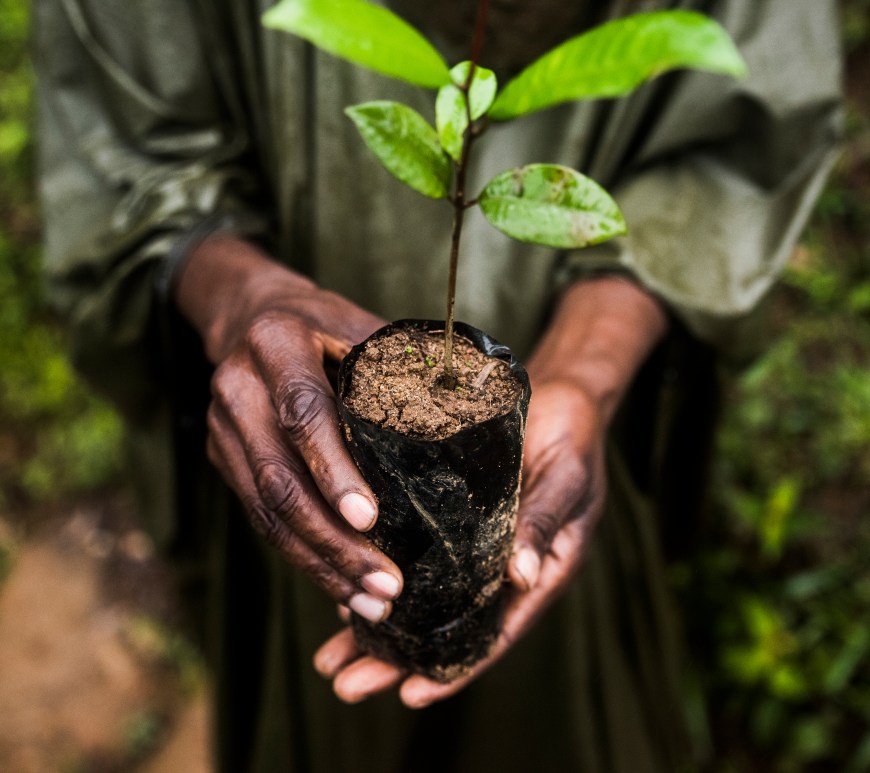
Journal of Applied Ecology’s September 2020 cover highlights an international Malagasy-Finnish project trying to reforest some of the damaged Malagasy forests. In the photo, a project worker shows a shoot that will be planted in one of the areas under reforestation process. Here photographer, Joan de la Malla shares some more of her work and tells the story behind the photos. The corresponding research contributes … Continue reading Cover stories: Indigenous and local knowledge

How ecological assessments can benefit from engagement with Indigenous and local knowledge

Part of a new Special Feature, Informing decision‐making with Indigenous and local knowledge and science, Pamela McElwee and colleagues look at the important role of Indigenous and local knowledge in initiatives such as the Intergovernmental Science-Policy Platform on Biodiversity and Ecosystem Services Global Assessment. Interest in Indigenous and local knowledge (ILK) has been growing, but not everyone knows what ILK is or how it can … Continue reading How ecological assessments can benefit from engagement with Indigenous and local knowledge

Showcasing developments in biologging and related methods in applied ecology

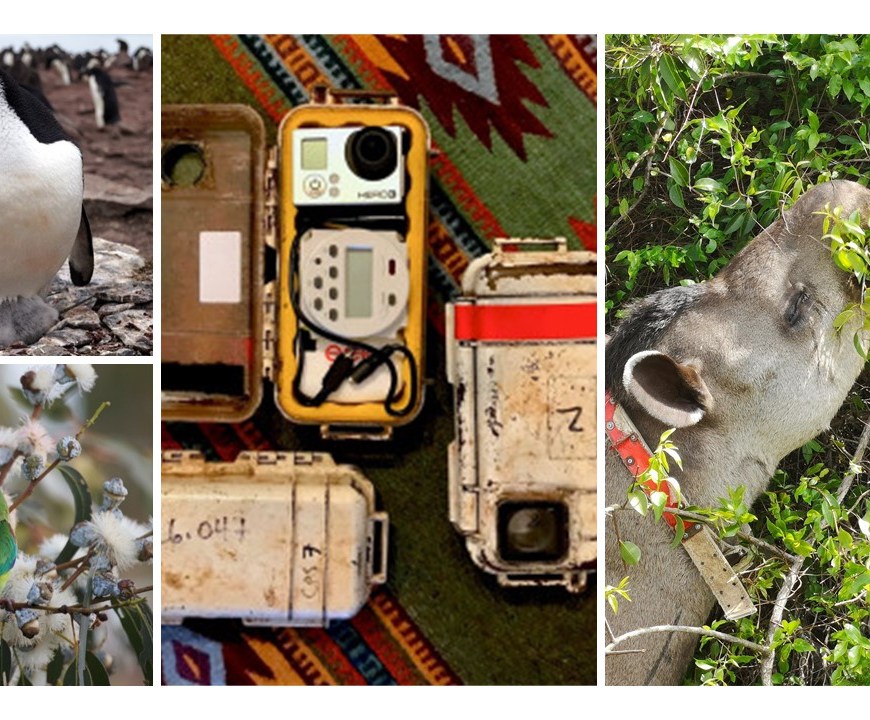
Following the recent Journal of Animal Ecology Special Feature on biologging, Associate Editor, Steph Januchowski-Hartley takes a look at how research in this and similar methods are affecting the field of applied ecology today. Advances in technology have allowed for small electronic loggers and transmitters to be developed not only for biomedical monitoring for humans (think of the tech we can use for monitoring hearts, … Continue reading Showcasing developments in biologging and related methods in applied ecology

Call for papers: citizen science Special Feature

*UPDATE: the deadline for this special feature open call has been extended to 28 February 2020* Ecological projects involving citizen scientists have rapidly increased in number and there is now a general consensus that they can produce high-quality data. Citizen science projects generate large datasets that allow novel ecological questions to be addressed, but can require the development of both new analytical tools to handle … Continue reading Call for papers: citizen science Special Feature

BES journal blogs round up: February 2019

February was another busy month across the British Ecological Society blogs. We’ve seen the launch of Special Features on ecological succession and advances in modelling demographic processes, as well as a cross-journal series on rewilding, a look at the physics behind predator and prey size ratios and an exploration of how climate change is affecting penguin interactions. Read on for more highlights. Functional Ecologists – … Continue reading BES journal blogs round up: February 2019

Functional traits in agroecology: advancing description and prediction in agroecosystems

Our series of posts on the Special Feature, Functional traits in agroecology rounds up with a post from one of the series’ editors, Adam Martin. We’ve always thought “commentary” articles – particularly those that outline a vision for a future field of research – to be an interesting enigma in science. On one hand, many commentary-type articles have been undoubtedly influential and can be pointed … Continue reading Functional traits in agroecology: advancing description and prediction in agroecosystems

Functional traits represent a key nexus between scientific and local knowledge

Continuing our Special Feature series, Functional traits in agroecology, Marney Isaac comments on her paper, Farmer perception and utilization of leaf functional traits in managing agroecosystems. Using leaf functional traits to understand plant response to environmental change is well-established for research in a wide number of natural ecosystems, and now being more widely applied to agroecosystems. Yet, little is known about if, or how, farm managers … Continue reading Functional traits represent a key nexus between scientific and local knowledge