In many parts of the world, grasslands and savannas are being taken over by trees. This change reduces biodiversity and alters how these ecosystems work. We wanted to test a simple, low-cost way to slow this process and help restore open grassy areas.
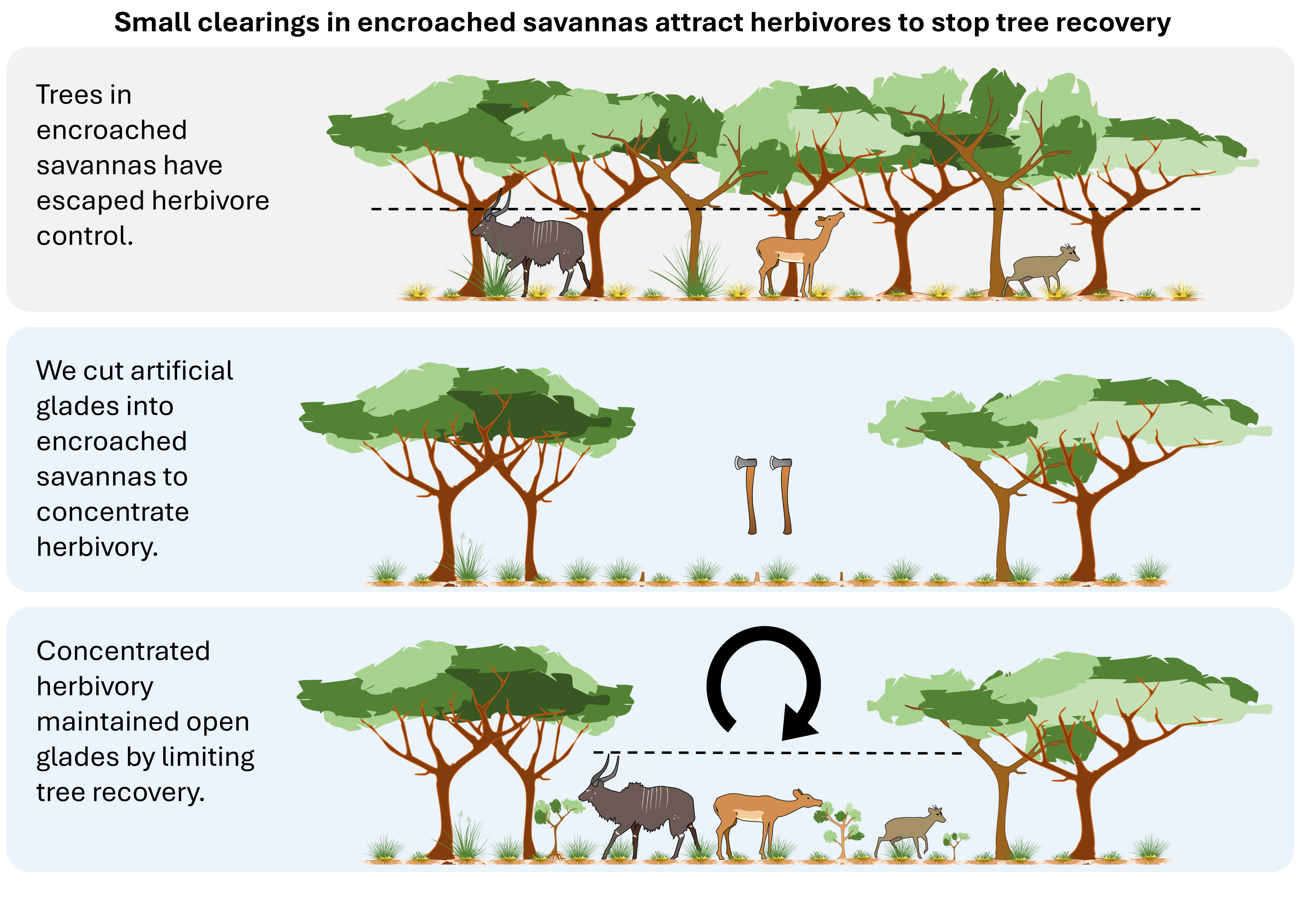
In our study, we created small clearings (“glades”) by cutting trees in a heavily wooded savanna in South Africa. We compared these cleared areas with nearby wooded areas. We also used fenced and unfenced plots to understand how medium-sized plant-eating animals (like impala and wildebeest) influenced what happened next.
We found that animals were strongly attracted to the new clearings. In these areas, animals fed heavily on the young shoots growing back after cutting. This intense feeding kept the new trees short and prevented them from growing back into dense woodland. At the same time, grazing animals reduced grass height in the glades, maintaining open, short-grass patches.
This effect depended on the type of trees that were originally present. The effect was strongest when the original trees were species that are more nutritious and palatable. When the cleared areas came from less palatable tree species, animals were less attracted, and the control of regrowth was weaker.
Our results show that creating small, targeted clearings can concentrate animal feeding in a way that naturally limits tree regrowth. This creates a feedback loop where animals help maintain open areas over time. Compared to large-scale clearing or frequent burning, this approach could be more affordable and practical for many land managers.
Overall, we show that restoring natural herbivore control of trees can offer an effective way to manage tree encroachment and support healthier, more diverse savanna ecosystems.
This is a Plain Language Summary discussing a recently-published article in Journal of Applied Ecology. Find the full article here.

