Prescribed burning does not change how vulnerable pine trees are to pine processionary moth (PPM) caterpillars in the short term. This means land managers can use this tool without increasing or decreasing the risk of pest outbreaks.
Warmer winters linked to climate change are helping the PPM move into new areas where it was previously absent, while also increasing its chances of survival. These caterpillars feed on pine needles and can weaken forests. At the same time, prescribed burning is usually used to reduce wildfire risk. However, because prescribed burns change forest conditions, it can potentially affect how trees defend themselves against pests. We wanted to find out whether this management practice affects tree resistance to PPM.
To answer this, we studied black pine forests in three areas of northeastern Spain. We compared trees in burned and unburned sites, both before and one year after prescribed fire. We measured the natural chemical defences in pine needles, along with nutrient levels and indicators of water stress. We also carried out a controlled experiment where we fed pine needles to young PPM caterpillars to see how well they survived.
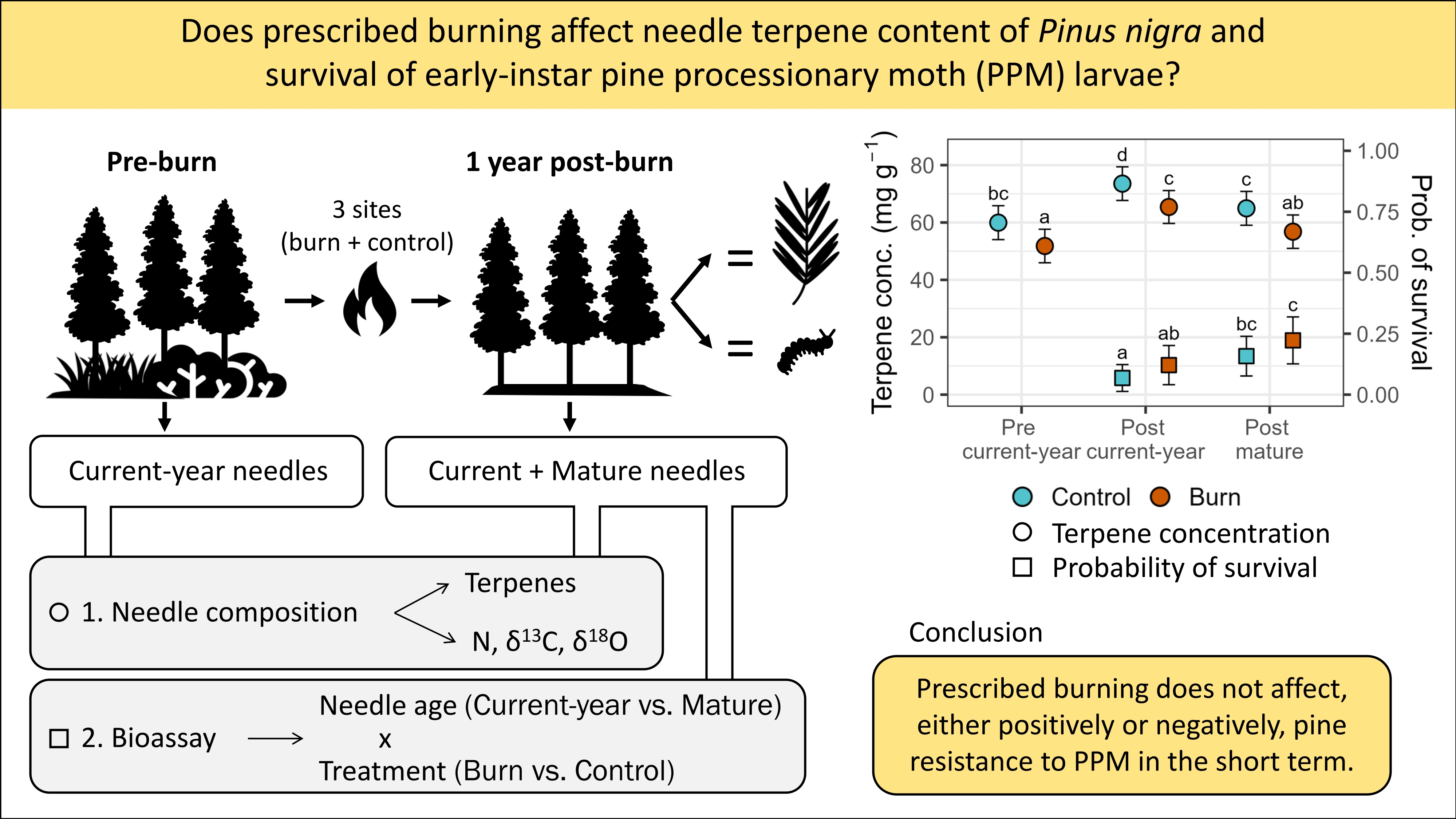
We found that prescribed burning did not change the levels of defensive chemicals in pine needles after one year. Instead, differences in these chemicals were better explained by the dry weather conditions during that period. We also found that burning had a small overall effect on caterpillar survival, which instead depended on several factors, including the age of the needles and their chemical composition.
Our findings show that prescribed burning does not increase or decrease forest vulnerability to this pest in the short term. This is important because it supports the continued use of prescribed burning to reduce wildfire risk without worrying about unintended effects on insect damage. In the bigger picture, this helps support forest management strategies that aim to balance fire prevention with maintaining healthy and resilient ecosystems.
 The Applied Ecologist