Georgina Mace Prize 2022: Shortlist announced for early career researcher award

Each year, Ecological Solutions and Evidence awards the Georgina Mace Prize to the best research article published by an early career author. Today, we present the shortlisted articles for this year’s award based on the previous volume of the journal. This is the third year we’ll be awarding the prize in honour of Professor Dame Georgina Mace, a pioneer in conservation science and policy who was … Continue reading Georgina Mace Prize 2022: Shortlist announced for early career researcher award

FAR-sighted conservation: Facing the inevitability of ongoing environmental change

Chris Thomas and colleagues describe their latest Perspective article outlining a new framework – Facilitate-Accept-Resist (FAR) – that operationalizes conservation decision-making in a way that leads to greater adoption of positive biodiversity change. Conservation is in a bind. The biological world is changing, and so are our human priorities. When we declare a nature reserve on the basis of a particular species, for example, is … Continue reading FAR-sighted conservation: Facing the inevitability of ongoing environmental change

The threat to seabirds and the Barents Sea

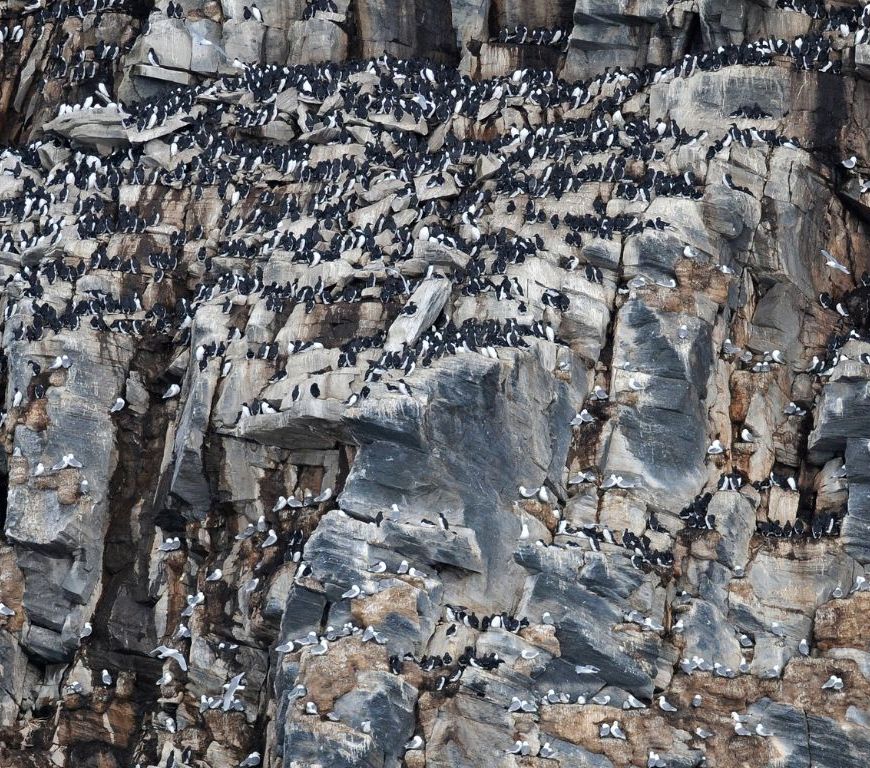
Feature photo: The Hornøya cliffs with nesting seabirds, including Kittiwakes, Common Guillemots and possibly Razorbills © Biotope In their latest research, Sam Hodges and colleagues present a novel solution that may help guide ecosystem management practices by predicting the effects of climate change and yearly variation in sea surface temperature on foraging seabird hotspots in the Barents Sea. Seabirds have historically been shown to be … Continue reading The threat to seabirds and the Barents Sea

Phylogenetic distance controls plant growth during early restoration of a semi-arid riparian forest

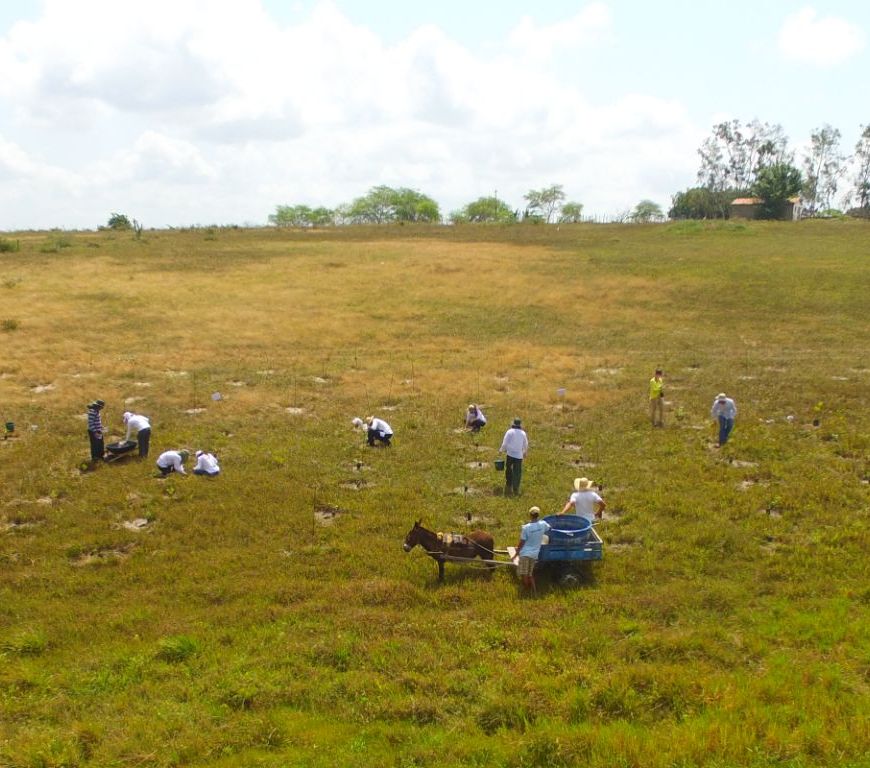
Leonardo H. Teixeira and colleagues share their latest research investigating the influence of species richness and phylogenetic relatedness during early restoration of a riparian forest in north-eastern Brazil. Restoration projects offer the opportunity to locally assess the effects of plant diversity on the assembly and functioning of restored ecosystems. In semi-arid areas of north-eastern Brazil, the extremely harsh environmental conditions are limiting plant establishment from … Continue reading Phylogenetic distance controls plant growth during early restoration of a semi-arid riparian forest

MammalWeb: The potential of citizen science for large-scale mammal monitoring

Feature photo: A camera trap photo © MammalWeb (CC BY-SA 2.0) In their latest article, Pen-Yuan Hsing et al. describe the processes involved in launching and running MammalWeb – a successful camera trapping project that has produced over 440,00 classified image sequences and videos over the past decade. It is unlikely to come as a shock to readers of the Applied Ecologist that the world … Continue reading MammalWeb: The potential of citizen science for large-scale mammal monitoring

Call for proposals: Innovation in Practice

The British Ecological Society journals Ecological Solutions and Evidence and Methods in Ecology and Evolution are seeking proposals for its new cross-journal Special Feature: “Innovation in Practice“. Applied ecological management relies in part on the application of technology to help mitigate anthropogenic impacts and facilitate the recovery of populations and ecosystems. In the past few decades, new and advanced technology has been applied to solve … Continue reading Call for proposals: Innovation in Practice

Can pasture-fed livestock farming practices improve the ecological condition of grasslands?

Innovative farmers are adopting agro-ecological approaches to producing beef which they believe are better for biodiversity and soils. Lisa Norton (UK Centre for Ecology and Hydrology) and colleagues investigated the validity of these claims by comparing their grassland to those across the wider countryside surveyed as part of the national GB Countryside Survey.  Public concerns about the environmental impacts of meat production add to the … Continue reading Can pasture-fed livestock farming practices improve the ecological condition of grasslands?

Research stories: How to (almost) double woodland carbon overnight

How much carbon is stored in the aboveground biomass (AGB) of Wytham Woods aka the ‘most studied forest in the world’? Professors Mat Disney and Kim Calders thought this would be very well-known but were surprised to find this perhaps wasn’t the case after all. They discuss how their team approached their latest research. Over the years, a number of studies have estimated the carbon … Continue reading Research stories: How to (almost) double woodland carbon overnight

Research stories: Strava, GBIF and Citizen Science

Lead author Caitlin Mandeville recalls how she and her co-authors kept their focus close to home in their latest research that explores connections between citizen science and recreation in natural areas. Just about every community has some small, unassuming natural areas that are mainly known to locals: a neighbourhood park, a small wildlife preserve, a field on the edge of town. These places might not … Continue reading Research stories: Strava, GBIF and Citizen Science

Making optimal adaptive management accessible to everyone

Author Sam Nicol describes his team’s latest research developing a new model to help managers easily identify and employ adaptive management interventions to protect threatened species. Adaptive management—what’s the problem? Adaptive management has been the coolest thing in conservation for almost 40 years – everyone wants to do it. Way back in the ‘80s, the elegant seminal formulations by Hollings and Walters proposed that conservation … Continue reading Making optimal adaptive management accessible to everyone