Fieldwork Insights: Himalayan hill streams and data loggers

Aashna Sharma, Associate Editor mentee for Journal of Applied Ecology, recently embarked on a fieldtrip to the Himalayas. In this stand-alone blog post, she details hers and research colleagues’ full experience, told alongside videos and photographs from the field. Introduction Fieldwork is inherent for wildlife researchers, a daily delight! Working in immaculate landscapes such as the Himalaya comes as a blessing and research stipends become … Continue reading Fieldwork Insights: Himalayan hill streams and data loggers

Expansion of hydropower plants drives the risk of extinction of an imperiled and endemic freshwater turtle

André Luis Regolin talks us through the latest research from themselves and colleagues on conserving the rare Williams’ side-necked turtle. The study uses a new methodological approach to evaluate how current and future scenarios of hydroelectric generation affect the species’ distribution. The problem The Williams’ side-necked turtle (Phrynops williamsi) was only described to science in 1983 and since then little attention and research efforts have … Continue reading Expansion of hydropower plants drives the risk of extinction of an imperiled and endemic freshwater turtle

Lucy Dowdall: The Natural Capital approach to estuaries

Shortlisted for the Georgina Mace Prize 2022 In their latest Perspective, Lucy Dowdall and colleagues present a framework for successful recovery of nature in estuaries using the Natural Capital approach. Estuaries are the transitional zones between freshwater rivers and saltwater seas. They are also some of the most complex and unique habitats on earth. They provide important habitats for a wide range of key species, … Continue reading Lucy Dowdall: The Natural Capital approach to estuaries

Kieran Gething: Predicting invertebrate richness and rarity in aquatic-terrestrial ecosystems

Shortlisted for the Georgina Mace Prize 2022 In their latest research, Kieran Gething and colleagues use a citizen science habitat survey to predict the richness and rarity of invertebrate communities in frequently inundated river sediments in order to guide monitoring and management of these dynamic habitats. River channels and their surrounding areas are dynamic ecosystems in which the extent of water varies in space and … Continue reading Kieran Gething: Predicting invertebrate richness and rarity in aquatic-terrestrial ecosystems

Editor’s Choice 58:9 Identifying a pathway towards recovery for depleted wild Pacific salmon populations in a large watershed under multiple stressors

Associate Editor, Hedley Grantham, introduces this month’s Editor’s Choice article by Lia Chalifour and colleagues, which evaluates the potential benefits of 14 management strategies on 19 conservation units of the five Pacific salmon species in the lower Fraser River, British Columbia, Canada. Salmon are an iconic and globally recognisable species. In the Northeast Pacific they are also an important commercial and recreational fish species with … Continue reading Editor’s Choice 58:9 Identifying a pathway towards recovery for depleted wild Pacific salmon populations in a large watershed under multiple stressors

Eight steps to urban amphibian conservation: Framework to translate ecological knowledge to action

New research by Lee et al. demonstrates the utility of an eight-step framework to identify priority wetland habitats and movement corridors for urban amphibian conservation in cities. Author Nicole Kahal explains more in this blog post. Amphibians are one of the most imperilled species assemblages with diversity and abundance declines reported globally. Considered a key indicator of ecological condition, amphibians face many challenges in the … Continue reading Eight steps to urban amphibian conservation: Framework to translate ecological knowledge to action

Electric fencing safeguards declining wader populations

Originally posted and adapted from a RSPB Centre for Conservation Science and Vogelbescherming Nederland blog. Insufficient reproduction as a consequence of predation is a major determinant of population decline in ground-nesting birds. Malcolm Burgess and colleagues discuss their latest study on the effectiveness of using electric fences as a preventative measure. A common driver of the decline of ground-nesting meadow birds, especially waders, is insufficient … Continue reading Electric fencing safeguards declining wader populations

The road to recovery: New research identifies priority actions for lower Fraser River salmon

In their latest research, Dr Lia Chalifour and colleagues evaluate the potential benefits of 14 management strategies – spanning fisheries, habitat, pollution, pathogens, hatcheries and predation management dimensions – on 19 genetically and ecologically distinct populations of the five Pacific salmon species in the lower Fraser River, British Columbia, Canada. Fisheries closures in British Columbia have become the norm, with ‘good years’ for returning stocks … Continue reading The road to recovery: New research identifies priority actions for lower Fraser River salmon

The importance of indirect effects of climate change adaptations on alpine and pre-alpine freshwater systems

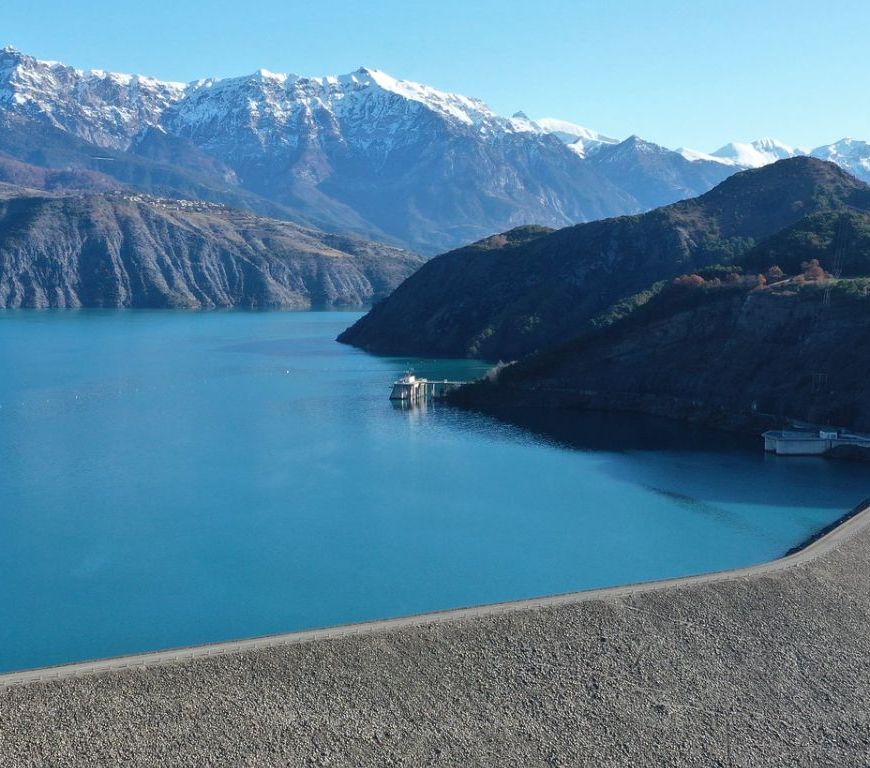
Feature photo edited from © Martin Laurenceau In their latest Perspective, Morgane Brosse and colleagues delve into the impact of human efforts to reduce or mitigate climate change, its effects on alpine freshwater environments and the role of specific management and policy decisions in determining the nature of these impacts. In an effort to address the threat of global change, much pressure is put on … Continue reading The importance of indirect effects of climate change adaptations on alpine and pre-alpine freshwater systems

Functional Biofilm on Intertidal Flats: A New Conservation Priority for Shorebirds

Intertidal flats are essential foraging areas for shorebirds but are severely impacted by climate and anthropogenic change. In their latest review, Kuwae and colleagues explore the effects of interventions that focus on intertidal biofilm for shorebird recovery. A version of this post is available in Japanese. Why shorebird species have been plummeting in numbers worldwide remains a subject of intense speculation and mounting conservation concern. However, … Continue reading Functional Biofilm on Intertidal Flats: A New Conservation Priority for Shorebirds