Holiday snapshots can help us to understand conservation sites

In their recent article, Quantifying wildlife watchers’ preferences to investigate the overlap between recreational and conservation value of natural areas, Mancini et al. discovered just how much a trawl through photo sharing and social media sites can tell us about conservation value. Associate Editor, Yolanda Wiersma explains more. We have all have experienced seeing someone’s holiday through their camera lens. Prior to the advent of … Continue reading Holiday snapshots can help us to understand conservation sites

Shining a light on indirect interactions

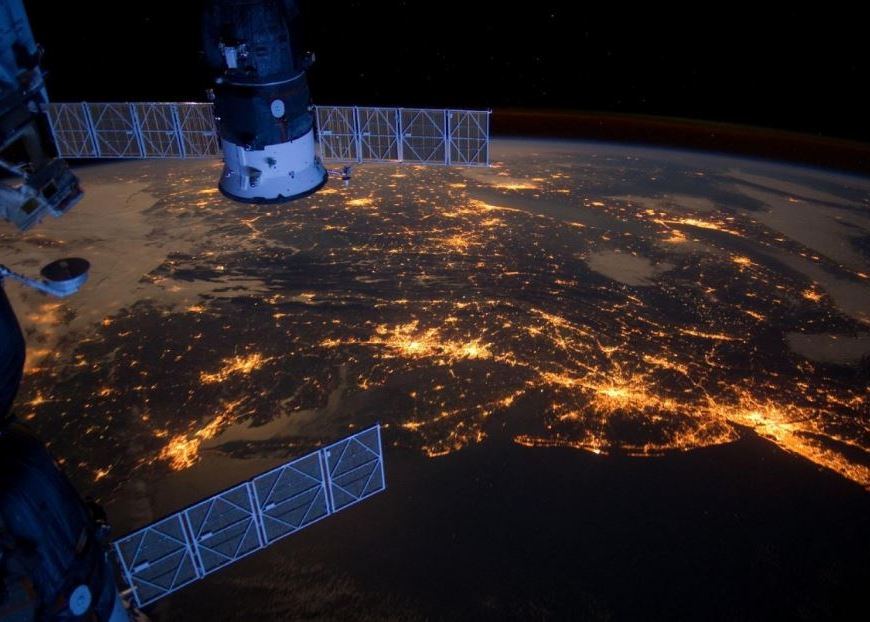
Many of us are familiar with direct effects of light pollution but how do these effects cascade and have wider implications? Associate Editor, Owen Lewis discusses the recently published article by Bennie et al. Artificial light at night causes top‐down and bottom‐up trophic effects on invertebrate populations. You’ve probably seen the images of a night-time earth taken from space: the cities of Europe and North … Continue reading Shining a light on indirect interactions

Ostrom’s framework: where people and nature meet

Presenting a framework to evaluate the sustainability of different social-ecological systems: Associate Editor, Cristina Garcia discusses the recently published paper, Quantifying ecological and social drivers of ecological surprise by Filbee‐Dexter et al. Conservation Biology has operated under different paradigms since the 1960s, when the preservation of pristine natural ecosystems and species was the frontmost goal under the ‘nature itself‘ paradigm. More recently, conservation biologists have recognized the ‘people … Continue reading Ostrom’s framework: where people and nature meet

Stress on the ski slope: individual capercaillies show different coping styles

As part of our cross-journal series for Endangered Species Day, Journal of Applied Ecology Associate Editor, Marc-André Villard considers Coppes et al.’s research around human-induced stress, and what this means for vulnerable populations. The full article, The importance of individual heterogeneity for interpreting faecal glucocorticoid metabolite levels in wildlife studies is available in Journal of Applied Ecology. Ecologists have long been aware that individual animals vary … Continue reading Stress on the ski slope: individual capercaillies show different coping styles

Integrating socio-economic and ecological data leads to better management recommendations

Comparing the effects of habitat fragmentation with those of human persecution on the Chilean güiña, Associate Editor, Kulbhushansingh Suryawanshi discusses the recent article, A spatially integrated framework for assessing socioecological drivers of carnivore decline by Gálvez et al. When trying to understand the distribution and abundanceof species, very often, ecological studies ignore the interactions these animals have with one of the most ubiquitous species on the planet, the human! … Continue reading Integrating socio-economic and ecological data leads to better management recommendations

Bears on the move: effects of human development and climate change on hibernation in a large carnivore

How is climate change affecting both black bear hibernation and our interactions with the species? Associate Editor, Claudia Bieber comments on the recent article, Human development and climate affect hibernation in a large carnivore with implications for human–carnivore conflicts by Heather Johnson et al. As we were enduring extremely high summer temperatures in Vienna, it was indeed refreshing to find a manuscript dealing with hibernation in … Continue reading Bears on the move: effects of human development and climate change on hibernation in a large carnivore

Spotlight: How do renewable energy installations affect wildlife?

In the first post of its kind for The Applied Ecologist’s blog, Dr Lucy Wright, RSPB Principal Conservation Scientist, discusses five articles published in the latest issue of Journal of Applied Ecology, which have been grouped into a special profile on wildlife and renewable energy. All five papers are currently free to read online. Renewable energy is widely accepted to be a vital part of … Continue reading Spotlight: How do renewable energy installations affect wildlife?

Managing species and reducing human–wildlife conflicts

This blog post is part of the blog series ‘Authors in Asia’, to accompany the recent Virtual Issue in Journal of Applied Ecology. You can read other posts in this series here. This post features three manuscripts which look at reducing human–wildlife conflicts and managing species. First, Toshifumi Minamoto discusses his paper ‘A basin-scale application of environmental DNA assessment for rare endemic species and closely … Continue reading Managing species and reducing human–wildlife conflicts

People, predators and perceptions

This guest post was written by Kulbhushansingh Suryawanshi, who was awarded the 2013 Southwood Prize for his paper People, predators and perceptions: patterns of livestock depredation by snow leopards and wolves published with Yash Veer Bhatnagar, Stephen Redpath and Charudutt Mishra. Carnivores and pastoralist make very uneasy neighbours! Carnivores affect the livelihood of the pastoralist by preying on the livestock, and pastoralists kill the carnivores … Continue reading People, predators and perceptions