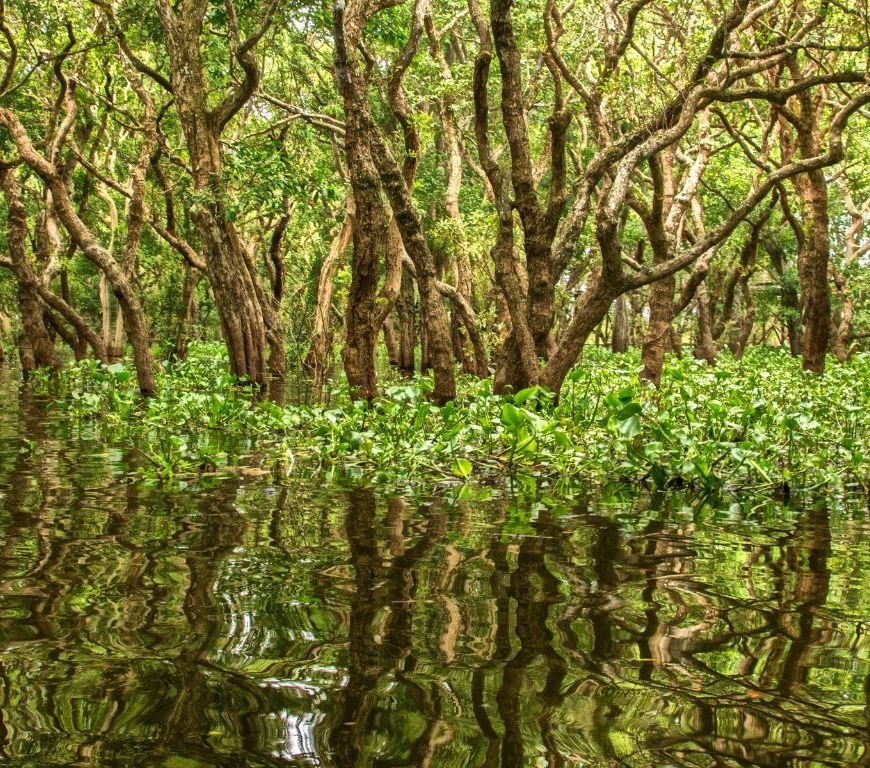
Does logging help or harm Borneo’s bats?

Natalie Yoh and Dave Seaman discuss their recently published research article that uses remote sensing to investigate the effects of logging on aerial insectivorous bats in Southeast Asia. Findings indicate that logged forests can provide an important refuge and several species that respond predictably to logging could be targeted for biodiversity monitoring using acoustic and capture-based methods. “Bats make up around 40% of Borneo’s mammal … Continue reading Does logging help or harm Borneo’s bats?

Chronic declines and Red Listing: Are hazel dormice Endangered?

Shortlisted for the Georgina Mace Prize 2023 Ellie Scopes describe her team’s latest article re-assessing the extinction risk and conservation status of hazel dormice (Muscardinus avellanarius) using long-term monitoring data. Threats assessments and conservation priority often become entangled, despite different aims. Whilst threat assessments focus on the proximity of the species to extinction, usually with objective guidelines, conservation priority is more subjective and will involve … Continue reading Chronic declines and Red Listing: Are hazel dormice Endangered?

Mahmood Soofi: Quantifying the relationship between prey density, livestock and illegal killing of leopards

Shortlisted for the Southwood Prize 2022 Mahmood Soofi talks us through his research project which saw him and colleagues use ranger-collected data on illegal leopard killings in Iran and an N-mixture model to quantify relationships between livestock, prey density and illegal killing. Overexploitation and carnivores Overexploitation is one of the major threats to biodiversity in many parts of the world, which is driving many species … Continue reading Mahmood Soofi: Quantifying the relationship between prey density, livestock and illegal killing of leopards

Deqiang Ma: The consequences of coastal offsets for fisheries

Shortlisted for the Southwood Prize 2022 Deqiang Ma talks us through his and colleagues’ research article which uses a case study of mangrove and seagrass habitats in Queensland, Australia to consider different policies regarding offsetting impacts on fish habitats. The issue Globally, ecosystem services are imperiled due to development, especially in coastal and marine areas. To achieve no net loss of ecosystem services through offsetting … Continue reading Deqiang Ma: The consequences of coastal offsets for fisheries

Lucy Dowdall: The Natural Capital approach to estuaries

Shortlisted for the Georgina Mace Prize 2022 In their latest Perspective, Lucy Dowdall and colleagues present a framework for successful recovery of nature in estuaries using the Natural Capital approach. Estuaries are the transitional zones between freshwater rivers and saltwater seas. They are also some of the most complex and unique habitats on earth. They provide important habitats for a wide range of key species, … Continue reading Lucy Dowdall: The Natural Capital approach to estuaries

Kieran Gething: Predicting invertebrate richness and rarity in aquatic-terrestrial ecosystems

Shortlisted for the Georgina Mace Prize 2022 In their latest research, Kieran Gething and colleagues use a citizen science habitat survey to predict the richness and rarity of invertebrate communities in frequently inundated river sediments in order to guide monitoring and management of these dynamic habitats. River channels and their surrounding areas are dynamic ecosystems in which the extent of water varies in space and … Continue reading Kieran Gething: Predicting invertebrate richness and rarity in aquatic-terrestrial ecosystems

Multiple incentives to harvest can increase the extinction risk of rare species

Ryan Almeida talks us through recent research on extinction risk with Juan Bonachela and Julie Lockwood. Through a case study on the ground pangolin, or the Smutsia temminckii, the study uses models to consider rare species extinction risk and the rate at which overexploitation occurs. The economics of exploitation Overexploitation, the unsustainable harvest of species from the wild, is recognized as one of the “big … Continue reading Multiple incentives to harvest can increase the extinction risk of rare species

How can soundscapes enhance recruitment and habitat building on new oyster reef restorations?

Author Dominic McAfee talks us through his and colleagues’ recently published research article which experimented with the use of home-made speakers to boost oyster recruitment at sites throughout Australia. We’ve all, at one time or another, used music as a band aid. Perhaps to mend a broken heart, or to help us through challenging times. And in this regard, it seems we are not alone … Continue reading How can soundscapes enhance recruitment and habitat building on new oyster reef restorations?

FAR-sighted conservation: Facing the inevitability of ongoing environmental change

Chris Thomas and colleagues describe their latest Perspective article outlining a new framework – Facilitate-Accept-Resist (FAR) – that operationalizes conservation decision-making in a way that leads to greater adoption of positive biodiversity change. Conservation is in a bind. The biological world is changing, and so are our human priorities. When we declare a nature reserve on the basis of a particular species, for example, is … Continue reading FAR-sighted conservation: Facing the inevitability of ongoing environmental change

MammalWeb: The potential of citizen science for large-scale mammal monitoring

Feature photo: A camera trap photo © MammalWeb (CC BY-SA 2.0) In their latest article, Pen-Yuan Hsing et al. describe the processes involved in launching and running MammalWeb – a successful camera trapping project that has produced over 440,00 classified image sequences and videos over the past decade. It is unlikely to come as a shock to readers of the Applied Ecologist that the world … Continue reading MammalWeb: The potential of citizen science for large-scale mammal monitoring