Fauna centinela: cómo el seguimiento GPS de especies necrófagas informa el cumplimiento de la normativa de gestión de carroñas


Patricia Mateo Tomás nos habla sobre el nuevo estudio de ella y sus colegas que tiene como objetivo evaluar cómo el seguimiento remoto de la vida silvestre puede contribuir a un mejor monitoreo de las leyes ambientales. A través del seguimiento experimental de lobos y buitres a través de GPS, los investigadores pudieron localizar un total de 489 cadáveres de ganado en España y Portugal. Continue reading Fauna centinela: cómo el seguimiento GPS de especies necrófagas informa el cumplimiento de la normativa de gestión de carroñas

Sentinel wildlife: GPS-tracking of scavengers to inform compliance with regulations on carcass disposal

Patricia Mateo Tomás talks us through her and colleagues’ new study which aims to assess how remotely tracking wildlife can contribute to the better monitoring of environmental laws. Through experimentally tracking wolves and vultures via GPS, researchers were able to locate a total of 489 livestock carcasses across Spain and Portugal. Continue reading Sentinel wildlife: GPS-tracking of scavengers to inform compliance with regulations on carcass disposal

Implementing expert knowledge of seabird ecology in the Canadian Arctic with fuzzy cognitive mapping

Author Jennifer Provencher shares her team’s latest study that trials a novel tool that helps factor the multiple stressors to seabirds in the Canadian Arctic identified by experts into a graphical ‘cognitive map’. Wildlife populations are commonly subject to multiple, interacting stressors (e.g. pollution, climate change), which makes predicting the outcomes of management actions and identifying priorities a challenge. In data-poor locations like the Arctic, … Continue reading Implementing expert knowledge of seabird ecology in the Canadian Arctic with fuzzy cognitive mapping

Rewild or Restore – how about doing both?

James Bullock and Nathalie Pettorelli summarise their Perspective piece that highlight the potential for integrating restoration and rewilding agendas into whole landscape approaches. As biodiversity continues to decline at an alarming pace, it is becoming more urgent to not only halt these losses but to reverse them. This reversal of losses, now commonly termed ‘nature recovery’, generally requires improving the state of terrestrial and aquatic … Continue reading Rewild or Restore – how about doing both?

What is the impact of publishing in Ecological Solutions and Evidence?

At the end of June 2023, Ecological Solutions and Evidence received its first Journal Impact Factor (JIF), and this served as a good moment in the journal’s developmental journey to reflect on what impact our published articles have had in our first three years. On 28th June 2023, Clarivate unveiled their annual Journal Citation Reports, which aims to support research integrity and promote accurate evaluation … Continue reading What is the impact of publishing in Ecological Solutions and Evidence?

Where and how do we manage for carbon in forestry in a changing world?

Lilli Kaarakka shares findings from her team’s review article assessing the evidence for the potential of specific improved forest management (IFM) practices to sequester carbon and enhance carbon storage in forests. Humans and forests share an infinite, intertwined history; forests have provided us with food, fuel and material for building homes, as well as a place of refuge and spirituality. In the most recent part … Continue reading Where and how do we manage for carbon in forestry in a changing world?

More and better hedgerows

Jo Staley, Lisa Norton (UK Centre for Ecology & Hydrology) and Rob Wolton (Devon Hedge Group and Hedgelink) present their latest Perspective article calling for and providing recommendations for improving and expanding hedgerows as a valuable habitat and carbon store. Hedgerows, and having more of them, are high on the policy agenda with a target for a 10% national increase by 2050 in the recent … Continue reading More and better hedgerows

How can we make solar energy work for the environment as much as for the climate?

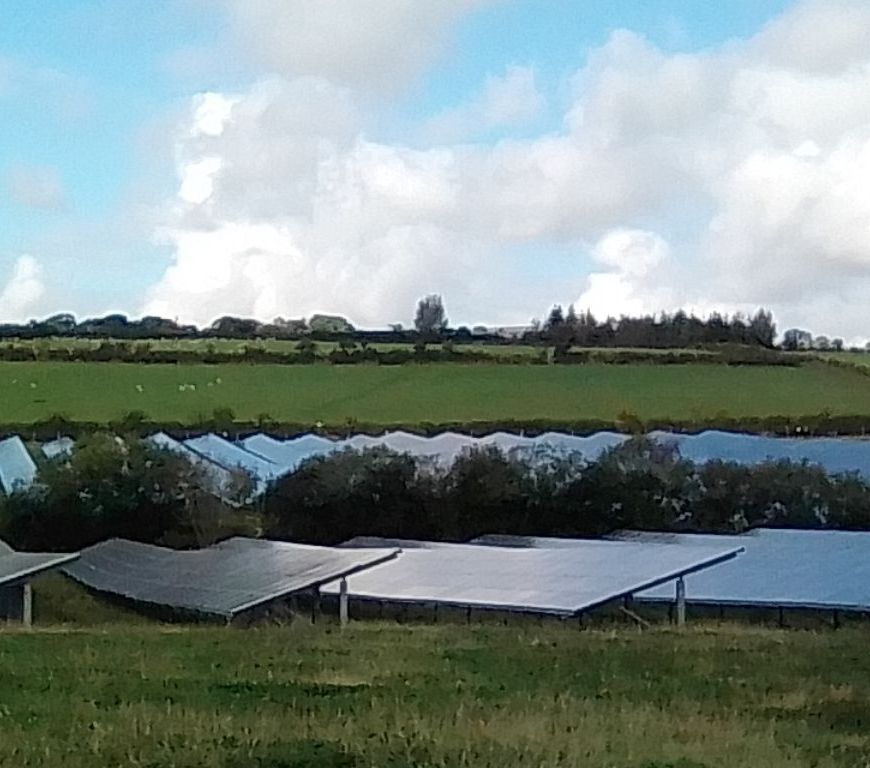
Drawing from his team’s latest Perspective piece, Fabio Carvalho provides an overview of the growth of the solar energy industry in the UK and how we can better evaluate its impact on the environment. Solar farms are fast becoming a common sight across Britain. It is not hard to spot one by the side of a road or by going up a hill and looking … Continue reading How can we make solar energy work for the environment as much as for the climate?

Effective knowledge exchange in forestry: What is it and what’s effective?

Co-authors Jenna Hutchen and MJ Robertson discuss how their latest research in interdisciplinary forest science led to a typology of Knowledge Exchange practices. Managing forests is not as simple as growing or cutting down trees. Global forest management is the complex interplay of government policies and directives, cultural and spiritual values, stakeholder perspectives, and efforts from both industry and conservationists to maintain ecological functions of … Continue reading Effective knowledge exchange in forestry: What is it and what’s effective?