Can ‘Citizen Scientists’ play a valid role in conservation management?

The emergence of citizen science in biodiversity monitoring has transformed the methods by which biodiversity surveys can be conducted. With the recent development of automatic visual identification tools, Pierre Bonnet and colleagues present two distinct case studies implementing citizen science and the use of Pl@ntNet, an automatic plant identification platform. This article is part of the BES cross-journal special feature on Citizen Science. Effective monitoring … Continue reading Can ‘Citizen Scientists’ play a valid role in conservation management?

Using grey literature as an evidence base for ecological research and practice

Applied Ecology Resources promote evidence-based decision making by curating a wide range of information sources including grey literature – but how can researchers and practitioners use this resource in their work? AER Chair Marc Cadotte provides the following advice. Information is key for evaluating the evidence base underpinning scientific understanding, and for developing effective and efficient management of ecosystems. Yet, the primary sources of information … Continue reading Using grey literature as an evidence base for ecological research and practice

ESE Editor’s Choice 1:1 – Understanding invasive plant phenology to better protect native island species

Laysan albatrosses amongst a field of golden crownbeard © David Dow Taylor et al.’s recent From Practice article details a case study on Midway Atoll that demonstrates the importance of understanding plant phenology to better control and eradicate non-native species. Lead Editor Carolyn Kurle highlights this article as the inaugural Ecological Solutions and Evidence Editor’s Choice. Invasive species on islands are an enormous problem; largely … Continue reading ESE Editor’s Choice 1:1 – Understanding invasive plant phenology to better protect native island species

Using phenology to guide invasive plant management

Successful restoration of degraded land often depends on well-timed interventions to control invasive species. In their recently published article, Taylor and colleagues present a case study of the effects of incorporating phenology information into invasive plant control operations at Midway Atoll National Wildlife Refuge (NWR), USA. The authors share their story below. Towards the end of April, millions of birds, including warblers, tanagers, buntings, grosbeaks … Continue reading Using phenology to guide invasive plant management

Expanding communication and inclusion in applied ecology: lessons from the past and the path ahead

Journal of Applied Ecology’s outgoing and incoming Executive Editors, Marc Cadotte and Jos Barlow, take stock of the growth of the journal and how applied ecology has developed as a discipline in the past decade. They also look forward to innovative new projects and publications aiming to further support ecological researchers and practitioners.  Applied ecological research has never before been more germane to the management … Continue reading Expanding communication and inclusion in applied ecology: lessons from the past and the path ahead

Busy practitioner? Think carefully before choosing which academic conference to attend

With conference season upon us, Errol Douwes (Environmental Planning and Climate Protection, Durban) shares advice on how to make the most of the academic conference circuit from a practitioner’s perspective. What tips do you have? Leave a comment below or Tweet us @JAppliedEcology. I’ve often wondered if and how other practitioners decide on which conferences they will attend. It’s very seldom that I’ve been invited … Continue reading Busy practitioner? Think carefully before choosing which academic conference to attend

Carnivores without borders: management of transboundary populations when objectives differ

Using the recent case study of wolverines in Scandinavia as an example, Associate Editor, Kulbhushansingh Suryawanshi highlights why management initiatives for transboundary populations need to collaborate across borders – and what happens when they don’t. Globally, carnivore conservation has two very different objectives. First, to protect the population of the carnivore species from going extinct. Second, to mitigate the impact of the carnivore on the … Continue reading Carnivores without borders: management of transboundary populations when objectives differ

Can living shorelines survive the rising seas?

Take a sneak preview into our new issue, which publishes this Friday and turns the Spotlight on conservation in marine habitats. The feature includes a Practitioner’s Perspective on designing climate‐resilient living shorelines, which Molly Mitchell and Donna Marie Bilkovic discuss here. Look out for an additional post bringing together all the papers in the Spotlight soon. Living shorelines are a form of shoreline protection that mimics … Continue reading Can living shorelines survive the rising seas?

The bear necessities of grizzly bear population recovery in Alberta, Canada

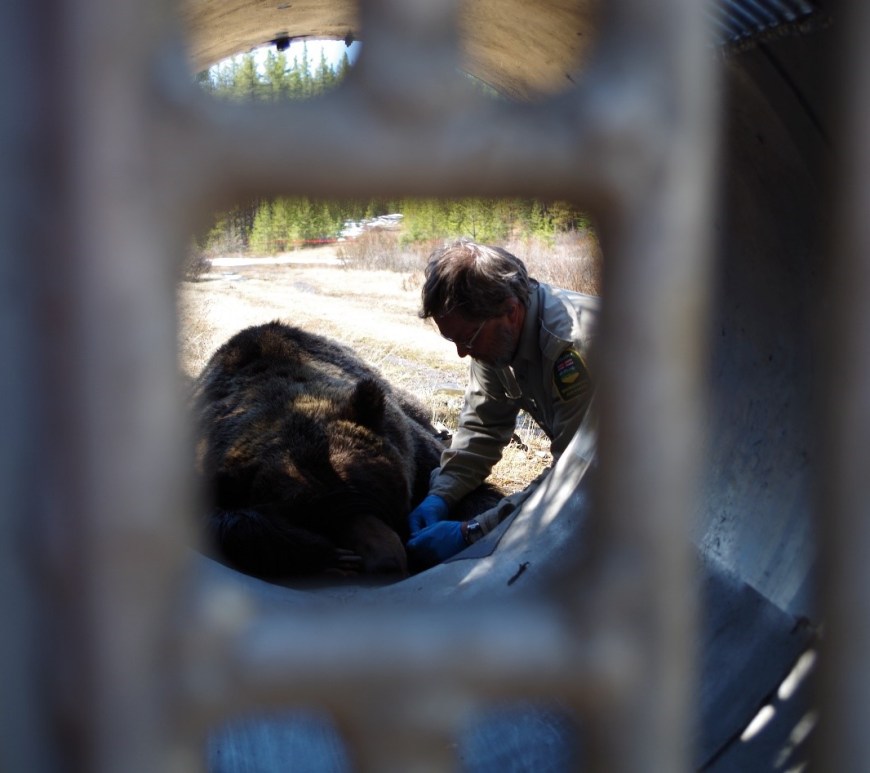
In our latest Practitioner’s Perspective, Towards grizzly bear population recovery in a modern landscape, Sean Coogan explains how new, multi-disciplinary approaches are being used to protect Canada’s threatened grizzly bears. The management and conservation of large carnivores can be socially controversial and politically charged. To make matters more complicated, the data required to make effective scientifically-informed management decisions may be lacking, or extremely difficult to … Continue reading The bear necessities of grizzly bear population recovery in Alberta, Canada

Solutions science – Ciencia de soluciones

Claire Wordley (Conservation Evidence project, University of Cambridge) looks at evaluation and evidence in testing interventions and asks the question, ‘What works in conservation’? A Spanish version  of this post is also available. Evidence in conservation: does it matter? What do scaring juvenile offenders, giving steroids to head trauma patients, and bat bridges all have in common? They are all examples of interventions that were … Continue reading Solutions science – Ciencia de soluciones