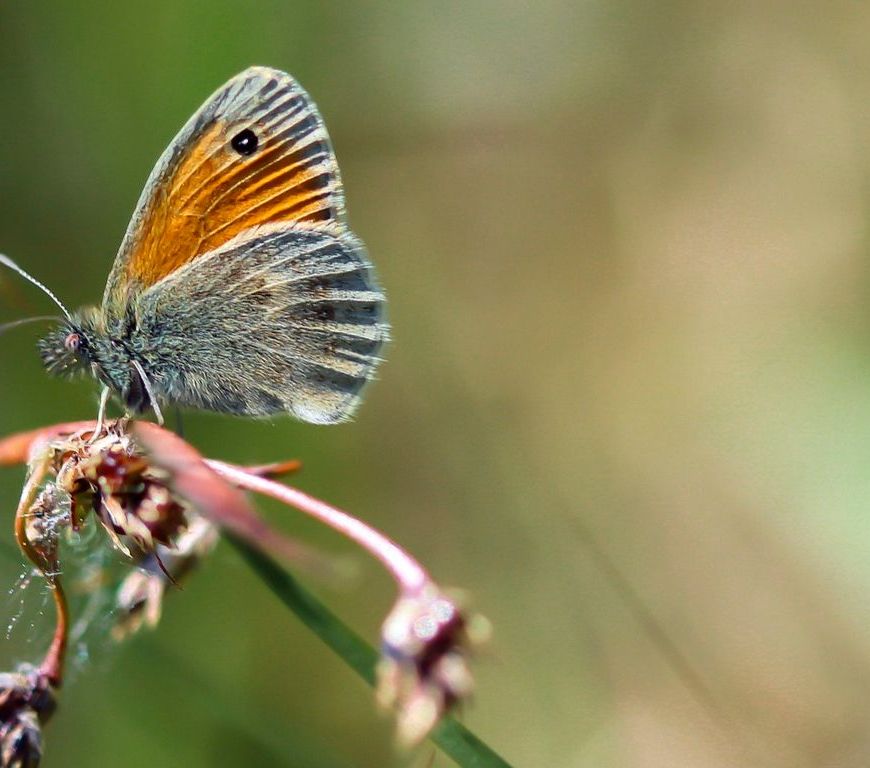
Supporting butterflies within smallholding oil palm plantations

Martina Harianja discusses the latest research into butterfly assemblages detailing how, alongside colleagues, they recorded over 1200 butterflies across 27 different oil palm plantations. Findings suggest that replanting oil palm and choice of mono or polyculture had relatively few effects on butterflies. However, management for specific features in plantations could benefit butterfly assemblages. Continue reading Supporting butterflies within smallholding oil palm plantations

Mendukung kupu-kupu di perkebunan kelapa sawit milik petani kecil

Martina Harianja membahas penelitian terbaru tentang kumpulan kupu-kupu yang merinci bagaimana, bersama rekan-rekannya, mereka mencatat lebih dari 1200 kupu-kupu di 27 perkebunan kelapa sawit yang berbeda. Temuan menunjukkan bahwa peremajaan kelapa sawit dan pilihan mono atau polikultur memiliki efek yang relatif kecil pada kupu-kupu. Namun, manajemen untuk fitur spesifik di perkebunan dapat menguntungkan kumpulan kupu-kupu. Continue reading Mendukung kupu-kupu di perkebunan kelapa sawit milik petani kecil

Powerful flowers

In a recent study, Charlotte Howard and her colleagues report that floral strips can be a practical and effective way to encourage natural pest control in commercial apple orchards. Floral margins can deliver a measurable increase in yield of undamaged fruit. We found that by using flower margins in conventional orchards, farmers were able to significantly reduce damage by a problematic global pest: the rosy … Continue reading Powerful flowers

A decadal study reveals that restoration guided by an umbrella species does not reach target levels

Author Albin Larsson Ekström discusses how their latest research evaluates the decadal effects of restoration aimed at the white-backed woodpecker on the biodiversity of saproxylic beetles. The study suggests that, for restoration to be successful, both continuous and repeated restoration efforts are needed. Restoration guided by the umbrella species concept A long history of intensive forest management has transformed the forests of Sweden into well-managed … Continue reading A decadal study reveals that restoration guided by an umbrella species does not reach target levels

Humans drive spatial variation in mortality risk for a threatened wolf population in a Canis hybrid zone

John Benson shares recent research, conducted alongside colleagues, which monitored the movement of eastern wolves in Algonquin Provincial Park, Canada. Results suggest that eastern wolves and dispersing canids survive poorly outside of APP, primarily due to human-caused mortality. Thus, expanding the threatened population outside of APP is unlikely under current management conditions. The challenge of human-caused mortality for threatened, hybridizing wolves in Canada When large … Continue reading Humans drive spatial variation in mortality risk for a threatened wolf population in a Canis hybrid zone

Local and landscape scale factors influence pollinators at solar parks

Authors Hollie Blaydes and Alona Armstrong describe their latest research to better understand how pollinators respond to increasing solar park developments. Ground mounted solar parks are becoming increasingly common features of our landscapes and are set to play a pivotal role on the path to net zero. Currently taking up ~15,000 hectares across the UK, more land will be needed for solar parks to meet … Continue reading Local and landscape scale factors influence pollinators at solar parks

A disposição da plantação de café pode aumentar a produtividade e a sustentabilidade?

Gudryan J. Baronio discute sobre o recente estudo, conduzido em colaboração, que enfatiza o papel fundamental dos polinizadores na produção de café e seu impacto nas características dos frutos e sementes. As conclusões do estudo apoiam a otimização dos cafezais através da preservação da vegetação nativa para aumentar a produção de café e conservar a biodiversidade. Continue reading A disposição da plantação de café pode aumentar a produtividade e a sustentabilidade?

Can coffee plantation design boost both productivity and sustainability?

Gudryan J. Baronio discusses a recent study, conducted alongside colleagues, which emphasises the key role of pollinators in coffee production and their impact on fruit and seed characteristics. Their findings support optimising coffee plantation design by preserving native vegetation to increase coffee yields and conserve biodiversity. Continue reading Can coffee plantation design boost both productivity and sustainability?

Climate challenges in savannas: How herbivore communities chart the course

Dr. Katja Irob summarises their latest study, conducted alongside colleagues, which analysed the impacts of climate change and rangeland management on degradation in Savanna ecosystems of southern Africa. Findings suggest that, in the face of climate uncertainty, farmers’ most effective strategy for securing their livelihoods and ecosystem stability is to integrate browsers and apply management of mixed herbivore communities.  Savannas as hot spots of environmental … Continue reading Climate challenges in savannas: How herbivore communities chart the course

Weather forecasts can help us save migratory birds from collisions with city buildings

In their latest research article, Sara Kross, Katherine Chen, Benjamin Van Doren and colleagues utilise 5 years of bird collision counts in New York City to determine the influence of nocturnal weather conditions and bird migration traffic rates on collisions with buildings. Migration is already a particularly dangerous part of the annual life cycle of many birds, and it’s estimated that collisions with windows kills up … Continue reading Weather forecasts can help us save migratory birds from collisions with city buildings