Counting the ghosts of the mountains: sampling snow leopard populations at large spatial scales

Effective management of large carnivores requires robust monitoring at all scales. In their latest research, Manvi Sharma and colleagues describe the first systematic effort at estimating snow leopard populations at a large regional scale. The high-altitude mountains of the Himalaya are important habitats for unique flora and fauna adapted to these regions. The most charming of these species that has taken home here is the … Continue reading Counting the ghosts of the mountains: sampling snow leopard populations at large spatial scales

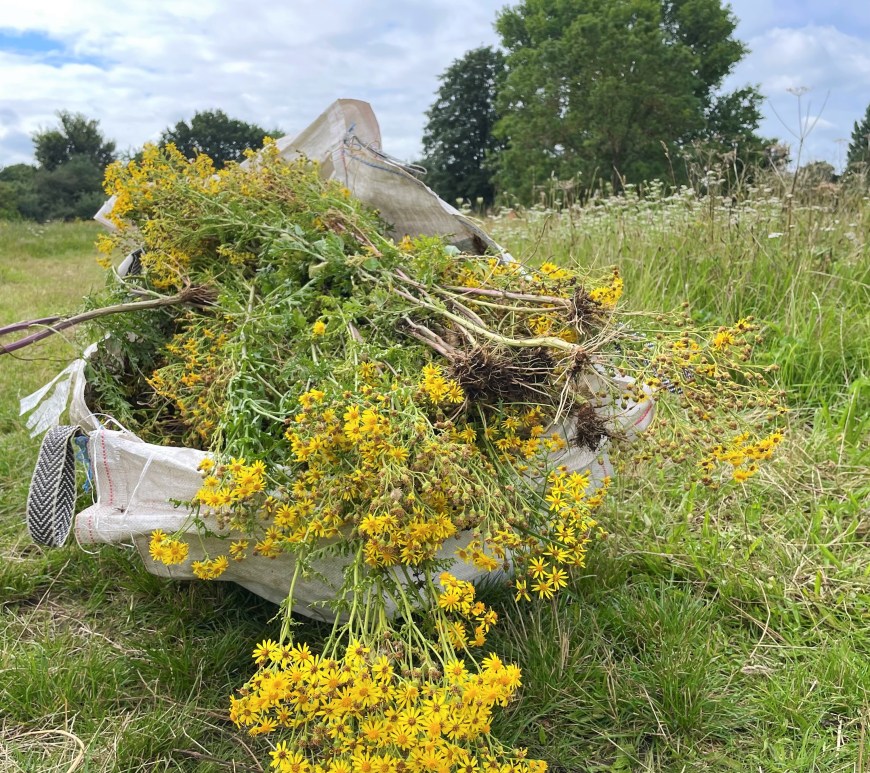
The Disproportionate Value of ‘Weeds’ to Pollinators and Biodiversity

In their latest research, Nicholas Balfour and Francis Ratnieks use multiple datasets to compare the biodiversity value of the plant species classified as ‘injurious weeds’ by the UK’s 1959 Weeds Act, with those species stipulated by DEFRA for pollinator targeted agri-environmental options. In the UK, five species of native wildflowers are classified as “injurious weeds” in the 1959 Weeds Act. Three of them are frequently … Continue reading The Disproportionate Value of ‘Weeds’ to Pollinators and Biodiversity

Cutting non-native trees helps, but may not be enough to restore coastal scrub invaded by pines

Invasive non-native trees can cause structural and functional changes in plant communities, but how do their impact change over time? Michele de Sá Dechoum and colleagues explore this in their latest research on a coastal ecosystems in southern Brazil. We learn, since growing up, that we should plant trees. There is no doubt that trees have very important environmental and social roles, especially in the … Continue reading Cutting non-native trees helps, but may not be enough to restore coastal scrub invaded by pines

Not all hosts are equal: creating relevant questions for wildlife disease management

In their latest research, Will Rogers and colleagues use an age- and sex-structured simulation model to explore harvest-based management of CWD under three different transmission scenarios that all generate higher male prevalence. In many host-pathogen systems, males tend to be more diseased than females. This can be the result of many different factors such as the effects of testosterone on immune function and different social … Continue reading Not all hosts are equal: creating relevant questions for wildlife disease management

Shortlist announced for Southwood Prize early career researcher award

Each year Journal of Applied Ecology awards the Southwood Prize to the best paper in the journal by an author at the start of their career. Today we present the shortlisted papers for this year’s award, based on the previous (58th) volume of the journal. The winner will be selected in the coming weeks, so watch this space for future announcements. This year’s shortlisted candidates are: Reduced … Continue reading Shortlist announced for Southwood Prize early career researcher award

Shortlist announced for Chico Mendes Prize early career practitioner award

After announcing the Chico Mendes Prize at the end of 2021, we present the shortlisted articles for this year’s Chico Mendes Prize – awarded to the best Practice Insights article published by an early career practitioner – based on the first two volumes of the journal. The Chico Mendes Prize is awarded every two years to celebrate and honour the work of on-the-ground practitioners and … Continue reading Shortlist announced for Chico Mendes Prize early career practitioner award

Shortlist announced for Georgina Mace Prize early career researcher award

Each year, Ecological Solutions and Evidence awards the Georgina Mace Prize to the best research article published by an early career author. Today, we present the shortlisted articles for this year’s award based on the previous volume (2nd) of the journal. Having announced the name of ESE’s early career researcher prize in December 2021, this will be the first year we award the prize in honour … Continue reading Shortlist announced for Georgina Mace Prize early career researcher award

Acelerando la sucesión secundaria: uso de árboles tolerantes a la sombra para la restauración del bosque de niebla

Esta publicación de blog también está disponible en inglés aquí. Tarin Toledo-Aceves y sus colegas describen sus últimas investigaciones y la importancia de los árboles tolerantes a la sombra en los proyectos de restauración forestal Las iniciativas de reforestación y restauración comúnmente utilizan especies de árboles pioneras de rápido crecimiento. Sin embargo, un alto número de especies tolerantes a la sombra se encuentran amenazadas por … Continue reading Acelerando la sucesión secundaria: uso de árboles tolerantes a la sombra para la restauración del bosque de niebla

Accelerating secondary succession: using shade-tolerant trees for cloud forest restoration

This blog post is also available in Spanish here. Tarin Toledo-Aceves and colleagues describe their latest research and the importance of shade tolerant trees in forest restoration projects. Reforestation and restoration initiatives commonly use fast-growing pioneer tree species. However, a high number of shade-tolerant species are threatened by deforestation and overharvesting, and unlike pioneer species, they have no seed banks on the ground and are … Continue reading Accelerating secondary succession: using shade-tolerant trees for cloud forest restoration

How do you solve a problem like Molinia?

The increasing dominance of the invasive purple moor grass (Molinia caerulea) on blanket bogs is a growing threat to diversity and carbon storage. In this post, practitioners from Moors for the Future Partnership give their account of the team’s latest research attempting to reverse these effects. Reducing the domination of Molinia caerulea on blanket bogs to a more Sphagnum-rich, characteristically boggy landscape has been a … Continue reading How do you solve a problem like Molinia?