Associate Editor mentoring: welcome to our new mentees 2018

Journal of Applied Ecology is please to offer an Associate Editor mentoring opportunity, available to Early Career Researchers looking to gain more publications and editorial experience. Each mentee enters a two-year role in which they handle manuscripts as an Associate Editor with the support of their own Senior Editor mentor and the Editorial Office. Our new mentees for 2018-2019 are: Chi-Yeung (Jimmy) Choi Centre for … Continue reading Associate Editor mentoring: welcome to our new mentees 2018

Issue 55:2

Issue 55:2 includes a Spotlight on Decision making under uncertainty. Other topics include urban ecology, population monitoring, tropical forest restoration and more. Here we take a look at some of the articles published in this issue. Decision making under uncertainty Senior Editor, Michael Bode on this issue’s selection of Spotlight papers How does grazing by wild ungulates and livestock affect plant richness? This issue’s Editor’s Choice Jaguar … Continue reading Issue 55:2

Ecological traps for large-scale invasive species control

Predicting recolonisation areas favoured by American mink is a step towards invasive species control, according to this new article by Melero et al. Ecological traps for large-scale invasive species control: Predicting settling rules by recolonising American mink post-culling is published today in Journal of Applied Ecology. Invasive species present daunting challenges to conservationists because of the scale over which their impact on native biodiversity plays out. … Continue reading Ecological traps for large-scale invasive species control

How important is seagrass for blue carbon?

Seagrass is key for carbon storage but shading from man-made structures is putting seagrass meadows at risk. Associate Editor Nathalie Butt discusses the recent article, Effects of small-scale, shading-induced seagrass loss on blue carbon storage: Implications for management of degraded seagrass ecosystems by Stacey Trevathan-Tackett et al. Carbon storage in the sea Given ever-increasing global emissions, natural systems and organisms that can absorb and store … Continue reading How important is seagrass for blue carbon?

Welcome to our new Associate Editors 2018

This year we are pleased to welcome seven new Associate Editors to the Journal of Applied Ecology Editorial Board, following our recent cross-journal Associate Editor open call. Our new editors are: Lars Brudvig Michigan State University, USA Lars’ research investigates how human activities impact the biodiversity and functioning of ecosystems and approaches to their restoration. He approaches these topics through the application of theory to environmental … Continue reading Welcome to our new Associate Editors 2018

New radar satellite imagery tracks agricultural land use intensity at landscape scales

Ruth Howison comments on recent article, Quantifying landscape-level land-use intensity patterns through radar-based remote sensing. Sentinel 1 radar imagery strongly predicts agricultural land use intensity across whole landscapes at the resolution of individual fields. In combination with extensive ground surveys, we developed a new analytical technique to summarize temporal variation in radar satellite data (i.e. variation in surface roughness) in north-western Europe. Higher variation corresponded strongly … Continue reading New radar satellite imagery tracks agricultural land use intensity at landscape scales

Ensuring sustainable açaí fruit production in the Amazon river delta

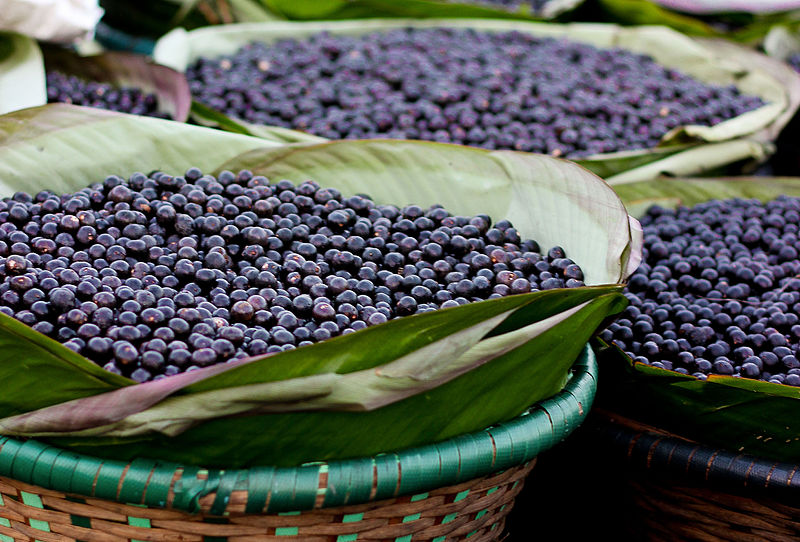
With açaí fruit becoming increasingly popular, it is important to understand how farming management practices are affecting vital pollination services. Associate Editor, Ainhoa Magrach comments on the recent article, Anthropogenic disturbance of tropical forests threatens pollination services to açaí palm in the Amazon river delta by Campbell et al. Worldwide the demand for the berries of the açaí palm is increasing. These anti-oxidant rich foods have … Continue reading Ensuring sustainable açaí fruit production in the Amazon river delta

One step back, two steps forward: impacts of disturbance on the population dynamics of an endangered species

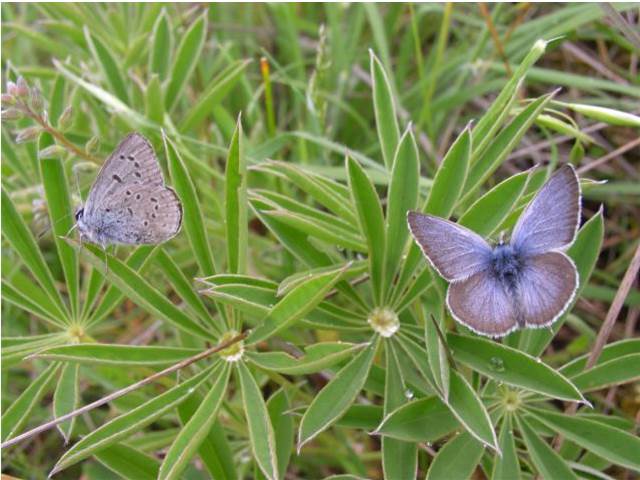
Associate Editor, Bret Elderd discusses the ‘double-edged sword’ fire presents to endangered species, based around the recent article by Warchola et al, Balancing ecological costs and benefits of fire for population viability of disturbance-dependent butterflies. The article features in issue 55:2 of Journal of Applied Ecology. In their recently published paper in Journal of Applied Ecology, Warchola et al. tackle a problem of conservation concern … Continue reading One step back, two steps forward: impacts of disturbance on the population dynamics of an endangered species

Spotlight: Decision making under uncertainty

Issue 55:2 of Journal of Applied Ecology features a Spotlight on Decision making under uncertainty. Senior Editor, Michael Bode discusses these Spotlight papers, chosen by the Editors to showcase the latest research in this area. Professor John Shepherd famously compared fisheries management to forestry, except that the trees were invisible and were constantly moving around. Most applied ecologists would sympathise, while simultaneously casting an envious eye … Continue reading Spotlight: Decision making under uncertainty

Editor’s Choice 55:2 – How does grazing by wild ungulates and livestock affect plant richness?

The Editor’s Choice for issue 55:2 is written by Associate Editor, Jörg Müller. The selected article is Livestock activity increases exotic plant richness, but wildlife increases native richness, with stronger effects under low productivity by David J. Eldridge et al. Browsing and grazing by wild ungulates and livestock affect the vegetation layer in complex ways, creating many management conflicts in silviculture, restoration and conservation. However, certain types of herbivory … Continue reading Editor’s Choice 55:2 – How does grazing by wild ungulates and livestock affect plant richness?