A safe passage: Protecting migratory birds in the North Sea

Maja Bradarić summarises how, alongside colleagues, they used 5 years of tracking bird radar data, weather and phenological variables to develop seasonal forecasts of bird migration over the southern North Sea. These forecasts of nocturnal bird migration may be used to define curtailment thresholds for offshore wind energy. In May 2023, turbines in two offshore wind farms in the Dutch North Sea came to a virtual … Continue reading A safe passage: Protecting migratory birds in the North Sea

Adaptive Resource Management: Achieving functional eradication of invasive snakes to benefit avian conservation

Melia Nafus summarises how, alongside colleagues, they applied an Adaptive Resource Management process across three field phases of snake removal. This enabled an evaluation of whether eradication was achievable and whether it was necessary to achieve an avian response. Invasive snakes Invasive species, particularly predators, harm natural ecosystems and are a leading driver in global biodiversity loss. Invasive snakes often cause substantial ecological harm as … Continue reading Adaptive Resource Management: Achieving functional eradication of invasive snakes to benefit avian conservation

Drone-induced flight initiation distances for shorebirds in mixed-species flocks

Joshua Wilson discusses recent research at Moreton Bay, Australia which saw Wilson and colleagues conduct over 200 drone approaches of shorebird flocks to measure how the birds respond to drones. Particular attention is paid to the critically endangered Eastern Curlew. Stress responses Imagine you’re resting in your bed when, out of the corner of your eye, you see something scuttling along the roof towards you. … Continue reading Drone-induced flight initiation distances for shorebirds in mixed-species flocks

Hotspots in the Grid: Avian sensitivity and vulnerability to collision risk from energy infrastructure interactions In Europe and North Africa

A new paper, led by Jethro Gauld from the University of East Anglia and colleagues from across Europe, demonstrates how GPS tracking data can be a powerful tool for identifying areas where birds are most sensitive to new renewable energy development due to collision risks. The transition to zero carbon energy is essential to avoid runaway climate change. As nations strive to achieve their Net … Continue reading Hotspots in the Grid: Avian sensitivity and vulnerability to collision risk from energy infrastructure interactions In Europe and North Africa

Integrating fire management policies within conservation planning: ‘win-win’ solutions for bird conservation and wildfire prevention

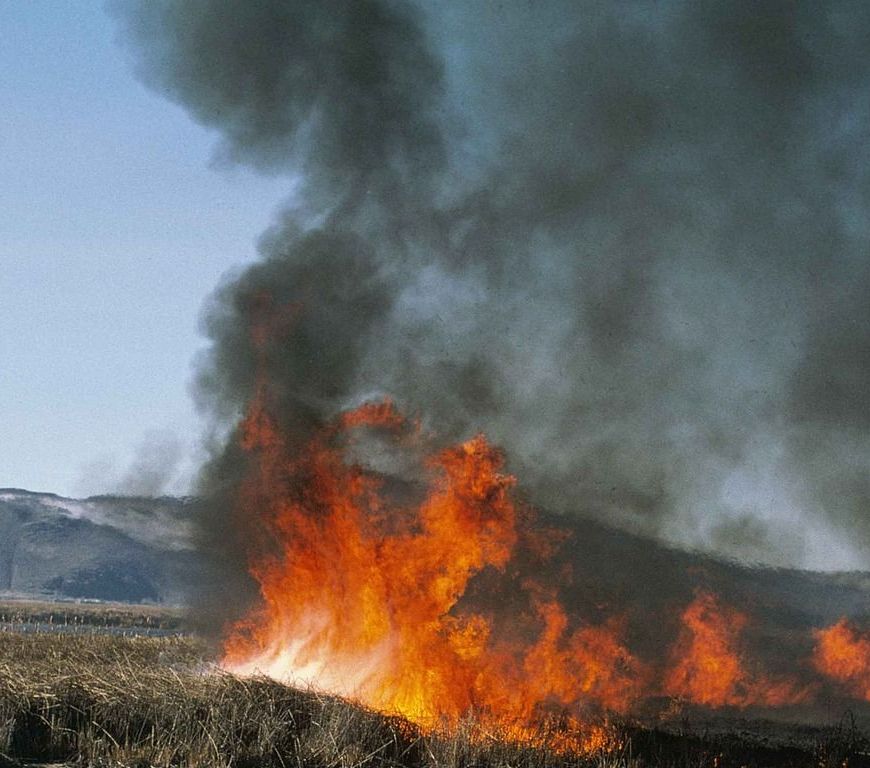
Adrián Regos and colleagues highlight how their conservation planning objectives can lead to ‘win-win’ situations for bird conservation and wildfire prevention in fire-prone abandoned landscapes. This follows the recent publication of their article, Trade‐offs and synergies between bird conservation and wildfire suppression in the face of global change. Protected areas play a key role in safeguarding biodiversity worldwide. However, their role can be seriously compromised … Continue reading Integrating fire management policies within conservation planning: ‘win-win’ solutions for bird conservation and wildfire prevention

La integración de las políticas de gestión de incendios forestales en la planificación de la conservación puede proporcionar soluciones beneficiosas tanto para la conservación de las aves como la prevención de incendios

En el siguiente articulo, Trade‐offs and synergies between bird conservation and wildfire suppression in the face of global change, Adrián Regos y coautores muestran como la integración de las dinámicas fuego-vegetación, las políticas de incendios forestales y sus objetivos en la planificación de la conservación puede conducir a situaciones beneficiosas tanto en términos de conservación de la avifauna como de prevención de incendios en paisaje … Continue reading La integración de las políticas de gestión de incendios forestales en la planificación de la conservación puede proporcionar soluciones beneficiosas tanto para la conservación de las aves como la prevención de incendios