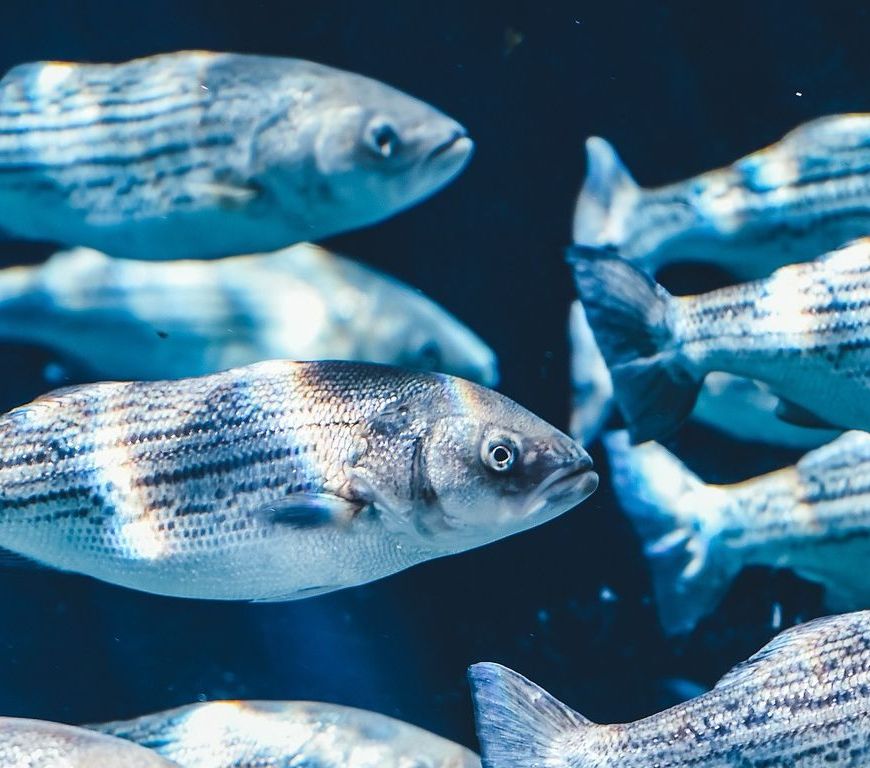
Does incorporating complexity into coastal engineering increase fish diversity along urban shorelines?

Authors of a recently published research article explain how, to enhance fish diversity, it is important to provide three-dimensional habitat architecture that incorporates a wide range of microhabitat sizes and types.  Habitat complexity Habitat complexity is a key driver of marine fish diversity and essential for determining structure and function of fish communities. Many fishes use benthic habitat features (e.g. holes, crevices, vertical reliefs, and … Continue reading Does incorporating complexity into coastal engineering increase fish diversity along urban shorelines?

Long-term Monitoring: The key to unlocking effective Marine Protected Area Management?

Christopher Honeyman talks us through recently published work which compared three Marine Protected Area (MPA) monitoring techniques, along with colleagues. Interestingly, each technique was shown to survey distinct groundfish community assemblages with varying levels of species diversity and richness. Therefore, combining multiple techniques may better allow managers to create the most comprehensive, effective and inclusive MPA monitoring regimes. A global phenomenon In response to human-caused … Continue reading Long-term Monitoring: The key to unlocking effective Marine Protected Area Management?

Using salt marshes for coastal protection: effective but hard to get where needed most

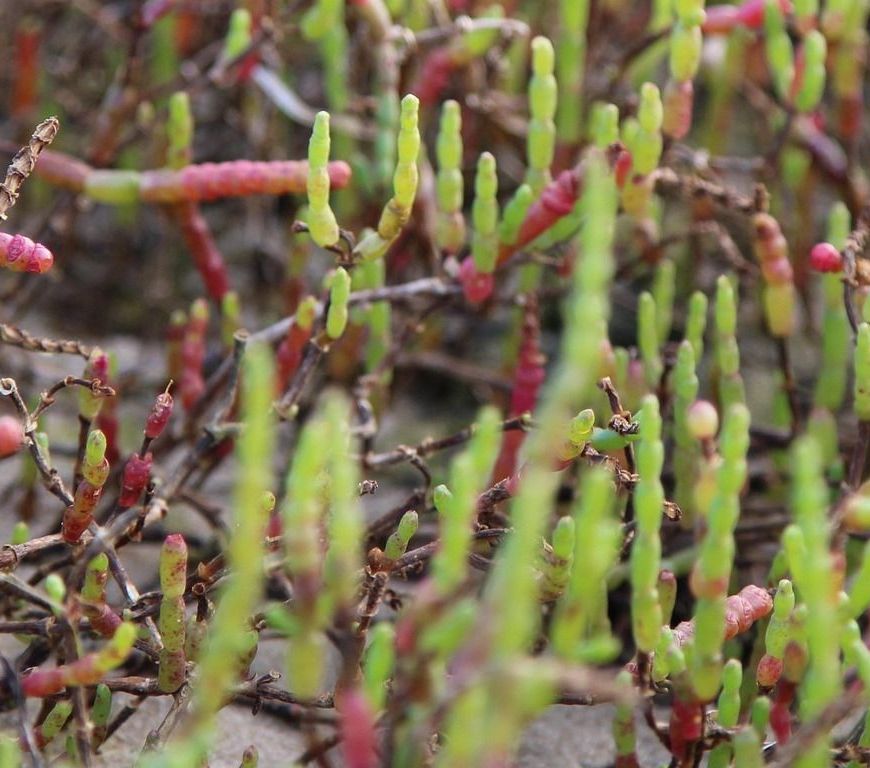
Beatriz Marin-Diaz talks about her and research colleagues’ latest article, where they monitored wave run-up on Dutch dikes over the course of 3 years. Through comparing different dike locations, some fronted by salt marshes and others fronted by bare tidal flats without vegetation, results could be linked to the long-term marsh development in the area. Introduction Salt marshes are wetlands in coastal areas that provide … Continue reading Using salt marshes for coastal protection: effective but hard to get where needed most

Cutting non-native trees helps, but may not be enough to restore coastal scrub invaded by pines

Invasive non-native trees can cause structural and functional changes in plant communities, but how do their impact change over time? Michele de Sá Dechoum and colleagues explore this in their latest research on a coastal ecosystems in southern Brazil. We learn, since growing up, that we should plant trees. There is no doubt that trees have very important environmental and social roles, especially in the … Continue reading Cutting non-native trees helps, but may not be enough to restore coastal scrub invaded by pines

Conservation grazing on saltmarsh: are agri-environment schemes helping?

Following a recently published Research Article, Jennifer Smart explores this question and considers ways we can continue to work with the farming community to achieve conservation goals. Jennifer worked on this post with the British Ecological Society Policy team. In contemporary landscapes, grazing by domesticated cattle and sheep has become an increasingly important aspect of grassland management. This is largely because natural processes such as … Continue reading Conservation grazing on saltmarsh: are agri-environment schemes helping?

Spotlight: Conservation in marine habitats

This month, Journal of Applied Ecology turns its focus to the health of the worlds’ oceans, with a new Spotlight, Conservation in marine habitats. Ignasi Montero-Serra summarizes the importance of this collection of work that provides a variety of cutting-edge tools to quantify the impact of major stressors, and to guide management actions across marine habitats; from the intertidal to the deep sea. Marine habitats … Continue reading Spotlight: Conservation in marine habitats

Welcome to our new Associate Editors – 2019

Towards the end of last year and the start of this, we welcomed some new faces to our Editorial Board. Get to know our new Associate Editors: Amy J. Dickman Wild Conservation Research Unit, Department of Zoology, University of Oxford Amy has more than 20 years’ experience working on large carnivores in Africa, specialising in human-carnivore conflict. She has an MSc from Oxford University and … Continue reading Welcome to our new Associate Editors – 2019

Mapping risk: new method to synthesize spatial data on human and animal use of coastal waters

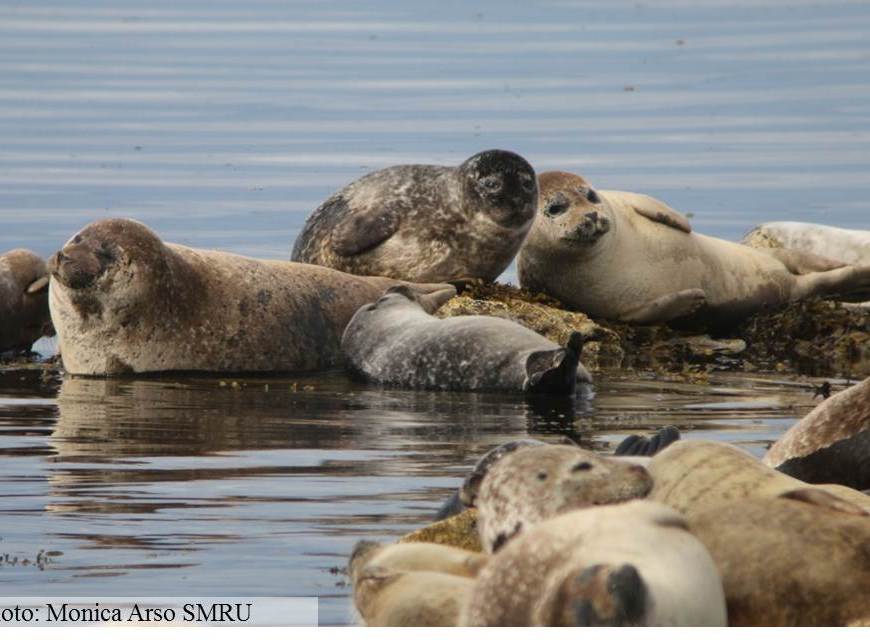
In this post Erin Ashe discusses a new article from Esther Jones and colleagues ‘Seals and shipping: quantifying population risk and individual exposure to vessel noise‘ An exciting new paper (Jones et al. 2017) outlines a rigorous and widely applicable framework to predict ship noise levels in coastal waters, assess noise exposure for two seal species, and explicitly incorporate these results into risk assessments and … Continue reading Mapping risk: new method to synthesize spatial data on human and animal use of coastal waters

Designing waterfronts that work for fish and people

In this post Stuart Munsch discusses his new article ‘Effects of shoreline armouring and overwater structures on coastal and estuarine fish: opportunities for habitat improvement‘ Shallow ecosystems facilitate the development and survival of juvenile fish. These areas are productive and provide fish with an abundance of small invertebrates produced in intertidal substrate, backshore vegetation, and the water column. In addition, predators are rare or ineffective … Continue reading Designing waterfronts that work for fish and people

The “bright side” of invasive species – with Portuguese and Spanish translations

In this post Karen Castillioni discusses a recent paper by Bianca Charbonneau and colleagues ‘A species effect on storm erosion: Invasive sedge stabilized dunes more than native grass during Hurricane Sandy‘. Karen has also provided Portuguese and Spanish translations of this post to reach out to Portuguese and Spanish readers interested in this topic. Journal of Applied Ecology is dedicated to making papers more accessible … Continue reading The “bright side” of invasive species – with Portuguese and Spanish translations