BES journal blogs round up: February 2019

February was another busy month across the British Ecological Society blogs. We’ve seen the launch of Special Features on ecological succession and advances in modelling demographic processes, as well as a cross-journal series on rewilding, a look at the physics behind predator and prey size ratios and an exploration of how climate change is affecting penguin interactions. Read on for more highlights. Functional Ecologists – … Continue reading BES journal blogs round up: February 2019

Welcome to our new Associate Editors – 2019

Towards the end of last year and the start of this, we welcomed some new faces to our Editorial Board. Get to know our new Associate Editors: Amy J. Dickman Wild Conservation Research Unit, Department of Zoology, University of Oxford Amy has more than 20 years’ experience working on large carnivores in Africa, specialising in human-carnivore conflict. She has an MSc from Oxford University and … Continue reading Welcome to our new Associate Editors – 2019

How to prioritise management when human and natural worlds collide

Udell et al. recently published a new way to prioritise and allocate speed restriction zones that will best protect wildlife from boat collisions. Associate Editor, Jonathan Rhodes explains how this research could be applied to a range of conservation efforts around biodiversity and human movements. Many threats to species of conservation concern arise due to collisions or interactions between species and people or between species … Continue reading How to prioritise management when human and natural worlds collide

Issue 55:6

Here are some of the highlights from our last issue of 2018 and our last issue to be published in print. You can also read issue 55:6 online here. Disentangling natural vs anthropogenic influences on predation: reducing impacts on sensitive prey Our latest Editor’s Choice article Cover stories: Cheetah chase Take a look at this selection of images telling the story behind our latest cover … Continue reading Issue 55:6

Is fencing the solution to human-elephant conflict?

Is fencing just a short-term solution for preventing human-wildlife conflict? In their recently published paper, Osipova et al. model the longer-term effects fencing can have on the vital movements of wildlife populations, using the African elephant as an example. See their work presented in this infographic: Read the full article, Fencing solves human‐wildlife conflict locally but shifts problems elsewhere: A case study using functional connectivity … Continue reading Is fencing the solution to human-elephant conflict?

Mitigating conflicts between agriculture and migratory geese: is shooting a viable option or just passing on the problem?

Following the recent article, Shooting may aggravate rather than alleviate conflicts between migratory geese and agriculture, Silke Bauer explains why management plans for migratory goose populations need to be considered across a broader scale. A challenge with developing management plans for migratory populations is that these populations use several sites in their annual cycle. Therefore, local actions may not only affect how migratory animals behave … Continue reading Mitigating conflicts between agriculture and migratory geese: is shooting a viable option or just passing on the problem?

Wind farms affect small birds too

Julia Gómez-Catasús explains the need for a 4.5km threshold between wind farms and small-sized birds, based on the recently published article, Wind farms affect the occurrence, abundance and population trends of small passerine birds: The case of the Dupont’s lark. Wind energy has experienced significant developments in recent decades, with China, United States, Germany, India and Spain being the main wind energy producers in the world. … Continue reading Wind farms affect small birds too

Where do wintering cormorants in Europe come from – and does it matter?

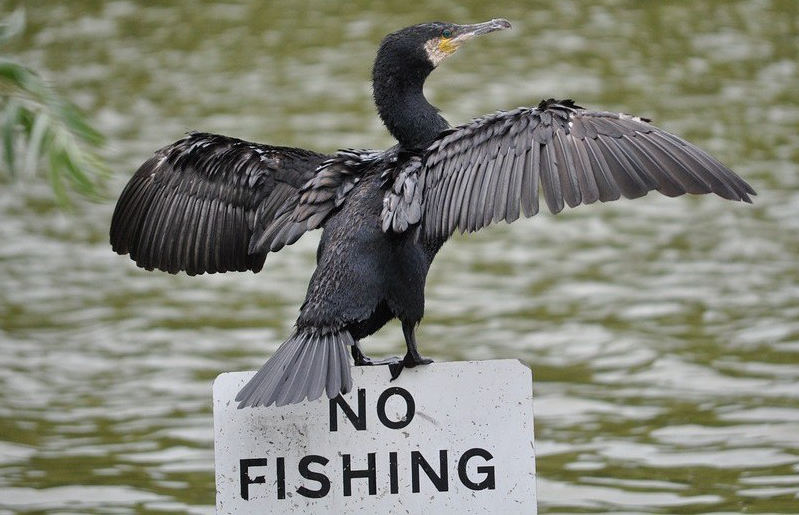
Morten Frederiksen discusses conflicts between wintering cormorants and fisheries, following the recent article, Where do wintering cormorants come from? Long-term changes in the geographical origin of a migratory bird on a continental scale. Cormorants are very efficient predators of fish in shallow waters. They are particularly good at exploiting artificially high densities of fish. Predictably, this has led to widespread conflicts with human fisheries interests. Although fishermen … Continue reading Where do wintering cormorants in Europe come from – and does it matter?

Integrating socio-economic and ecological data leads to better management recommendations

Comparing the effects of habitat fragmentation with those of human persecution on the Chilean güiña, Associate Editor, Kulbhushansingh Suryawanshi discusses the recent article, A spatially integrated framework for assessing socioecological drivers of carnivore decline by Gálvez et al. When trying to understand the distribution and abundanceof species, very often, ecological studies ignore the interactions these animals have with one of the most ubiquitous species on the planet, the human! … Continue reading Integrating socio-economic and ecological data leads to better management recommendations

Issue 55:1

To start 2018, we’ve compiled some of the highlights for our first issue of the year. As well as a Special Feature on Functional traits in agroecology, issue 55:1 includes topics such as conservation, invasives and agricultural landscapes. Here we take a look at some of the author and Editor comments on articles in this issue: Special Feature: Functional traits in agroecology Authors from the … Continue reading Issue 55:1