Spotlight: Conservation in marine habitats

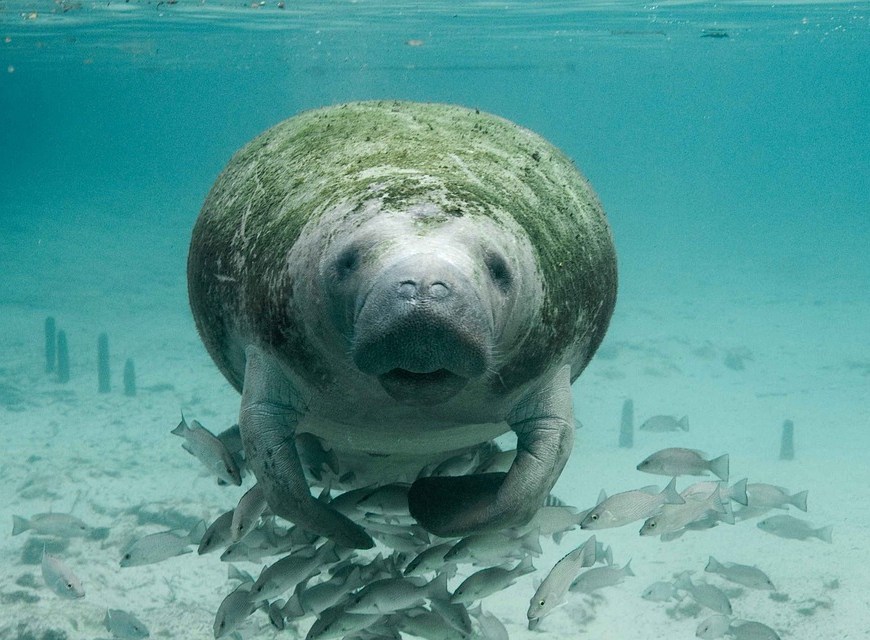
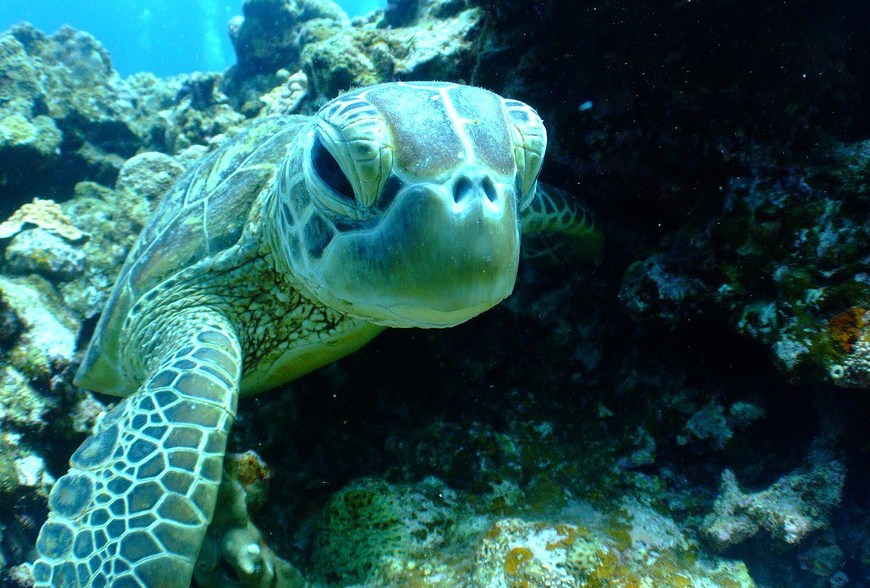
This month, Journal of Applied Ecology turns its focus to the health of the worlds’ oceans, with a new Spotlight, Conservation in marine habitats. Ignasi Montero-Serra summarizes the importance of this collection of work that provides a variety of cutting-edge tools to quantify the impact of major stressors, and to guide management actions across marine habitats; from the intertidal to the deep sea. Marine habitats … Continue reading Spotlight: Conservation in marine habitats

Can living shorelines survive the rising seas?

Take a sneak preview into our new issue, which publishes this Friday and turns the Spotlight on conservation in marine habitats. The feature includes a Practitioner’s Perspective on designing climate‐resilient living shorelines, which Molly Mitchell and Donna Marie Bilkovic discuss here. Look out for an additional post bringing together all the papers in the Spotlight soon. Living shorelines are a form of shoreline protection that mimics … Continue reading Can living shorelines survive the rising seas?

On the horizon: Plastic alternatives – the ecological impact is not always clear

Plastic and plastic pollution have been receiving a lot of attention in the media of late. But, as we explore alternative materials, how do we know what their long-term ecological impacts will be? Becky LeAnstey asks this question in our latest ‘On the horizon’ post.  A world without plastic is difficult to imagine, despite it having only been around for just over a century. Cheap manufacturing costs combined … Continue reading On the horizon: Plastic alternatives – the ecological impact is not always clear

Welcome to our new Associate Editors – 2019

Towards the end of last year and the start of this, we welcomed some new faces to our Editorial Board. Get to know our new Associate Editors: Amy J. Dickman Wild Conservation Research Unit, Department of Zoology, University of Oxford Amy has more than 20 years’ experience working on large carnivores in Africa, specialising in human-carnivore conflict. She has an MSc from Oxford University and … Continue reading Welcome to our new Associate Editors – 2019

How to prioritise management when human and natural worlds collide

Udell et al. recently published a new way to prioritise and allocate speed restriction zones that will best protect wildlife from boat collisions. Associate Editor, Jonathan Rhodes explains how this research could be applied to a range of conservation efforts around biodiversity and human movements. Many threats to species of conservation concern arise due to collisions or interactions between species and people or between species … Continue reading How to prioritise management when human and natural worlds collide

Infographic: Dynamic management tools

Heather Welch et al. provide an operationalization framework for implementing dynamic management tools to tackle a range of disturbance management goals, including minimization of protected species bycatch. See their work presented as an infographic here: Read the full open access article, Practical considerations for operationalizing dynamic management tools in Journal of Applied Ecology. Continue reading Infographic: Dynamic management tools

Reblog: Fishing forecasts can predict marine creature movements

Originally posted by The Conversation. Heather Welch, University of California, Santa Cruz; Elliott Lee Hazen, National Oceanic and Atmospheric Administration, and Stephanie Brodie, University of California, Santa Cruz Do you check the weather forecast before getting dressed in the morning? If you do, then you’re making a decision in real time, based on dynamic processes that can vary greatly over space and time. Marine animals … Continue reading Reblog: Fishing forecasts can predict marine creature movements

Infographic: Impacts of underwater noise – a helping hand

In their new Practitioner’s Perspective, Guiding principles for assessing the impact of underwater noise, published today (16th May 2018), Faulkner et al. present practical solutions for mitigating the effects of underwater noise on marine wildlife. See their work presented as an infographic here. Underwater noise pollution poses a global threat to marine wildlife, from charismatic ocean giants like the blue whale to ecosystem cornerstones such as … Continue reading Infographic: Impacts of underwater noise – a helping hand

Juvenile natural mortality is a hard parameter to estimate, but it can be done with pop-up archival tags

New research published today (9th May 2018) uses electronic tags to highlight the risk of shark mortality through unintentional capture in fishing gear. Associate Editor, Andre Punt, comments on the new paper by Benson et al., Juvenile survival, competing risks, and spatial variation in mortality risk of a marine apex predator. One of the most influential parameters in any population dynamics model is the rate of … Continue reading Juvenile natural mortality is a hard parameter to estimate, but it can be done with pop-up archival tags

Evaluating the temporal effectiveness of marine reserves

Assessing the effectiveness of marine reserves and evaluating species recovery after closure to towed mobile fishing gear; Associate Editor, Steph Januchowski-Hartley comments on the article, Recovery linked to life history of sessile epifauna following exclusion of towed mobile fishing gear by Kaiser et. al. Reserves, or protected areas, are frequently used to mitigate impacts from human uses. In marine waters these reserves are often established to afford … Continue reading Evaluating the temporal effectiveness of marine reserves