Restoring Landscapes: Knowledge Exchange Visit in the Cairngorms

In this series, we are promoting knowledge exchange in restoration around the world: from success to failures and anything in between! In this post Taylor Shaw from the Endangered Landscapes and Seascapes Programme shares their experience attending a Knowledge Exchange Visit hosted by Cairngorms Connect in Scotland, where restoration practitioners from across Europe met to discuss how science can support their work. The knowledge exchange … Continue reading Restoring Landscapes: Knowledge Exchange Visit in the Cairngorms

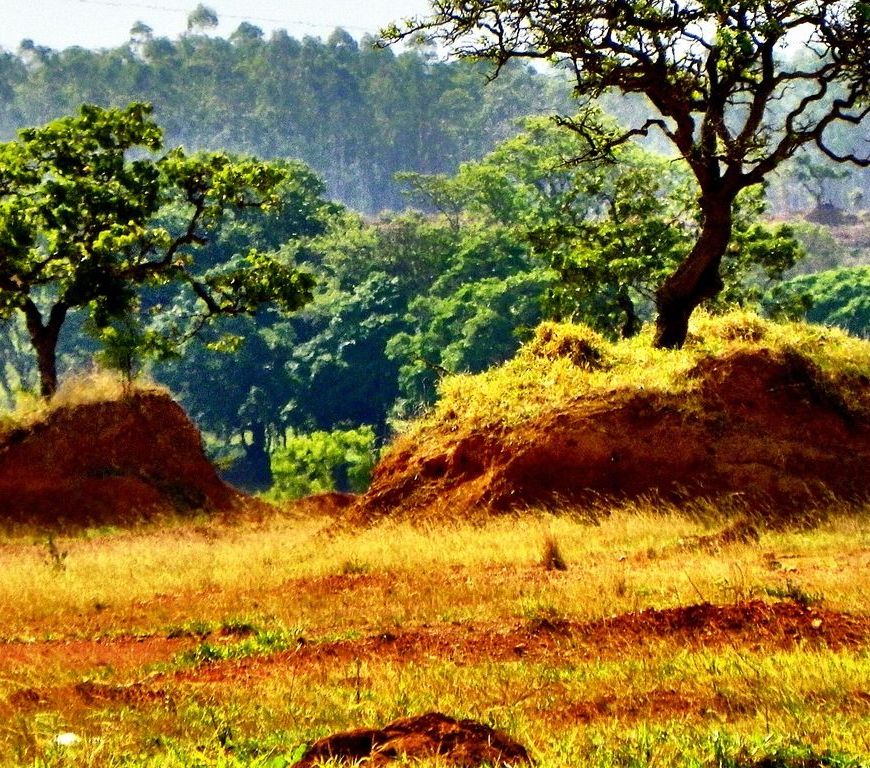
Natashi Pilon: Challenges and directions for open ecosystems biodiversity restoration: An overview of the techniques applied for Cerrado

Shortlisted for the 2023 Southwood Prize In this blog post, Natashi Pilon discusses their team’s analysis of 82 data sets from the literature and primary data collection, with the aim of assessing the effectiveness of passive and active restoration techniques applied in Cerrado open ecosystems. Restoration We are in the UN Decade on Ecosystem Restoration, and the consensus is stronger than ever that conservation is … Continue reading Natashi Pilon: Challenges and directions for open ecosystems biodiversity restoration: An overview of the techniques applied for Cerrado

Restoring Landscapes: Cairngorms Connect – a wild landscape in the making

In this new series, we hope to promote knowledge exchange in restoration and invite restoration practitioners to share their stories: successes, failures, implementation of learnings from other places and anything in between! To kick off the series, Sydney Henderson and Dr Pip Gullett share their story from Cairngorms Connect. Cairngorms Connect is a partnership of neighbouring land managers, committed to a bold and ambitious 200-year … Continue reading Restoring Landscapes: Cairngorms Connect – a wild landscape in the making

Our invaded world: India’s quest for ecosystem restoration

Ninad Mungi shares recent work, conducted with colleagues, which involved monitoring India’s levels of invasive plant species. This has knock-on effects for apex predators, such as tigers, who rely on their prey being able to access native species. Introduction In a world grappling with drastic ecological challenges, biological invasions have emerged as a pernicious threat to biodiversity, ecosystem functioning, and global health. While the impacts … Continue reading Our invaded world: India’s quest for ecosystem restoration

Predicting dispersal and conflict risk for wolf recolonisation in Colorado

Mark Ditmer discusses his and colleagues’ new research which aims to predict wolf movement and potential conflict hotspots following the state of Colorado’s decision to reintroduce gray wolves. This data may be used to offer practical, actionable recommendations for decision-makers. Animal movement and conflict risk Species’ ranges are shifting – and accurately predicting the way species disperse in novel areas can greatly enhance conservation efforts. … Continue reading Predicting dispersal and conflict risk for wolf recolonisation in Colorado

Resolving a heated debate: How useful is prescribed burning for lowland heaths?

Prescribed burning is a controversial management tool. Here, Barbara Smith discusses new research she and colleagues conducted into the impact of burning on lowland heaths at three trophic levels over a 20 year period. Its findings provide evidence for ecologists, land managers and policy makers to support decision making in protected area management. Background Lowland heathlands, with their unique assemblage of species, were created by … Continue reading Resolving a heated debate: How useful is prescribed burning for lowland heaths?

Natural recruitment should be a key goal of tree planting projects

Anna Gee, a PhD student at Imperial College London, talks us through ways in which we can help to restore forests through natural recruitment in this standalone piece. How do we decide what trees to plant for forest restoration? The approach of many restoration projects is to find what is known as a reference forest, a forest that has not been disturbed much by humans, … Continue reading Natural recruitment should be a key goal of tree planting projects

Can ecological restoration enhance the genetic diversity of plant species on a global scale?

Xinzeng Wei talks us through their recent meta-analysis, conducted with several colleagues, which found that ecological restoration does not significantly improve the genetic diversity of plant species as compared to reference or degraded populations. Wei et al instead suggest that using passive restoration, seeding, and mixed sources could significantly increase the genetic diversity of restored populations. The problem Human disturbance has led to several negative consequences … Continue reading Can ecological restoration enhance the genetic diversity of plant species on a global scale?

Eleanor Warren-Thomas: Blog re-look: Tropical peatland restoration

Shortlisted for the Southwood Prize 2022 In this blog re-look, Eleanor Warren-Thomas tells us about conducting research on the restoration of tropical peatlands, as well as the experiences of an early career ecologist. You can find the original blog post discussing Eleanor’s research in English here and in Indonesian here! The research process Can you summarise your research and how it advances the wider field? … Continue reading Eleanor Warren-Thomas: Blog re-look: Tropical peatland restoration

How can soundscapes enhance recruitment and habitat building on new oyster reef restorations?

Author Dominic McAfee talks us through his and colleagues’ recently published research article which experimented with the use of home-made speakers to boost oyster recruitment at sites throughout Australia. We’ve all, at one time or another, used music as a band aid. Perhaps to mend a broken heart, or to help us through challenging times. And in this regard, it seems we are not alone … Continue reading How can soundscapes enhance recruitment and habitat building on new oyster reef restorations?