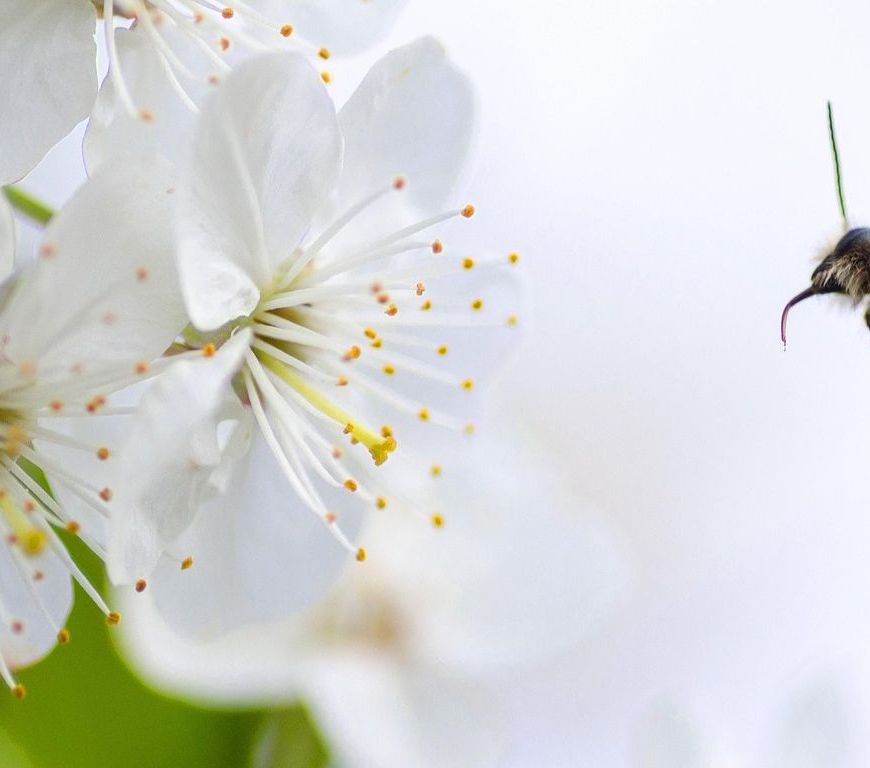
Kaixuan Pan: Dutch landscapes have lost insect-pollinated plants over the past 87  years

Shortlisted for the 2024 Southwood Prize Kaixuan Pan discusses recent research which assessed the changes in occurrences of plants pollinated by different modes, and explored the persistence of the observed changes under different environmental conditions. About the research Overview Our paper explores how plant communities in the Netherlands have changed over the past 87 years. By analyzing historical and contemporary vegetation data, we examined how … Continue reading Kaixuan Pan: Dutch landscapes have lost insect-pollinated plants over the past 87  years

Lijun Chen: Integrating variation in bacterial-fungal co-occurrence network with soil carbon dynamics

Shortlisted for the 2024 Southwood Prize Lijun Chen explores how bacterial-fungal interactions mediate soil organic carbon dynamics in the context of artificial forest ecosystems. About the research Overview Eucalyptus is one of the most widely planted tree species worldwide. It has been demostrated that long-term short-rotation practices of eucalyptus induced to declining of soil organic carbon content and ecosystem services capacity. Exploring the patterns of … Continue reading Lijun Chen: Integrating variation in bacterial-fungal co-occurrence network with soil carbon dynamics

Kylie Soanes: Do wildlife crossing structures mitigate the barrier effect of roads on animal movement?

Shortlisted for the 2024 Southwood Prize Kylie Soanes details how, alongside colleagues, they analysed 313 studies to determine whether wildlife crossing structures mitigate the barrier effect of roads on wildlife movement. About the research Overview Wildlife crossing structures are a common tool to help animals cross roads safely. While there’s clear evidence that these structures are used by wildlife, we wanted to dig deeper into … Continue reading Kylie Soanes: Do wildlife crossing structures mitigate the barrier effect of roads on animal movement?

Southwood Prize 2024: Shortlist announced for early career researcher award

Each year, Journal of Applied Ecology awards the Southwood Prize to the best paper in the journal by an author at the start of their research career. The following 10 papers, published in the 61st volume of the journal, have been shortlisted. Janina Heinen with ‘Diversified cropping strengthens herbivore regulation by providing seasonal resource continuity to predators’ Agostina Torres with ‘Inverse priority effects: The order and timing … Continue reading Southwood Prize 2024: Shortlist announced for early career researcher award

Southwood Prize 2023: Winner announced for early career researcher award

Journal of Applied Ecology is delighted to announce Dominic McAfee as the winner of the 2023 Southwood Prize! The award is given annually to the best article in the journal by an author at the start of their career. This year, Dominic was chosen by the Senior Editors from a strong shortlist of 12 articles.  Winner: Dominic McAfee Research: Soundscape enrichment enhances recruitment and habitat building on new oyster reef … Continue reading Southwood Prize 2023: Winner announced for early career researcher award

Oliver Wilson: Assessing the exposure of UK habitats to 20th- and 21st-century climate change, and its representation in ecological monitoring schemes

Shortlisted for the 2023 Southwood Prize Oliver Wilson explains how he, along with co-author Oliver Pescott, generated a metric of climate change exposure by quantifying the change in observed historical and predicted future conditions. They then compared patterns of climate change exposure in locations sampled by ecological monitoring schemes to random samples from wider habitats. Climate change and ecological monitoring We’re living in a time … Continue reading Oliver Wilson: Assessing the exposure of UK habitats to 20th- and 21st-century climate change, and its representation in ecological monitoring schemes

Iván Raniero Hernández-Salmerón: Native palms and trees mediate drought impacts on dry neotropical pastures

Shortlisted for the 2023 Southwood Prize Iván Raniero Hernández-Salmerón talks us through research, conducted alongside colleagues, which shows that fostering a diversity of native palms and trees has positive effects on the functioning of cattle pastures, especially during dry periods. A larger understanding of the facilitative effects of remnant palms and trees on pastures during seasonal droughts may also help to develop more climate-resilient livestock … Continue reading Iván Raniero Hernández-Salmerón: Native palms and trees mediate drought impacts on dry neotropical pastures

Natashi Pilon: Challenges and directions for open ecosystems biodiversity restoration: An overview of the techniques applied for Cerrado

Shortlisted for the 2023 Southwood Prize In this blog post, Natashi Pilon discusses their team’s analysis of 82 data sets from the literature and primary data collection, with the aim of assessing the effectiveness of passive and active restoration techniques applied in Cerrado open ecosystems. Restoration We are in the UN Decade on Ecosystem Restoration, and the consensus is stronger than ever that conservation is … Continue reading Natashi Pilon: Challenges and directions for open ecosystems biodiversity restoration: An overview of the techniques applied for Cerrado

Nicholas McMillan: Unraveling the invasion paradox 

Shortlisted for the 2023 Southwood Prize Nicholas McMillan details how he and colleagues collected data across eight grassland landscapes to test how an invasive legume affected plant and bird communities at spatial grains ranging from 0.1 m2 to >3,000,000 m2. It was concluded that scale is a central problem in ecology, and defining scale in management objectives is essential for effective biodiversity conservation. Invasive plants Invasive plants are managed … Continue reading Nicholas McMillan: Unraveling the invasion paradox 

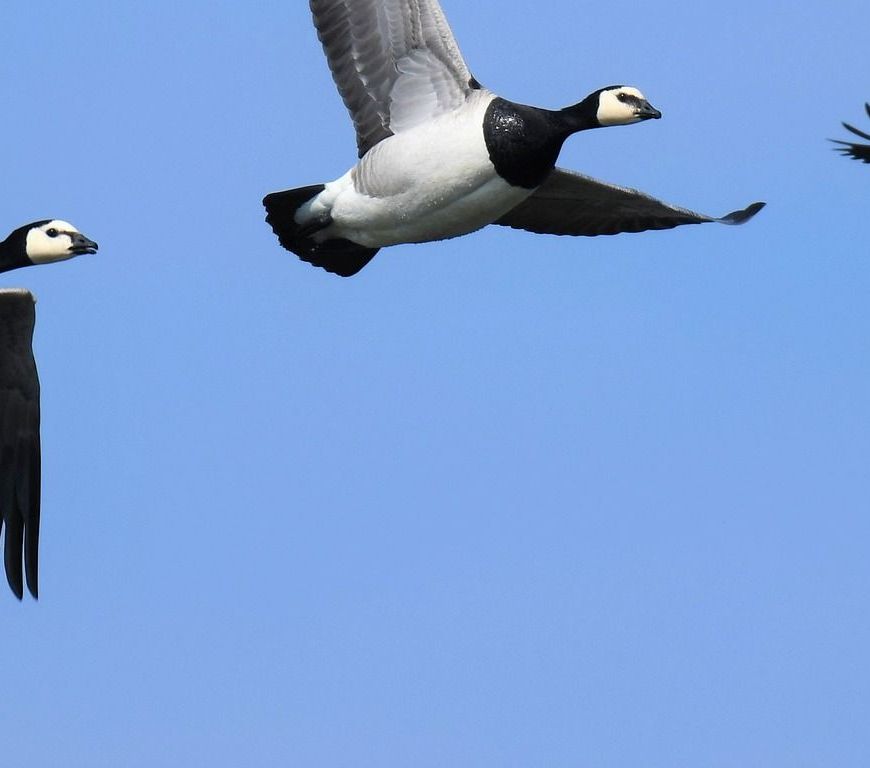
Aimée McIntosh: Modelling harvest of Greenland barnacle geese and its implications in mitigating human–wildlife conflict

Shortlisted for the 2023 Southwood Prize Aimée McIntosh talks us through how she and colleagues constructed an integrated population model to assess the cumulative impact of all shooting harvest on the Greenland barnacle goose. Findings demonstrate the impact of local harvests on global abundance, emphasising the importance of internationally coordinated monitoring and management strategies of migratory species. From conservation success to conflict Unlike many migratory … Continue reading Aimée McIntosh: Modelling harvest of Greenland barnacle geese and its implications in mitigating human–wildlife conflict