Not all hosts are equal: creating relevant questions for wildlife disease management

In their latest research, Will Rogers and colleagues use an age- and sex-structured simulation model to explore harvest-based management of CWD under three different transmission scenarios that all generate higher male prevalence. In many host-pathogen systems, males tend to be more diseased than females. This can be the result of many different factors such as the effects of testosterone on immune function and different social … Continue reading Not all hosts are equal: creating relevant questions for wildlife disease management

Shortlist announced for Southwood Prize early career researcher award

Each year Journal of Applied Ecology awards the Southwood Prize to the best paper in the journal by an author at the start of their career. Today we present the shortlisted papers for this year’s award, based on the previous (58th) volume of the journal. The winner will be selected in the coming weeks, so watch this space for future announcements. This year’s shortlisted candidates are: Reduced … Continue reading Shortlist announced for Southwood Prize early career researcher award

Acelerando la sucesión secundaria: uso de árboles tolerantes a la sombra para la restauración del bosque de niebla

Esta publicación de blog también está disponible en inglés aquí. Tarin Toledo-Aceves y sus colegas describen sus últimas investigaciones y la importancia de los árboles tolerantes a la sombra en los proyectos de restauración forestal Las iniciativas de reforestación y restauración comúnmente utilizan especies de árboles pioneras de rápido crecimiento. Sin embargo, un alto número de especies tolerantes a la sombra se encuentran amenazadas por … Continue reading Acelerando la sucesión secundaria: uso de árboles tolerantes a la sombra para la restauración del bosque de niebla

Accelerating secondary succession: using shade-tolerant trees for cloud forest restoration

This blog post is also available in Spanish here. Tarin Toledo-Aceves and colleagues describe their latest research and the importance of shade tolerant trees in forest restoration projects. Reforestation and restoration initiatives commonly use fast-growing pioneer tree species. However, a high number of shade-tolerant species are threatened by deforestation and overharvesting, and unlike pioneer species, they have no seed banks on the ground and are … Continue reading Accelerating secondary succession: using shade-tolerant trees for cloud forest restoration

Beneficial arthropod abundance assessed by sweep-netting is negatively associated with landscape-wide insecticide use

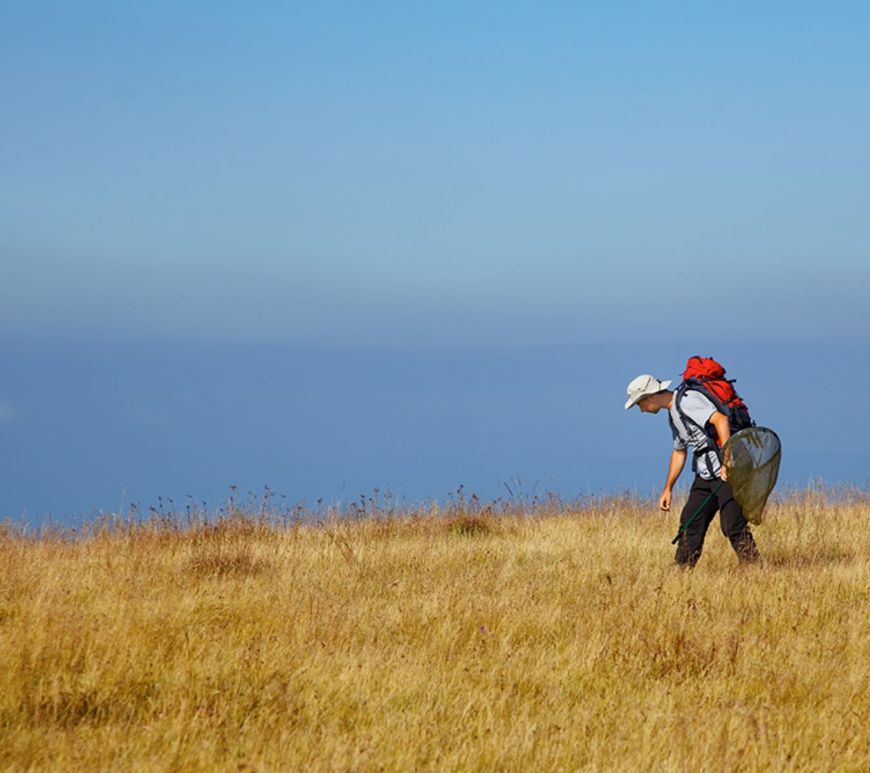
In a new study, Bakker, Bianchi and van der Werf assess how the use of insecticides and semi-natural landscapes impact beneficial arthropods in the Netherlands. Beneficial arthropods, like predators, parasitoids and pollinators, provide important ecosystem services such as biological pest control and pollination, and are therefore vital for ecosystem health and global food production. However, concerns have risen on the widespread decline of arthropods — … Continue reading Beneficial arthropod abundance assessed by sweep-netting is negatively associated with landscape-wide insecticide use

Impacting habitat connectivity of the endangered Florida panther for the transition to utility‐scale solar energy

In a new study, Leskova and colleagues examined the impacts of utility-scale solar energy (USSE) facility installations on habitat connectivity for Florida Panther within Peninsular Florida. Faced with the challenge of meeting increasing global energy demands and pressure to shift from conventional fossil fuels to renewable energy sources to mitigate climate change, the environmental trade-offs associated with renewable energy’s implementation are becoming increasingly apparent. Unfortunately, … Continue reading Impacting habitat connectivity of the endangered Florida panther for the transition to utility‐scale solar energy

Evaluierung von GAP-Wildpflanzenblühstreifen: Hochwertige Saatgutmischungen erhöhen die Pflanzenvielfalt und die damit verbundenen Pollen- und Nektarressourcen auf Ackerflächen erheblich

Dieser Beitrag ist hier auch auf Englisch verfügbar In ihrer neuen Studie untersuchten Schmidt et al., die Wirksamkeit von Wildblumenstreifen, die im Rahmen der EU Agrarumweltprogramme eingeführt wurden Blühstreifen sind ein wesentlicher Bestandteil der Agrarumwelt- und Klimamaßnahmen (AUKM), die von der Europäischen Union eingeführt wurden, um dem Verlust der biologischen Vielfalt und der damit verbundenen Ökosystemleistungen in der Agrarlandschaft entgegenzuwirken. Mehrjährige Blühstreifen werden einmalig zu Beginn … Continue reading Evaluierung von GAP-Wildpflanzenblühstreifen: Hochwertige Saatgutmischungen erhöhen die Pflanzenvielfalt und die damit verbundenen Pollen- und Nektarressourcen auf Ackerflächen erheblich

Evaluating CAP wildflower strips: high-quality seed mixtures significantly improve plant diversity and related pollen and nectar resources

This post is also available in German here In their new study, Schmidt and colleagues investigate the effectiveness of wildflower strips introduced under the European Union’s Agri-Environment Schemes Flower strips are a fundamental part of agri-environment schemes (AES) introduced by the European Union to counteract the loss of biodiversity and related ecosystem services in agricultural landscapes. At the beginning of every funding period (approx. 5 … Continue reading Evaluating CAP wildflower strips: high-quality seed mixtures significantly improve plant diversity and related pollen and nectar resources

New Associate Editors: February 2022

We are delighted to welcome three new Associate Editors to the Journal of Applied Ecology editorial board: Sarah Faye Harpenslager, Francesca Pilotto and Fraser Januchowski-Hartly. Find out more about them and their research interests below: Sarah Faye Harpenslager, B-Ware research centre, Netherlands. Sarah Faye is a biogeochemist and aquatic ecologist. Her main research interests comprise the cycling of nutrients, the interaction between plants and their … Continue reading New Associate Editors: February 2022

(A) Hodgson’s frogmouth, (B) Gould’s shortwing, (C) Fire-tailed myzornis (Phub Dorji)

The fragile Himalayas and the balancing act!

Ugyen Penjor discusses their latest research, conducted with colleagues Sherub Sherub and Rinzin Jamtsho, which explores the effects of land-use change on the functional and phylogenetic diversity of Eastern Himalayan bird communities. Envision the Himalayas – snow-clad mountains, jagged peaks, ruddy-cheeked people, and of course the ‘Abominable Snowman’ or The Yeti. But what is more exciting about the Himalayas is the biodiversity. The Himalayas can … Continue reading The fragile Himalayas and the balancing act!