New-look blog coming soon …

We are excited to introduce a brand new and refreshed look to this applied ecology blog, coming next week (after 12 May 2020). The new-look blog will continue to share research news from Journal of Applied Ecology as well as topical contributions from our global community of practitioners, researchers and policymakers. But it will also welcome contributions based on work published in new journal, Ecological … Continue reading New-look blog coming soon …

Editor’s Choice 57:05 – Long-lasting effects of land use on soil microbial restoration

How might previous land uses still affect restoration efforts today? Associate Editor, Gaowen Yang explores our latest Editor’s Choice research by Nash E. Turley and colleagues.   Agricultural abandonment can result in many environmental benefits, such as reduction in soil loss, increase in soil nutrient, biodiversity conservation. However, agricultural history has long-lasting effects (also called land-use legacies) on ecosystem recovery. For instance, when compared with … Continue reading Editor’s Choice 57:05 – Long-lasting effects of land use on soil microbial restoration

Strategies for global rangeland stewardship: the equilibrium-non-equilibrium debate

The rangeland equilibrium-non-equilibrium debate produced several important advances in our understanding of rangeland systems. But, in their recent Review, Briske et al. ask if, collectively, these advances are still insufficient to inform the stewardship strategies necessary to sustain global rangelands? Here they provide a summary of their work. The rangeland equilibrium-non-equilibrium debate of the late 20th Century questioned the appropriate ecological model governing the function … Continue reading Strategies for global rangeland stewardship: the equilibrium-non-equilibrium debate

Southwood Prize 2019: early career researcher winner announced

We’re excited to announce Ségolène Humann‐Guilleminot as the winner of this year’s Southwood Prize, celebrating the best paper by an early career researcher in the 2019 (56th) volume of Journal of Applied Ecology. Ségolène’s winning paper is ‘A nation‐wide survey of neonicotinoid insecticides in agricultural land with implications for agri‐environment schemes’. About the research From ten years of being marketed in the mid-1990s, neonicotinoid insecticides … Continue reading Southwood Prize 2019: early career researcher winner announced

Bee pollen reveals how multiple threats could contribute to bee decline

Recent research from Centrella et al. shows the effects agriculture and associated pesticides are having on bees in terms of both their diets and the offspring they produce. Here they discuss their findings. Threats to bee pollinators such as land use change, high pesticide use, and reduced floral diet diversity are usually assessed independently, even though we know that bees face these threats simultaneously in … Continue reading Bee pollen reveals how multiple threats could contribute to bee decline

Applied ecology in times of COVID-19

In these unusual and, often challenging times, Journal of Applied Ecology Senior Editor, Martin Nuñez raises the questions of how COVID-19 could influence the direction of, and priorities in, applied ecological research.  SARS-CoV-2 and COVID-19 have drastically changed our lives and routines – as I write this, my two-year-old is desperate for me to make her a cheese empanada out of playdoh. Aside from the … Continue reading Applied ecology in times of COVID-19

Cover stories: celebrating the beauty of pollinators

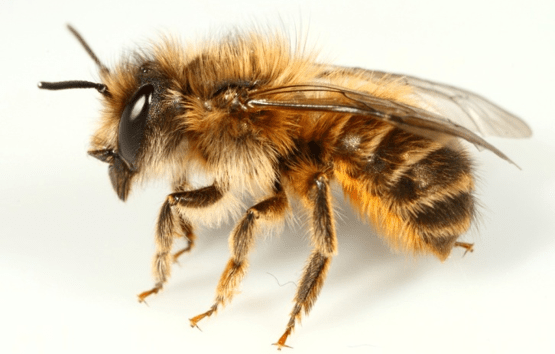
This month’s Journal of Applied Ecology cover shows a foraging male Habropoda tarsata. Photographer, David Kleijn shares the joy of rediscovering your passion for your study species. These days when we talk and write about pollinators, it is often in the context of their role as providers of pollination services. Pollinators are important for maintaining the production of the insect-pollinated crops that provide most of … Continue reading Cover stories: celebrating the beauty of pollinators

Editor’s Choice 57:04 – Enhancing biodiversity through more heterogeneous field designs

In Journal of Applied Ecology’s April Editor’s Choice, Alignier et al. present a way of promoting farmland biodiversity without sacrificing land needed for agricultural production. Associate Editor, Pieter De Frenne (Forest & Nature Lab, Ghent University, Belgium), introduces their exciting research. Researchers and policymakers are constantly testing, assessing and implementing different techniques to reduce the negative impacts of current agricultural practices on biodiversity. This is … Continue reading Editor’s Choice 57:04 – Enhancing biodiversity through more heterogeneous field designs

Camera traps reveal hidden treasures of the rainforest

In their new research, Mattia Bessone and colleagues demonstrate how camera trap distance sampling can be used to develop conservation strategies and protect threatened species. The impact humans are exerting on the planet is accelerating the loss of biodiversity, with animal species disappearing at such unprecedented rate that scientists have labelled the current era ‘Earth’s sixth mass extinction’. To preserve the remnants of wildlife we … Continue reading Camera traps reveal hidden treasures of the rainforest

Fishing for mammals: using environmental DNA from rivers to monitor mammals on land

New research by Sales and colleagues looks at the monitoring of terrestrial mammal communities and compares the efficacy of landscape-level monitoring using environmental DNA (eDNA) to that of conventional methods. Here the authors summarise their findings. Accurately and effectively monitoring biodiversity is a key consideration in this rapidly changing world. Consistent and regular monitoring of species communities is pivotal for ongoing management, conservation and policy … Continue reading Fishing for mammals: using environmental DNA from rivers to monitor mammals on land