Anyone’s game: do gamebird releases lead to increases in generalist predators?

In their new research, published this week, Henrietta Pringle and colleagues recommend the recording of gamebird releases and predator numbers. Every year, 40-50 million non-native gamebirds (ring-necked pheasant Phasianus colchius and red-legged partridge Alectoris rufa) are released in the UK, equivalent to around 46000 tonnes of biomass. Fewer than half these birds are shot, with the remaining birds predated, scavenged or surviving to breed or … Continue reading Anyone’s game: do gamebird releases lead to increases in generalist predators?

Editor’s Choice 56:7: Can agri-environment be successful in a pesticide world?

Executive Editor, Marc Cadotte, provides an insight into the important research of Humann-Guilleminot et al. Their recent article, A nation‐wide survey of neonicotinoid insecticides in agricultural land with implications for agri‐environment schemes, is our July Editor’s Choice. In response to general concerns about the impacts of agricultural activities on native biodiversity and ecosystem health, European jurisdictions have implemented agri-environment schemes that regulate and mitigate agricultural … Continue reading Editor’s Choice 56:7: Can agri-environment be successful in a pesticide world?

Forest patches in working landscapes offer surprising opportunities to conserve neotropical birds

A Spanish version of this post is available here. After years of research into the biodiversity value of agricultural countrysides, it has become clear that, while there is great potential to conserve wildlife alongside humanity in ‘working landscapes’, wildlife communities remain distinct from those in nature reserves. But can working landscapes ever support vulnerable, reserve-affiliated species? New research from Costa Rica by Karp et al. … Continue reading Forest patches in working landscapes offer surprising opportunities to conserve neotropical birds

Parches boscosos en paisajes agrícolas: la estrategia para conservar las aves Neotropicales

An English version of this post is also available here. Tras investigar la biodiversidad en zonas agrícolas y ganaderas por varios años, se ha encontrado que las fincas, haciendas y jardines tienen mucho potencial para conservar la biodiversidad. Sin embargo, dichas áreas no son reemplazos de las áreas protegidas ya que hay algunas especies que solamente habitan en áreas protegidas. Un nuevo artículo de investigación … Continue reading Parches boscosos en paisajes agrícolas: la estrategia para conservar las aves Neotropicales

Is it possible to manage pests and pesticide resistance in heterogeneous landscapes?

Associate Editor Juan Corley explores the challenge of creating environmentally friendly pest management solutions. Does the recent work of Zhou et al. on self-limiting transgenic insects point us in the right direction? Food production is strongly dependent on successful pest management. Since the 1970s, and partly as a consequence of increasing problems with the mass use of pesticides, Integrated Pest Management (IPM) has become the … Continue reading Is it possible to manage pests and pesticide resistance in heterogeneous landscapes?

Measuring the ‘urbanness’ of a bird community

Harnessing the power of global citizen science data sets to improve local understanding, Corey T. Callaghan (Centre for Ecosystem Science, UNSW Sydney) introduces the Urban Greenspace Integrity Index as a means to track restoration efforts in urban areas. Restoring urban biodiversity has many benefits (for examples, see here, here, or here), but what should we actually be focusing on in our restoration efforts? If we … Continue reading Measuring the ‘urbanness’ of a bird community

Virtual Issue: Urban Ecosystems

An increasingly prevalent part of applied ecology, urban ecosystems provide us with both new challenges and opportunities to make the most of the natural resources around us. In a new Virtual Issue, Executive Editor Marc Cadotte brings together some of the recent research published in the journal that aims to bring environmental benefits to our cities’ inhabitants. The articles are free to read for a … Continue reading Virtual Issue: Urban Ecosystems

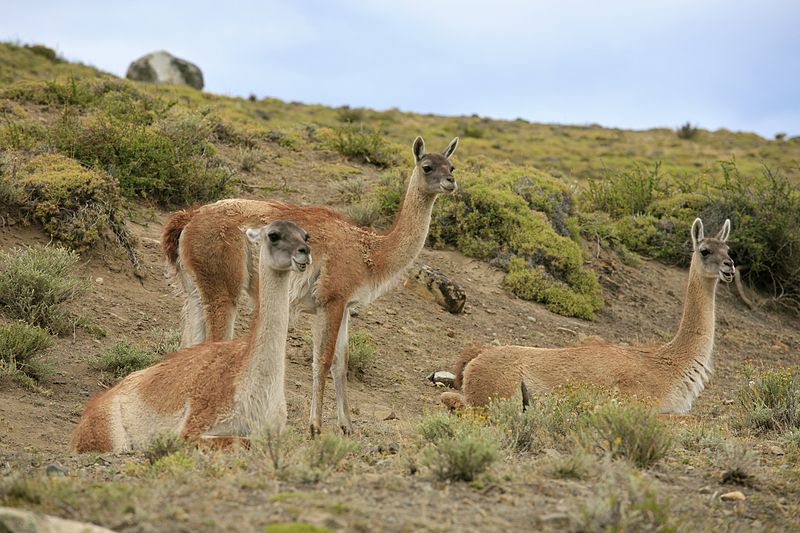
Guanacos can coexist with commercial livestock in Patagonia

Meredith Root-Bernstein raises the question of how we define overgrazing and highlights the recent findings of Oliva et al. in their article, Remotely sensed primary productivity shows that domestic and native herbivores combined are overgrazing Patagonia. Can large wild herbivores live together with domestic livestock? This question is important to answer if we are going to reconcile the conservation of herbivore populations across large areas … Continue reading Guanacos can coexist with commercial livestock in Patagonia

Conservation grazing on saltmarsh: are agri-environment schemes helping?

Following a recently published Research Article, Jennifer Smart explores this question and considers ways we can continue to work with the farming community to achieve conservation goals. Jennifer worked on this post with the British Ecological Society Policy team. In contemporary landscapes, grazing by domesticated cattle and sheep has become an increasingly important aspect of grassland management. This is largely because natural processes such as … Continue reading Conservation grazing on saltmarsh: are agri-environment schemes helping?

eDNA snapshots of invasion, infection and extinction from a freshwater crayfish tragedy

For the first time, a devastating crayfish plague outbreak has been monitored from the onset to crayfish extinction using eDNA methodology. David A. Strand and colleagues surveyed a watercourse over three years and discovered a remarkable correlation between eDNA fluctuations and host-pathogen dynamics. Noble crayfish (Astacus astacus) are macroinvertebrates that can be found in both lotic and lentic freshwater systems across most of Europe. Previously … Continue reading eDNA snapshots of invasion, infection and extinction from a freshwater crayfish tragedy