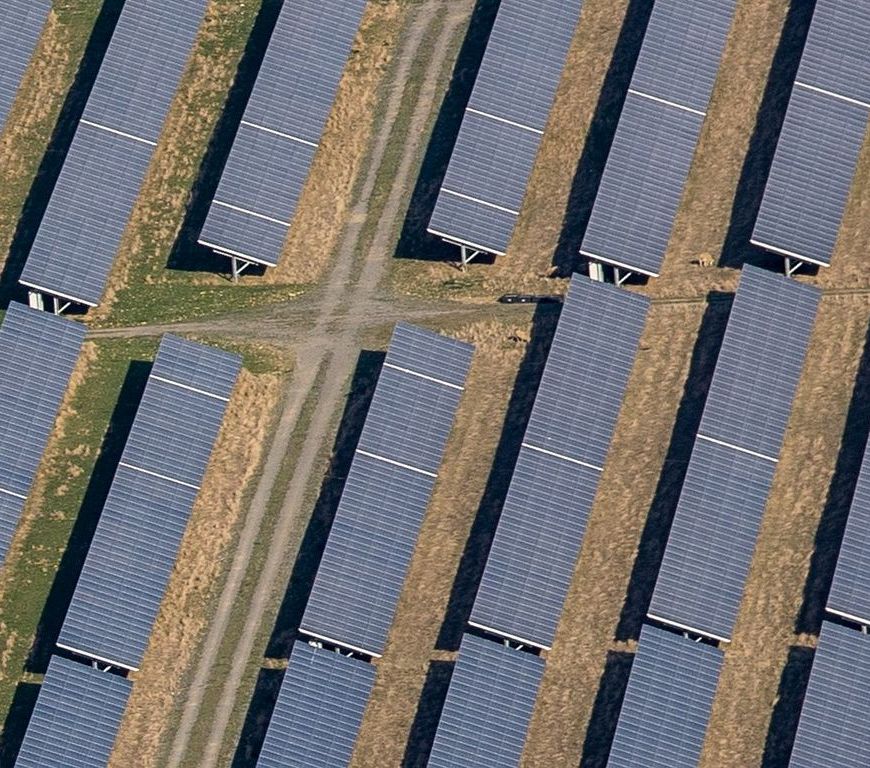
Local and landscape scale factors influence pollinators at solar parks

Authors Hollie Blaydes and Alona Armstrong describe their latest research to better understand how pollinators respond to increasing solar park developments. Ground mounted solar parks are becoming increasingly common features of our landscapes and are set to play a pivotal role on the path to net zero. Currently taking up ~15,000 hectares across the UK, more land will be needed for solar parks to meet … Continue reading Local and landscape scale factors influence pollinators at solar parks

A disposição da plantação de café pode aumentar a produtividade e a sustentabilidade?

Gudryan J. Baronio discute sobre o recente estudo, conduzido em colaboração, que enfatiza o papel fundamental dos polinizadores na produção de café e seu impacto nas características dos frutos e sementes. As conclusões do estudo apoiam a otimização dos cafezais através da preservação da vegetação nativa para aumentar a produção de café e conservar a biodiversidade. Continue reading A disposição da plantação de café pode aumentar a produtividade e a sustentabilidade?

Can coffee plantation design boost both productivity and sustainability?

Gudryan J. Baronio discusses a recent study, conducted alongside colleagues, which emphasises the key role of pollinators in coffee production and their impact on fruit and seed characteristics. Their findings support optimising coffee plantation design by preserving native vegetation to increase coffee yields and conserve biodiversity. Continue reading Can coffee plantation design boost both productivity and sustainability?

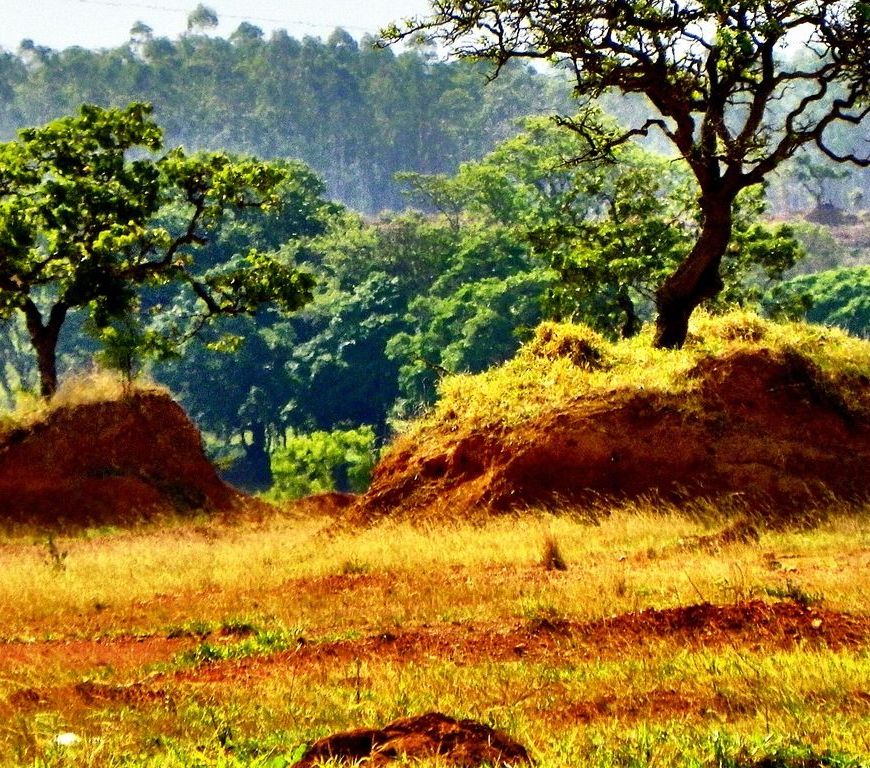
Climate challenges in savannas: How herbivore communities chart the course

Dr. Katja Irob summarises their latest study, conducted alongside colleagues, which analysed the impacts of climate change and rangeland management on degradation in Savanna ecosystems of southern Africa. Findings suggest that, in the face of climate uncertainty, farmers’ most effective strategy for securing their livelihoods and ecosystem stability is to integrate browsers and apply management of mixed herbivore communities.  Savannas as hot spots of environmental … Continue reading Climate challenges in savannas: How herbivore communities chart the course

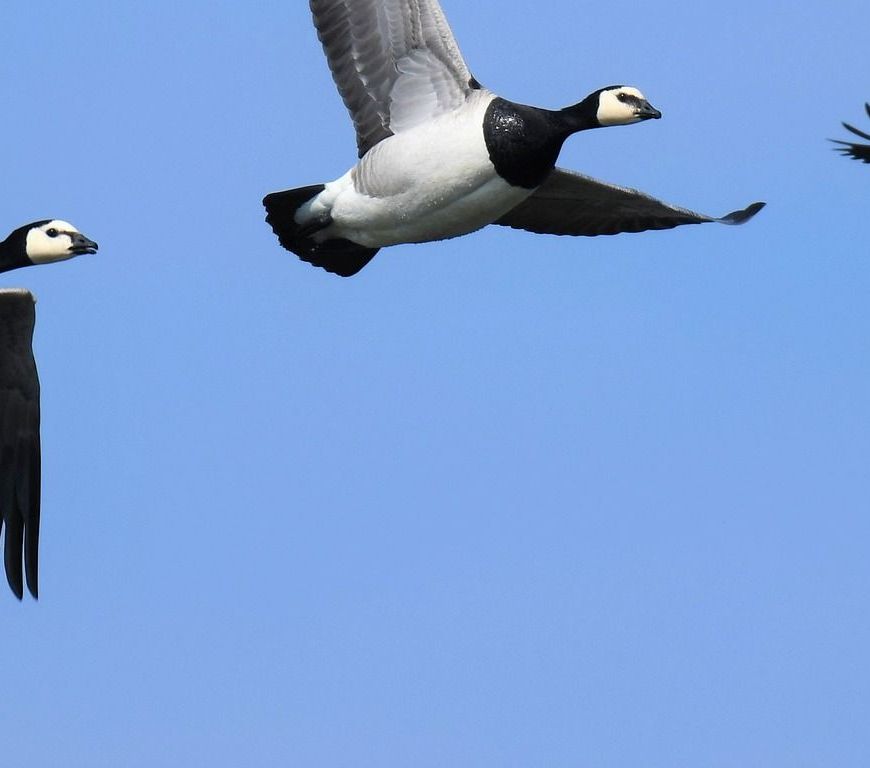
Weather forecasts can help us save migratory birds from collisions with city buildings

In their latest research article, Sara Kross, Katherine Chen, Benjamin Van Doren and colleagues utilise 5 years of bird collision counts in New York City to determine the influence of nocturnal weather conditions and bird migration traffic rates on collisions with buildings. Migration is already a particularly dangerous part of the annual life cycle of many birds, and it’s estimated that collisions with windows kills up … Continue reading Weather forecasts can help us save migratory birds from collisions with city buildings

What butterflies tell us about greenspace management in urban developments

Dr Joseph Cooper, from the British Trust for Ornithology, shares recent research conducted alongside colleagues which saw the development of models. These models provide the foundation through which butterfly abundance could be integrated into an urban biodiversity assessment tool, providing species- and community-level statistics to non-specialists from the urban planning and design sector. The prevailing view on new housing is it is built at the … Continue reading What butterflies tell us about greenspace management in urban developments

Temporal mismatches in flight activity patterns between Pipistrellus kuhlii and Prays oleae in olive farms: Implications for biocontrol services potential

In this blog post José M. Herrera discusses their latest research, conducted alongside co-authors, which looks at the temporal relationship between the nightly activity patterns of the common pipistrelle bat (Pipistrellus kuhlii) and the olive fruit moth (Prays oleae). To enhance biocontrol services, they propose increasing the availability of suitable roosting and foraging sites as well as conserving areas of remnant native woodland and scattered … Continue reading Temporal mismatches in flight activity patterns between Pipistrellus kuhlii and Prays oleae in olive farms: Implications for biocontrol services potential

Research into cassava: A promising crop under climate change

Author Dr Amelia Hood describes what their systematic map of cassava farming practices revealed about our knowledge gaps around this important staple crop. Cassava is a potato-like tuber used to produce a wide array of savoury and sweet dishes, either for direct consumption (e.g. tasty chips!) or following processing into flour (e.g. tapioca, farinha, garri). Cassava – also known as mandioca and yuca – is … Continue reading Research into cassava: A promising crop under climate change

Bed or breakfast? Roe deer balance food and safety according to crop phenology

Noa Rigoudy and co-authors talk us through their latest work, highlighting how behavioural adjustment may buffer the consequences of the reduction in natural habitats that accompanies intensification of agricultural production. This has implications for understanding how agricultural practices shape the food-safety trade-off of wildlife living in these highly modified landscapes. Wildlife in agroecosystems The life cycle of plants (i.e., their phenology) influences how food is … Continue reading Bed or breakfast? Roe deer balance food and safety according to crop phenology

Rewilding boosts Carbon Storage: How trees channel more Carbon into their roots

Author Nancy Burrell highlights the importance of accurate carbon accounting and describes her team’s latest research into the accuracy of current methods for measuring carbon in scrublands. Traditional methods like the i-Tree Eco model, effective in urban and forestry settings for estimating carbon storage in trees, are based on the growth patterns of plantation trees (trees grown in herbivore-free landscapes). But how does browsing at … Continue reading Rewilding boosts Carbon Storage: How trees channel more Carbon into their roots