Flower strips, organic management or small-scale farming: which benefits pollinator abundance, richness and reproduction most?

Exploring local and landscape management actions, Costanza Geppert and colleagues recognise the value of flower strips but also point to the importance of organic agriculture when it comes to maintaining pollinator richness. Their new insights were recently published in Journal of Applied Ecology. In recent years, the ‘insect Armageddon’ has received growing attention in Europe. The main driver of this insect decline is agricultural intensification, … Continue reading Flower strips, organic management or small-scale farming: which benefits pollinator abundance, richness and reproduction most?

Igor Khorozyan: How to protect cattle from leopard attacks

In this Q&A, we discussed with author Igor Khorozyan the background behind his team’s recently published article: “Studded leather collars are very effective in protecting cattle from leopard (Panthera pardus) attacks” and the wider implications of the research, as well as finding a little bit more about the author himself. The research What’s your article about? In this article, we studied how good protective collars … Continue reading Igor Khorozyan: How to protect cattle from leopard attacks

Green-tree retention benefits recovery of ground beetles

In their new research, Linhao Wu and colleagues set out to answer the question ‘how do retention harvest and forest type together affect the conservation and recovery of ground beetles assemblages’?  Ground beetles (members of the family Carabidae) are common and important components of forest biodiversity. Because they are easy to collect, highly diverse and sensitive to habitat changes, they have been widely used as … Continue reading Green-tree retention benefits recovery of ground beetles

Editor’s choice 57:07 – An urgent need for standardised monitoring of Arctic freshwaters

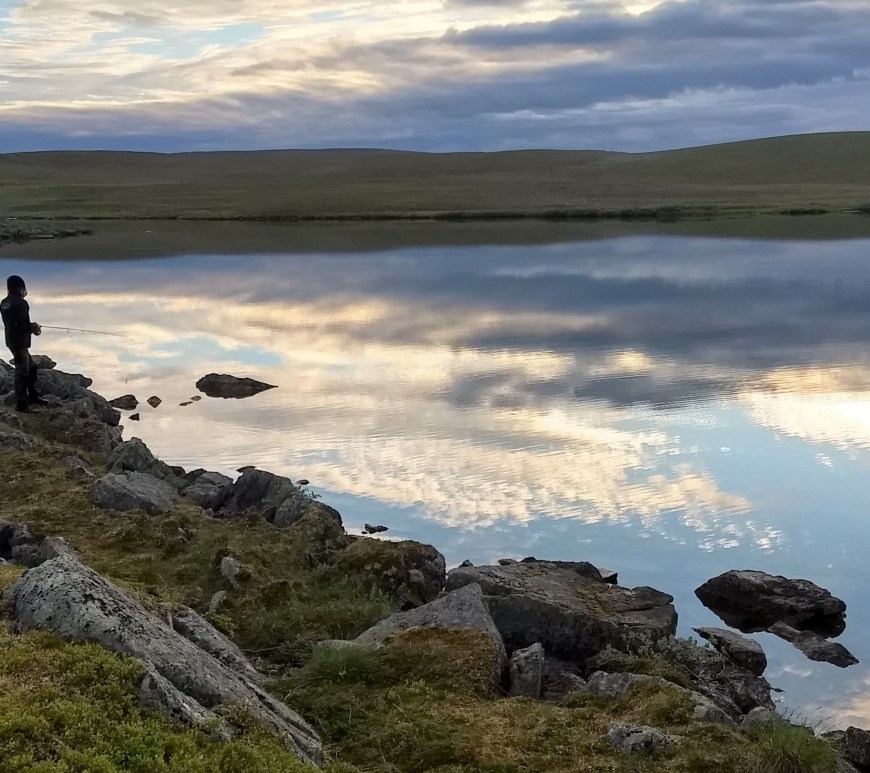
Heino et al.’s recent Policy Direction provides an approach to freshwater biomonitoring that could equip us to manage the effects of climate change in the Arctic. Associate Editor, Robert Britton highlights the work as our latest Journal of Applied Ecology Editor’s Choice. Anthropogenic climate change is not resulting in uniform warming rates across the world, with some regions increasing in temperature faster than others. This … Continue reading Editor’s choice 57:07 – An urgent need for standardised monitoring of Arctic freshwaters

How can movement ecology support marine protected areas in preventing illegal fishing?

In their recently published work, David Jacoby and colleagues combine long-term shark tracking data with that of enforcement patrols to see how behaviour can influence the vulnerability of marine life to illegal fishing in one of the world’s largest marine protected areas. Continue reading How can movement ecology support marine protected areas in preventing illegal fishing?

Biodiversity in West African parklands promotes pollination of shea

With demand on shea parklands increasing, Aoife Delaney and colleagues explore the pollination services to shea and how we can better support this resource of both ecological and economic importance. Their new research was recently published in Journal of Applied Ecology. Shea parklands occupy over 1 million km2 in the Sudano-Sahelian semi-arid zone of sub-Saharan Africa, from Senegal in the west to Uganda in the … Continue reading Biodiversity in West African parklands promotes pollination of shea

Weathering the storm: plant community flood resilience in intensively managed grasslands and the role of the plant economic spectrum

As flooding events increase in frequency and severity, how will managed grasslands weather the storm? Can we use the traits or ‘strategies’ of the plants that make up these grasslands to predict their resilience? Natalie Oram and colleagues address this issue in their new Journal of Applied Ecology article. Here they discuss their work further. Long story short: in flooded conditions, resource-conservative plant communities are … Continue reading Weathering the storm: plant community flood resilience in intensively managed grasslands and the role of the plant economic spectrum

A new threat to native bumblebees

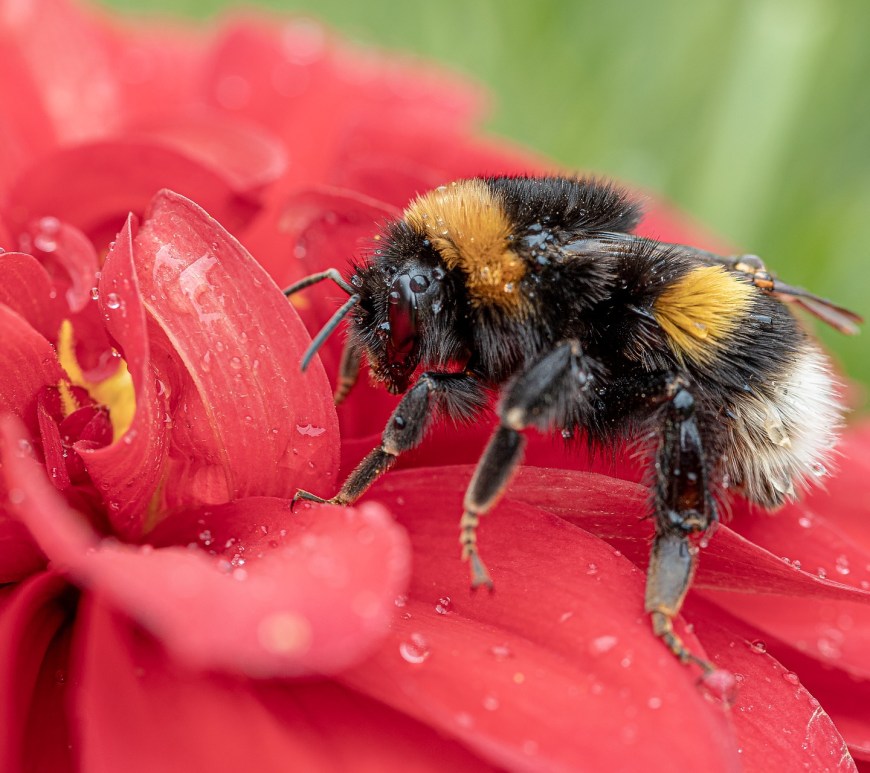
In their recently published article, Bartomeus et al. show how the commercial bumblebee trade is affecting the genetic integrity of native pollinators. Here the authors provide a summary of their work. Bees, especially bumblebees, are threatened by human-induced rapid environmental change such as habitat loss, exotic pathogens and global warming. But some species are more resilient than others. This is the case for the buff-tailed … Continue reading A new threat to native bumblebees

Is invasion success explained by enemy release?

The cover for Journal of Applied Ecology issue 57:06 shows a Cuban treefrog in Florida, USA. Discussing the research behind the image, Elizabeth Roznik explains how invasive species such as this can outcompete native frogs due to their large body sizes, fast growth rates, and tolerance of parasites.

Invasive species are among the leading threats to native wildlife. Understanding the mechanisms underlying invasions can help us manage invasive species and their impacts. Continue reading Is invasion success explained by enemy release?

Why neonicotinoids? Interview with Southwood Prize winner, Ségolène Humann‐Guilleminot

Senior Editor, Romina Rader, recently spoke to Ségolène Humann‐Guilleminot, winner of our Southwood Prize early career researcher award, to find out more about her work on neonicotinoid insecticides in agricultural land.

Ségolène’s research has also been beautifully illustrated (above) by Rob Lang at Underdone Comics. Continue reading Why neonicotinoids? Interview with Southwood Prize winner, Ségolène Humann‐Guilleminot