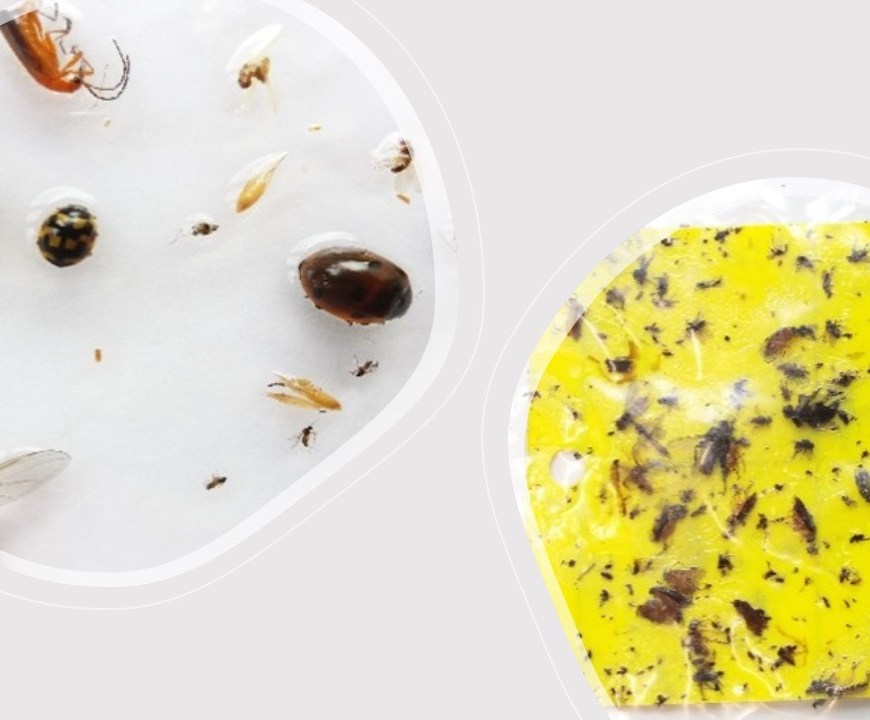
Beneficial arthropod abundance assessed by sweep-netting is negatively associated with landscape-wide insecticide use

In a new study, Bakker, Bianchi and van der Werf assess how the use of insecticides and semi-natural landscapes impact beneficial arthropods in the Netherlands. Beneficial arthropods, like predators, parasitoids and pollinators, provide important ecosystem services such as biological pest control and pollination, and are therefore vital for ecosystem health and global food production. However, concerns have risen on the widespread decline of arthropods — … Continue reading Beneficial arthropod abundance assessed by sweep-netting is negatively associated with landscape-wide insecticide use

シギ・チドリ類の保全策として重要な干潟上のバイオフィルム

干潟はシギ・チドリ類にとって不可欠な採餌場であるが、気候変動や人為的影響によって深刻な影響を受けている。桑江朝比呂氏らの研究グループは、バイオフィルムに焦点を当てた干潟生態系への積極的介入によるシギ・チドリ類の回復効果について、最新の総説で探っている。A version of this post is available in English. Continue reading シギ・チドリ類の保全策として重要な干潟上のバイオフィルム

Functional Biofilm on Intertidal Flats: A New Conservation Priority for Shorebirds

Intertidal flats are essential foraging areas for shorebirds but are severely impacted by climate and anthropogenic change. In their latest review, Kuwae and colleagues explore the effects of interventions that focus on intertidal biofilm for shorebird recovery. A version of this post is available in Japanese. Why shorebird species have been plummeting in numbers worldwide remains a subject of intense speculation and mounting conservation concern. However, … Continue reading Functional Biofilm on Intertidal Flats: A New Conservation Priority for Shorebirds

Impacting habitat connectivity of the endangered Florida panther for the transition to utility‐scale solar energy

In a new study, Leskova and colleagues examined the impacts of utility-scale solar energy (USSE) facility installations on habitat connectivity for Florida Panther within Peninsular Florida. Faced with the challenge of meeting increasing global energy demands and pressure to shift from conventional fossil fuels to renewable energy sources to mitigate climate change, the environmental trade-offs associated with renewable energy’s implementation are becoming increasingly apparent. Unfortunately, … Continue reading Impacting habitat connectivity of the endangered Florida panther for the transition to utility‐scale solar energy

Evaluierung von GAP-Wildpflanzenblühstreifen: Hochwertige Saatgutmischungen erhöhen die Pflanzenvielfalt und die damit verbundenen Pollen- und Nektarressourcen auf Ackerflächen erheblich

Dieser Beitrag ist hier auch auf Englisch verfügbar In ihrer neuen Studie untersuchten Schmidt et al., die Wirksamkeit von Wildblumenstreifen, die im Rahmen der EU Agrarumweltprogramme eingeführt wurden Blühstreifen sind ein wesentlicher Bestandteil der Agrarumwelt- und Klimamaßnahmen (AUKM), die von der Europäischen Union eingeführt wurden, um dem Verlust der biologischen Vielfalt und der damit verbundenen Ökosystemleistungen in der Agrarlandschaft entgegenzuwirken. Mehrjährige Blühstreifen werden einmalig zu Beginn … Continue reading Evaluierung von GAP-Wildpflanzenblühstreifen: Hochwertige Saatgutmischungen erhöhen die Pflanzenvielfalt und die damit verbundenen Pollen- und Nektarressourcen auf Ackerflächen erheblich

Evaluating CAP wildflower strips: high-quality seed mixtures significantly improve plant diversity and related pollen and nectar resources

This post is also available in German here In their new study, Schmidt and colleagues investigate the effectiveness of wildflower strips introduced under the European Union’s Agri-Environment Schemes Flower strips are a fundamental part of agri-environment schemes (AES) introduced by the European Union to counteract the loss of biodiversity and related ecosystem services in agricultural landscapes. At the beginning of every funding period (approx. 5 … Continue reading Evaluating CAP wildflower strips: high-quality seed mixtures significantly improve plant diversity and related pollen and nectar resources

New Associate Editors: February 2022

We are delighted to welcome three new Associate Editors to the Journal of Applied Ecology editorial board: Sarah Faye Harpenslager, Francesca Pilotto and Fraser Januchowski-Hartly. Find out more about them and their research interests below: Sarah Faye Harpenslager, B-Ware research centre, Netherlands. Sarah Faye is a biogeochemist and aquatic ecologist. Her main research interests comprise the cycling of nutrients, the interaction between plants and their … Continue reading New Associate Editors: February 2022

How does bat box design affect box temperatures and their suitability as maternity habitats?

In this podcast, authors Joy O’Keefe and Frank Tillman are interviewed about their latest research that seeks to better understand how bat box design affect internal temperatures – a critical factor for a species that spend more than half a day at roosts. Bat boxes are becoming important tools for conservationists worldwide. In our latest study published in Ecological Solutions and Evidence, we compared the … Continue reading How does bat box design affect box temperatures and their suitability as maternity habitats?

(A) Hodgson’s frogmouth, (B) Gould’s shortwing, (C) Fire-tailed myzornis (Phub Dorji)

The fragile Himalayas and the balancing act!

Ugyen Penjor discusses their latest research, conducted with colleagues Sherub Sherub and Rinzin Jamtsho, which explores the effects of land-use change on the functional and phylogenetic diversity of Eastern Himalayan bird communities. Envision the Himalayas – snow-clad mountains, jagged peaks, ruddy-cheeked people, and of course the ‘Abominable Snowman’ or The Yeti. But what is more exciting about the Himalayas is the biodiversity. The Himalayas can … Continue reading The fragile Himalayas and the balancing act!

Can artificial floods restore ecological health below the riverbed?

Kate Mathers and colleagues describe their latest research which aims to fill a much needed knowledge gap in the effects of artificial floods on subsurface habitats Naturally, river systems and their flow regimes are dynamic, reacting to changing meteorological events such as intense rainfall or annual snowmelt. This hydrological variability is vital in supporting a healthy river system because fluctuating flows regulate sediment transport (gravels … Continue reading Can artificial floods restore ecological health below the riverbed?