Research Stories: From wildlife-savers to citizen scientists

Johanna Kauffert and co-authors take us back to one early morning of a fawn rescue in June in order to demonstrate how opportunistically sampled field data of wildlife volunteers can be used to reconstruct birth distributions. It’s early morning (or rather still in the middle of the night) when I get up to drive to the countryside with my colleagues. Before the first rays of … Continue reading Research Stories: From wildlife-savers to citizen scientists

New Associate Editors 2023: Ecological Solutions and Evidence

Ecological Solutions and Evidence is delighted to announce 27 new Associate Editors who have joined the Editorial Board following our latest open call across all seven BES journals. At the end of 2022, the British Ecological Society journals conducted an open recruitment process for Associate Editors across all seven BES journals. This was the third time such a process has been conducted as we continue … Continue reading New Associate Editors 2023: Ecological Solutions and Evidence

Forestry raises the predation risk to caribou – we found ways to reduce it

Tracy McKay and Laura Finnegan share their latest research investigating what affects ungulate occurrence  in forest harvest blocks in west-central Alberta, Canada. Five years ago, our research group developed an idea with forest companies to help conserve woodland caribou – Rangifer tarandus, the same species as the Eurasian reindeer – in western Canada. Summer after summer, our crews drove the mud and gravel roads spiderwebbing … Continue reading Forestry raises the predation risk to caribou – we found ways to reduce it

Where and how do we manage for carbon in forestry in a changing world?

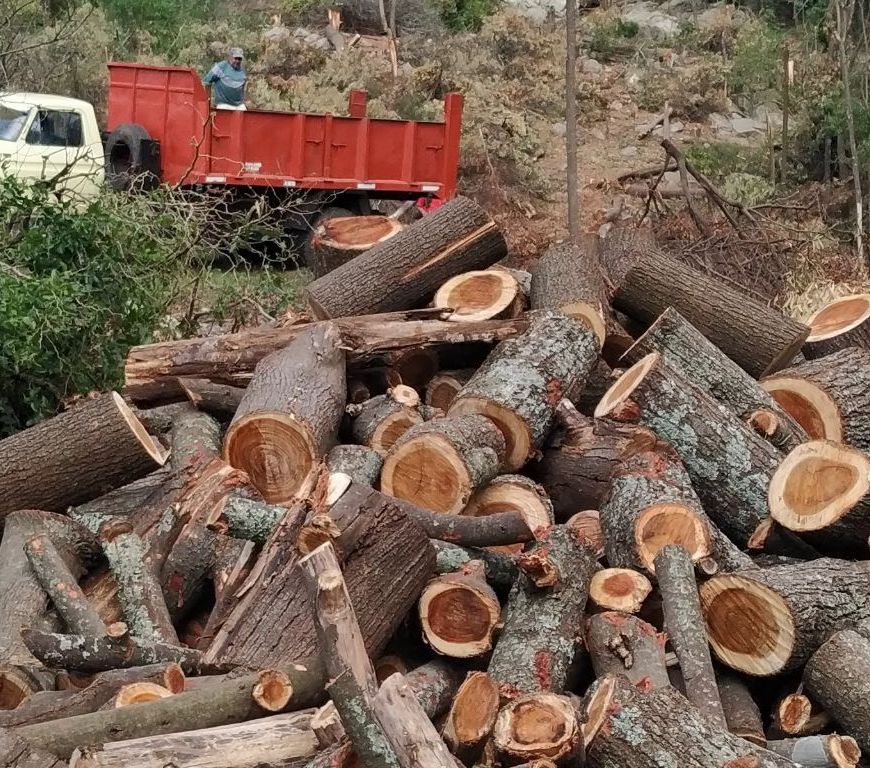
Lilli Kaarakka shares findings from her team’s review article assessing the evidence for the potential of specific improved forest management (IFM) practices to sequester carbon and enhance carbon storage in forests. Humans and forests share an infinite, intertwined history; forests have provided us with food, fuel and material for building homes, as well as a place of refuge and spirituality. In the most recent part … Continue reading Where and how do we manage for carbon in forestry in a changing world?

Seed additions facilitate herb-layer restoration in a temperate oak woodland

Originally posted and adapted from Natural History of Ecological Restoration blog. Andrew Kaul and colleagues present their latest research exploring whether seed additions can improve restoration outcomes in oak woodlands. Throughout most of the eastern United States, oak woodlands were once a widespread and dominant ecosystem. These woodlands experienced periodic fires, which prevented woody trees and shrubs from growing so densely that the overstory canopy … Continue reading Seed additions facilitate herb-layer restoration in a temperate oak woodland

Grub Hub for Fat Bats

Winifred Frick and colleagues share their latest research that tested a novel conservation approach targeted at improving foraging conditions near bat hibernacula with the overall aim of improving habitat conditions that can aid population resilience and recovery. Can we make them fatter? This was the million-dollar question that started the Fat Bat program at Bat Conservation International (BCI). It took a couple years of trial, … Continue reading Grub Hub for Fat Bats

Georgina Mace Prize 2022: Winner announced for early career researcher award

We’re excited to announce Luke Potgieter as the winner of the 2022 Georgina Mace Prize, celebrating the best article in the journal by an author at the start of their career. Winner: Luke Potgieter Research: Prioritizing sites for terrestrial invasive alien plant management in urban ecosystems About the research Rapid urbanization is placing increased pressure on natural, restored and designed ecosystems to provide services to … Continue reading Georgina Mace Prize 2022: Winner announced for early career researcher award

Chronic declines and Red Listing: Are hazel dormice Endangered?

Shortlisted for the Georgina Mace Prize 2023 Ellie Scopes describe her team’s latest article re-assessing the extinction risk and conservation status of hazel dormice (Muscardinus avellanarius) using long-term monitoring data. Threats assessments and conservation priority often become entangled, despite different aims. Whilst threat assessments focus on the proximity of the species to extinction, usually with objective guidelines, conservation priority is more subjective and will involve … Continue reading Chronic declines and Red Listing: Are hazel dormice Endangered?

More and better hedgerows

Jo Staley, Lisa Norton (UK Centre for Ecology & Hydrology) and Rob Wolton (Devon Hedge Group and Hedgelink) present their latest Perspective article calling for and providing recommendations for improving and expanding hedgerows as a valuable habitat and carbon store. Hedgerows, and having more of them, are high on the policy agenda with a target for a 10% national increase by 2050 in the recent … Continue reading More and better hedgerows

How can we make solar energy work for the environment as much as for the climate?

Drawing from his team’s latest Perspective piece, Fabio Carvalho provides an overview of the growth of the solar energy industry in the UK and how we can better evaluate its impact on the environment. Solar farms are fast becoming a common sight across Britain. It is not hard to spot one by the side of a road or by going up a hill and looking … Continue reading How can we make solar energy work for the environment as much as for the climate?