Social distancing between plants may amplify coastal restoration at early stage

Climate change and anthropogenic activities are jeopardising coastal ecosystems world-wide. Once degraded, these valuable ecosystems are not easy to recover. In their latest research, Hao Huang and colleagues conducted transplanting experiments to search for the optimal spatial design of coastal restoration. Few ecosystems can equate to coastal wetlands in terms of connections with humans. They provide many ecosystem services that are vital to current societies, … Continue reading Social distancing between plants may amplify coastal restoration at early stage

Welcome to our new Associate Editor Mentees, 2022.

Journal of Applied Ecology offers a two-year mentoring opportunity for early career researchers to gain experience of the Associate Editor role on a journal. Each mentee works with an assigned Senior Editor mentor and the Editorial Office. They have the opportunity to gain insights into the publishing and review processes as they handle submissions in an Associate Editor capacity. We’re pleased to welcome six new Associate … Continue reading Welcome to our new Associate Editor Mentees, 2022.

Editor’s Choice 59:1: Taking the road less fragmented slows disease spread

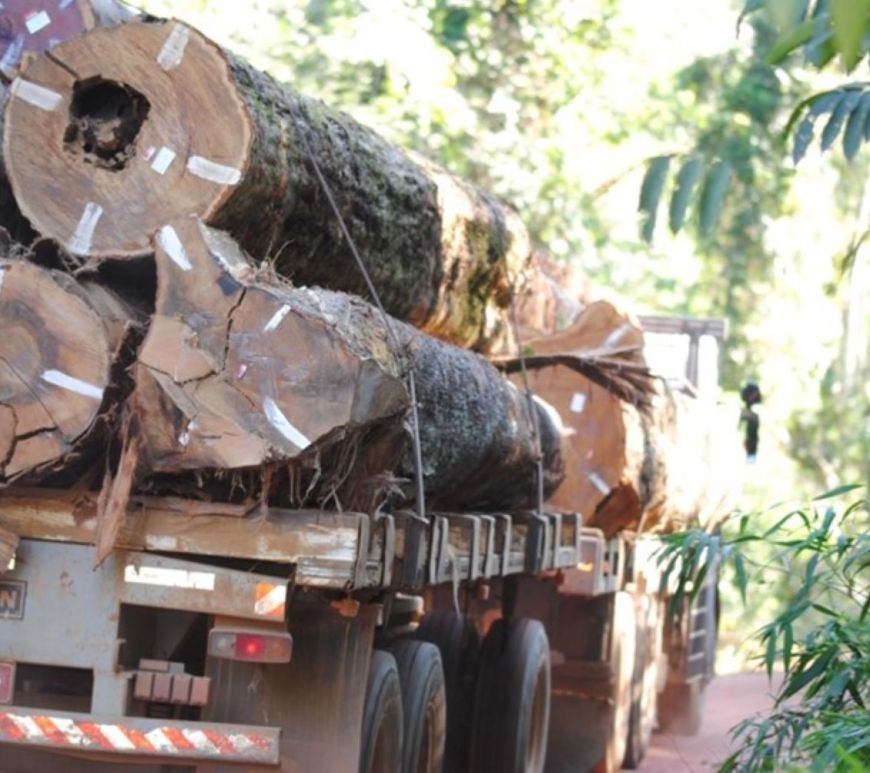
Associate Editors, Bret D Elderd and Anibal Pauchard, introduce this month’s Editor’s Choice article by Prist et al., which demonstrates that the building of roads that crisscross pristine habitat can lead to an increase in vector dispersal and Yellow Fever Virus (YFV) cases. The relationship between human and animal disease and environmental integrity has been highlighted by the recent COVID19 pandemic. However, quantitative studies on … Continue reading Editor’s Choice 59:1: Taking the road less fragmented slows disease spread

A tool to guide the selection of tree species and seed sources for forest landscape restoration

In their latest research, Tobias Fremout and colleagues present a scalable and freely available online tool, Diversity for Restoration (D4R), to identify suitable tree species and seed sources for climate-resilient tropical forest landscape restoration. Governments, NGOs and companies around the world have made ambitious pledges to restore the Earth’s degraded ecosystems. These grand commitments, such as the Bonn Challenge and the One Trillion Tree Initiative, … Continue reading A tool to guide the selection of tree species and seed sources for forest landscape restoration

Community-level responses of African carnivores to prescribed burning

Fires are common in many ecosystems world-wide, and are frequently used as a management tool. Using South African carnivores as their focal community, Laura C. Gigliotti and colleagues explore the relative changes in carnivore intensity of use in post-fire landscapes associated with hypothesized changes in prey availability and top-down suppression. Prescribed burning is a common form of habitat management and assessing wildlife responses to burning is … Continue reading Community-level responses of African carnivores to prescribed burning

Integrating snake distribution, abundance and expert-derived behavioural traits to predict snakebite risk

In their latest research, Martin et al. estimate the spatial patterns of seven snake species from Sri Lanka and combine these estimations with indices of species’ relative abundance, aggressiveness and envenoming severity to test whether these traits explain spatial patterns of snakebite risk. Whenever we go out for a walk to the bush, for holidays to an exotic, desolate and beautiful place, the idea of … Continue reading Integrating snake distribution, abundance and expert-derived behavioural traits to predict snakebite risk

Oportunidades para conservar las aves migratorias y al mismo tiempo beneficiar a los vertebrados residentes amenazados en América Latina

Esta publicación también está disponible en inglés aquí. Cada año, millones de aves migratorias salen de sus áreas de reproducción en los bosques templados de Canadá y Estados Unidos y migran a sus territorios de invernada en los bosques tropicales de América Latina en donde pasan entre seis y nueve meses entre una rica diversidad de especies Neotropicales residentes. Muchas especies de aves migratorias están … Continue reading Oportunidades para conservar las aves migratorias y al mismo tiempo beneficiar a los vertebrados residentes amenazados en América Latina

Opportunities to conserve migratory birds and at the same time benefit threatened resident vertebrates in Latin America

This blog is also available in Spanish here Biodiversity conservation requires decisions about how to efficiently allocate limited resources among management strategies, locations and species. In their latest research, Wilson et al. demonstrate how novel, high-resolution information on species distributions and risk of forest loss can be integrated to identify priority areas for the two groups at regional and landscape scales. Each year, millions of … Continue reading Opportunities to conserve migratory birds and at the same time benefit threatened resident vertebrates in Latin America

Reefs don’t just look better after restoration – they also sound healthier

Conservationists are launching bold programmes to actively restore coral reefs around the world, but efforts are hampered by a lack of effective monitoring. In their latest research, Lamont and colleagues explore the use of passive acoustic monitoring for measuring the success of coral reef restoration. Co-author Ben Williams swims us through the study… Over 50% of the world’s tropical reef habitat has been lost since … Continue reading Reefs don’t just look better after restoration – they also sound healthier

Knowing where your coffee comes from has the potential to aid restoration efforts 

In a new study, González-Chaves and colleagues assessed pollination benefits at a national scale by identifying where pollination services are more likely to be provided by native bees as a result of forest conservation. Coffee is a highly traded crop, which is produced in the tropics and enjoyed across the globe. Like most crops, coffee benefits from pollination services. However, this is rarely considered by … Continue reading Knowing where your coffee comes from has the potential to aid restoration efforts