Harvesting the benefits of the open science era in applied ecology  

From open data to preregistration of hypotheses, Erlend Nilsen and colleagues ask how can we make the most of open science in applied ecology? Take a look at this introduction to their recent Commentary and share your thoughts in the comments below. A world in rapid change The world around us is changing rapidly, and much of the research reported through Journal of Applied Ecology is, in … Continue reading Harvesting the benefits of the open science era in applied ecology  

A new approach for understanding the role of human-made structures in the North Sea

Hannah Tidbury and colleagues at the Centre for Environment, Fisheries and Aquaculture Science recently used social network analysis to aid marine spatial planning. Here Hannah explains a little more about the approach behind their work and what it means for oil and gas infrastructure. Connectivity between communities of organisms that live within marine environment is important because isolated communities are more vulnerable to extinction. Therefore, … Continue reading A new approach for understanding the role of human-made structures in the North Sea

Identifying hotspots of threats to marine megafauna

In newly published research, A framework for mapping the distribution of seabirds by integrating tracking, demography and phenology, Ana P. B. Carneiro et al. present a new framework aiming to tackle challenges of tracking seabird movement and ultimately improve bycatch mitigation measures. There is increased global awareness that our oceans are under threat. Marine megafauna such as seabirds, marine turtles, marine mammals, sharks and rays … Continue reading Identifying hotspots of threats to marine megafauna

Showcasing developments in biologging and related methods in applied ecology

Following the recent Journal of Animal Ecology Special Feature on biologging, Associate Editor, Steph Januchowski-Hartley takes a look at how research in this and similar methods are affecting the field of applied ecology today. Advances in technology have allowed for small electronic loggers and transmitters to be developed not only for biomedical monitoring for humans (think of the tech we can use for monitoring hearts, … Continue reading Showcasing developments in biologging and related methods in applied ecology

Loss of bumblebees is a loss to farmers 

New research by Néstor Pérez‐Méndez et al. highlights the economic implications of declining pollinator species. Here the authors summarise their work. Recent expansion and intensification of agriculture to meet growing food demands is among the main drivers of the alarming loss of insect diversity worldwide. This decline can lead to a marked degradation of the ecosystem services that insects provide, such as pollination or regulation of crop … Continue reading Loss of bumblebees is a loss to farmers 

Predator and scavenger movements as opportunities for pathogen spread among endangered seabirds

Infectious diseases have recently been acknowledged as an important threat for wild populations, notably seabirds. In order to implement efficient surveillance and management programmes, it is critical to look beyond the sick individuals to identify the individuals or species involved in cryptic epidemiological processes, such as pathogen spread. Amandine Gamble et al. summarise their recent research on the potential role of predators and scavengers in … Continue reading Predator and scavenger movements as opportunities for pathogen spread among endangered seabirds

Comportement alimentaire des prédateurs et charognards et opportunités pour la dissémination d’agents pathogènes

Les maladies infectieuses sont depuis peu reconnues comme une menace importante pour les populations sauvages, notamment les oiseaux marins. Afin de mettre en place des mesures de surveillance et de gestion efficaces, il est essentiel de regarder au-delà de l’animal malade pour pouvoir identifier les individus ou espèces impliqués dans les processus épidémiologiques cryptiques, tels que la dissémination d’agents pathogènes. Amandine Gamble et collaborateurs résument … Continue reading Comportement alimentaire des prédateurs et charognards et opportunités pour la dissémination d’agents pathogènes

Spotlight: new insights into forest management

What are some surprising new approaches to restoration in forest landscapes? What are the ecosystem services provided by deer? Can we use salvage logging to prevent future bark beetle outbreaks? These questions and more are answered in our new Spotlight collection, sharing new insights and innovations in forest management. Associate Editor, Julio Louzada brings together the featured articles. The modern tradeoff between the maintenance of … Continue reading Spotlight: new insights into forest management

Wildlife conservation modelling and Payment for Ecosystem Services schemes

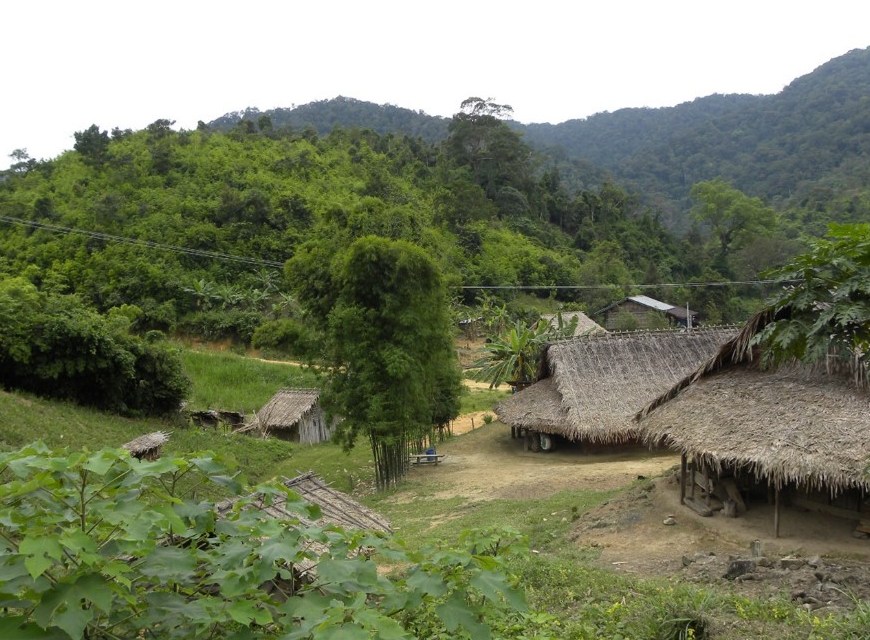
Payments for Ecosystem Services (PES) schemes are a way of bringing potential ‘buyers’ and ‘sellers’ of ecosystem services together for a mutually beneficial exchange. In their recently published work, Kragt and colleagues present an ecological model in the Lao People’s Democratic Republic that predicts how community-based patrolling can protect critically endangered species from poaching. Here they show how this model could benefit PES schemes. Laos … Continue reading Wildlife conservation modelling and Payment for Ecosystem Services schemes

Prevention vs cure for nature

Using the UK as an example, Joseph W. Bull and  E.J. Milner‐Gulland join the BES Policy team and present their new model, designed to simulate prevention and cure tactics for decision makers.  The UK Government’s Environment Bill sets out a decision to legally require most new economic development projects to achieve ‘Biodiversity Net Gain’ – that is, to leave the natural environment better off than … Continue reading Prevention vs cure for nature