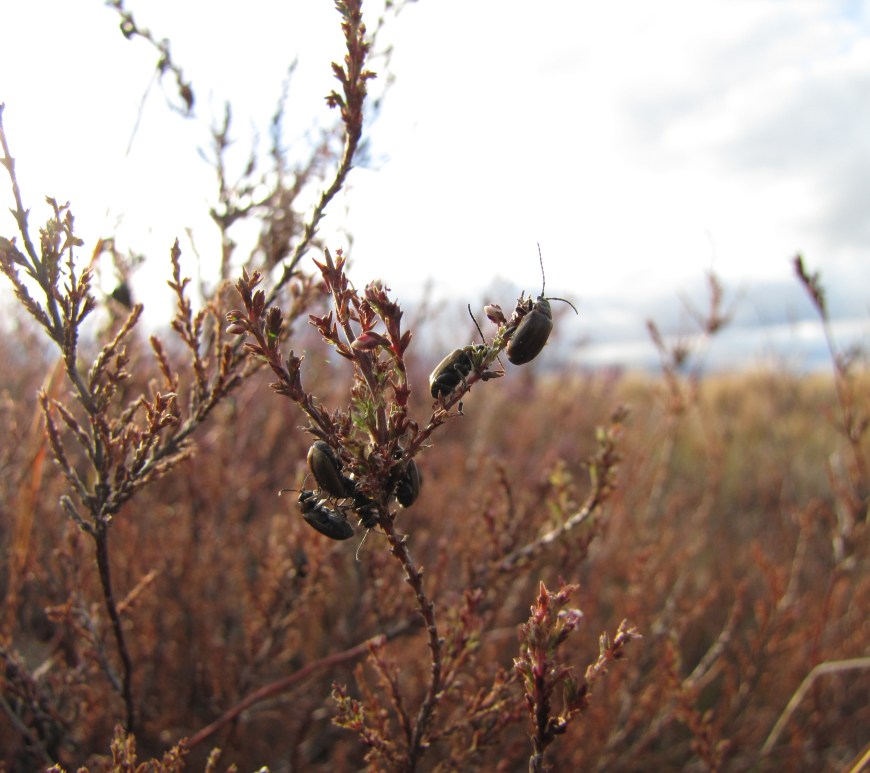
How does replanting of oil palm plantations affect arthropod biodiversity?

Palm oil plantations require replanting every twenty to thirty years but its effects on biodiversity are widely understudied. In their latest research, Pashkevich and colleagues assess the impact of replanting on arthropod communities in an industrial plantation. Biodiversity in oil palm plantations Oil palm plantations are often in areas that were once tropical rainforests, and this conversion has resulted in widespread declines in biodiversity and … Continue reading How does replanting of oil palm plantations affect arthropod biodiversity?


Black Outdoors: Sharing the joys of outdoors while Black

For Black History Month, the British Ecological Society (BES) journals are celebrating the work of Black ecologists from around the world and sharing their stories. Below we share Black Outdoors – a blog about the academic journey and outdoor adventures of Jacqueline L. Scott. Author, researcher and all-round outdoor adventurer. Jacqueline L. Scott is a PhD student at the University of Toronto studying the relationship … Continue reading Black Outdoors: Sharing the joys of outdoors while Black

Lionel Yamb: Saving sharks in Cameroon waters

For Black History Month, the British Ecological Society (BES) journals are celebrating the work of Black ecologists from around the world and sharing their stories. Lionel Yamb, who sits on the BES Equality and Diversity Working Group, shares his story below. My name is Lionel Yamb; I’m an early career marine ecologist working in Cameroon with the Institute of Agricultural Research for Development (IRAD). I … Continue reading Lionel Yamb: Saving sharks in Cameroon waters

Editor’s Choice 57:10 – Testing the relative effects of biocontrol and herbicide: finding an evidence-based management decision to control invasive plants

Journal of Applied Ecology’s October Editor’s Choice compares biocontrol and herbicide as approaches to invasive species management. Associate Editor, Rafael D. Zenni introduces the selected article by Paul G. Peterson and colleagues, which explores ‘efficacy, non-target effects and secondary invasion’. This post is also available in Portuguese here. In most ecosystems, controlling invasive alien plants is necessary in order to reduce and mitigate the negative … Continue reading Editor’s Choice 57:10 – Testing the relative effects of biocontrol and herbicide: finding an evidence-based management decision to control invasive plants

Testagem dos efeitos relativos de controle biológico e herbicida no controle de plantas exóticas invasoras para tomada de decisão baseada em evidências

This Editor’s Choice summary by Rafael D. Zenni is also available in English here. O controle de plantas exóticas invasoras é uma necessidade na maioria dos ecossistemas do planeta para reduzir e mitigar os impactos negativos causados ​​por invasões biológicas a biodiversidade nativa e aos serviços ecossistêmicos. No entanto, existem vários métodos de controle e escolher a solução mais eficaz, menos prejudicial e mais permanente … Continue reading Testagem dos efeitos relativos de controle biológico e herbicida no controle de plantas exóticas invasoras para tomada de decisão baseada em evidências

Uncovering the role of protected areas and private wildlife businesses for free-ranging carnivores

In their recent Journal of Applied Ecology research, Curveira-Santos et al. look at free-ranging carnivores in South Africa to highlight the importance of maintaining areas under long-term formal protection. Across southern Africa, the attribution of rights over wildlife has deeply transformed the conservation landscape. The private commercial wildlife industry (ecotourism and hunting) now plays an important role in augmenting and connecting formal protected areas. As … Continue reading Uncovering the role of protected areas and private wildlife businesses for free-ranging carnivores

Can ‘Citizen Scientists’ play a valid role in conservation management?

The emergence of citizen science in biodiversity monitoring has transformed the methods by which biodiversity surveys can be conducted. With the recent development of automatic visual identification tools, Pierre Bonnet and colleagues present two distinct case studies implementing citizen science and the use of Pl@ntNet, an automatic plant identification platform. This article is part of the BES cross-journal special feature on Citizen Science. Effective monitoring … Continue reading Can ‘Citizen Scientists’ play a valid role in conservation management?

Cover stories: Indigenous and local knowledge

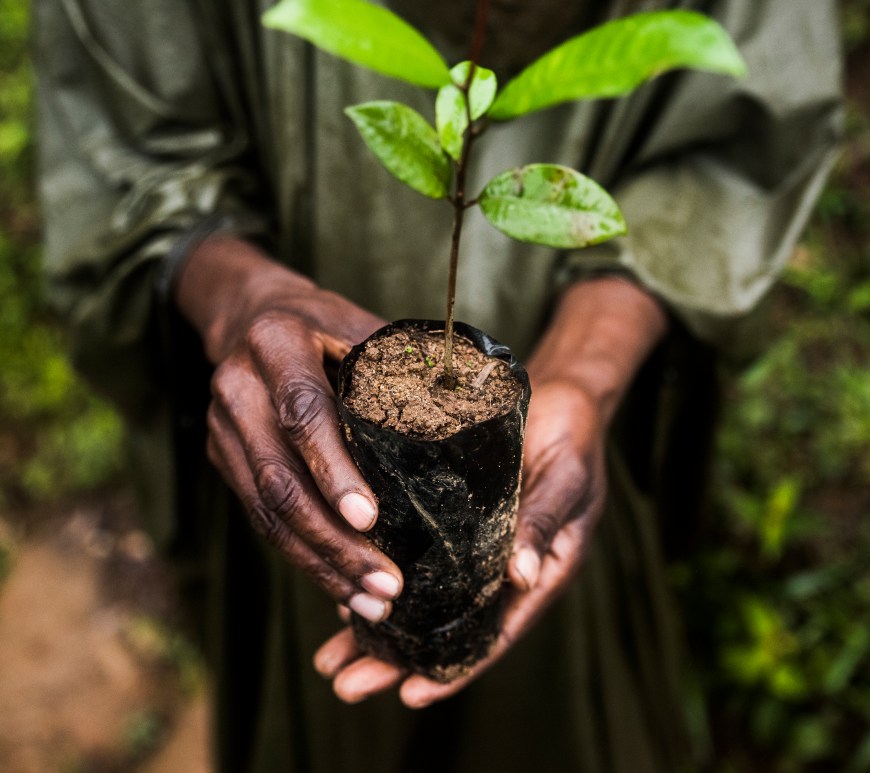
Journal of Applied Ecology’s September 2020 cover highlights an international Malagasy-Finnish project trying to reforest some of the damaged Malagasy forests. In the photo, a project worker shows a shoot that will be planted in one of the areas under reforestation process. Here photographer, Joan de la Malla shares some more of her work and tells the story behind the photos. The corresponding research contributes … Continue reading Cover stories: Indigenous and local knowledge

How ecological assessments can benefit from engagement with Indigenous and local knowledge

Part of a new Special Feature, Informing decision‐making with Indigenous and local knowledge and science, Pamela McElwee and colleagues look at the important role of Indigenous and local knowledge in initiatives such as the Intergovernmental Science-Policy Platform on Biodiversity and Ecosystem Services Global Assessment. Interest in Indigenous and local knowledge (ILK) has been growing, but not everyone knows what ILK is or how it can … Continue reading How ecological assessments can benefit from engagement with Indigenous and local knowledge

Using grey literature as an evidence base for ecological research and practice

Applied Ecology Resources promote evidence-based decision making by curating a wide range of information sources including grey literature – but how can researchers and practitioners use this resource in their work? AER Chair Marc Cadotte provides the following advice. Information is key for evaluating the evidence base underpinning scientific understanding, and for developing effective and efficient management of ecosystems. Yet, the primary sources of information … Continue reading Using grey literature as an evidence base for ecological research and practice